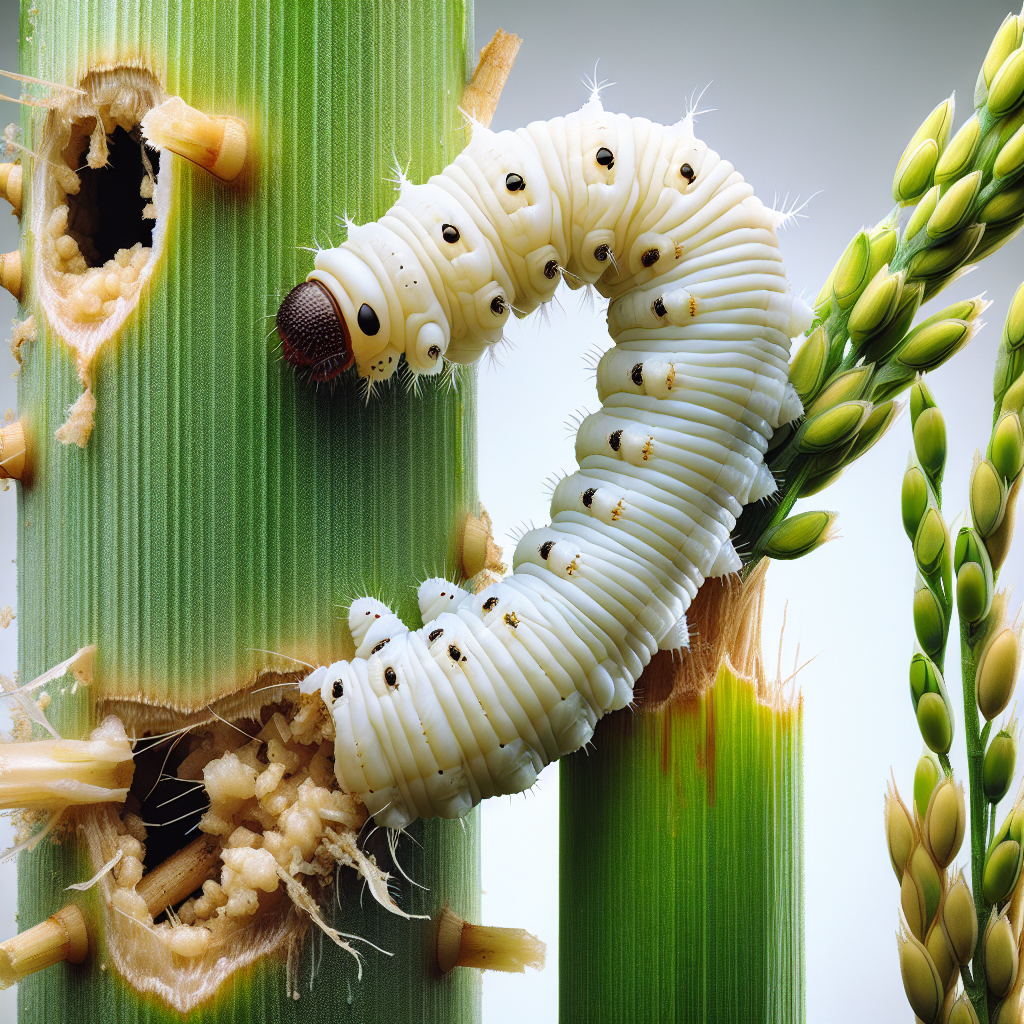
Introduction to Top shoot borer
The top shoot borer, scientifically known as Scirpophaga excerptalis, is one of the most notorious pests in rice cultivation, belonging to the family Pyralidae. Native to tropical and subtropical Asia, this moth's larvae specifically target the tender top shoots of rice plants, tunneling inside and disrupting nutrient flow, which results in the characteristic 'dead heart' symptom where the central leaf dries up and dies. Farmers in rice-growing regions like India, Southeast Asia, and parts of Australia face annual losses exceeding 20-30% in severe infestations if not managed properly.
This pest thrives in warm, humid conditions typical of paddy fields, making it a persistent threat during the vegetative growth stages. Understanding its behavior is crucial for timely intervention. Unlike broader pests like armyworms, the top shoot borer focuses exclusively on the apical meristem, halting plant growth and potentially killing young tillers. Early diagnosis and organic controls are key to minimizing damage without resorting to chemical sprays, preserving soil health and beneficial insects. This definitive guide equips growers with professional-grade strategies to diagnose, manage, and prevent outbreaks, ensuring robust harvests.
Identifying Symptoms & Damage
Spotting top shoot borer damage early can save entire fields. The primary symptom is the 'dead heart,' where the youngest leaf at the top turns yellow, dries, and hangs down lifelessly, often 15-30 days after transplanting. This occurs because larvae bore into the shoot, frass (insect waste) extrudes from the entry hole as a telltale yellowish silk-like strand.
Examine affected plants closely: pull back the leaf sheath to reveal creamy-white caterpillars (up to 20mm long) with a dark head, feeding inside. In later stages, multiple tillers may show wilting, and plants fail to produce panicles, leading to 50-100% yield loss in young crops. Differentiate from other issues like stem borers by the exclusive top-shoot targeting and frass position. Secondary damage includes bacterial infections entering through bore holes, causing rot.
Field scouting involves checking 20-30 plants per square meter weekly. Use a magnifying glass for larvae confirmation. Economic thresholds: 5-10% dead hearts trigger action. Document patterns—clustered damage indicates moth oviposition hotspots near field edges.
Lifecycle and Progression of Top shoot borer
The top shoot borer completes 4-6 generations per rice season, with a lifecycle of 30-45 days. Adult moths are pale yellow with wingspans of 20-25mm, active at dusk, laying 50-100 eggs in clusters on leaf undersides near the top shoot.
Eggs hatch in 4-6 days into tiny larvae that mine into the shoot tip. Larvae (1-20mm) feed for 20-30 days, passing through 5 instars, then pupate inside the stem or leaf sheath for 6-10 days. Pupae are reddish-brown. Overwintering occurs as diapausing larvae in stubble.
Progression peaks during tillering (20-40 DAT), coinciding with monsoon humidity. Moths prefer fields with dense, succulent tillers. Monitor using pheromone traps: 5-10 moths/trap/week signals imminent larval influx. Lifecycle disruption via sanitation breaks the cycle effectively.
Environmental Triggers & Risk Factors
Top shoot borer outbreaks surge with temperatures of 25-32°C and relative humidity >80%, common in rainy seasons. Over-fertilized fields with excess nitrogen produce lush shoots, attracting oviposition. Close planting (<20cm spacing) creates humid microclimates favoring egg hatch.
Risk factors include ratoon crops harboring overwintering larvae, water-stressed fields post-tillering, and nearby volunteer rice. Monsoon winds disperse moths up to 2km. Susceptibility peaks in susceptible varieties like Basmati Rice. Poor drainage exacerbates secondary root rots. Climate change extends generations, intensifying pressure.
Organic Control & Treatment Plans
Organic management integrates cultural, biological, and mechanical tactics. Cultural: Clip and destroy dead hearts promptly, removing 90% larvae. Flood fields intermittently to drown pupae. Apply neem oil (5ml/L) weekly from 15 DAT; azadirachtin disrupts larvae molting. For severe cases, release Trichogramma japonicum wasps (1,00,000/ha) at egg stage—80% parasitism rate.
Biological: Conserve predators like spiders, dragonflies, and birds. Spray Bacillus thuringiensis (Bt) kurstaki (2g/L) at 20 DAT, targeting young larvae. NPV virus sprays (250 LE/ha) cause 70-90% mortality. Mechanical: Use light traps (4/ha) to capture moths; install 20cm above canopy.
Treatment Plan: Week 1-2: Scout and rogue. Week 3: Neem + Bt. Week 4: Trichogramma release. Monitor Spring Pest Patrol: Organic AI Strategies to Shield Your Crops from Common Invaders for timing. Rotate with non-hosts like legumes. Yields recover 25-40% with IPM.
Preventing Top shoot borer in the Future
Prevention starts with resistant varieties like DRR Dhan 44. Time planting to avoid peak moth flights (use local forecasts). Maintain 20-25cm spacing, balanced NPK (avoid >120kg N/ha). Post-harvest, deep plow stubble to expose diapausing larvae to sun/predators. Border crops like marigold repel moths.
Use yellow sticky traps (25/ha) for monitoring. Mulch with neem cake (250kg/ha) pre-planting suppresses soil pupae. Foster biodiversity: interplant Thai Basil as trap crop. Clean irrigation channels of volunteers. Annual rotation with chickpeas breaks lifecycle. Long-term: Breeders develop Bt rice, but organics sustain soil.
Crops Most Affected by Top shoot borer
Primarily Rice (crop), especially Basmati and Jasmine types during vegetative stages. Secondary hosts include wild rice and sorghum. Young transplants suffer most, with losses up to 100% if >20% infestation. In mixed systems, nearby corn fields amplify moth migration. Global impact: 10-15% annual rice loss in Asia.