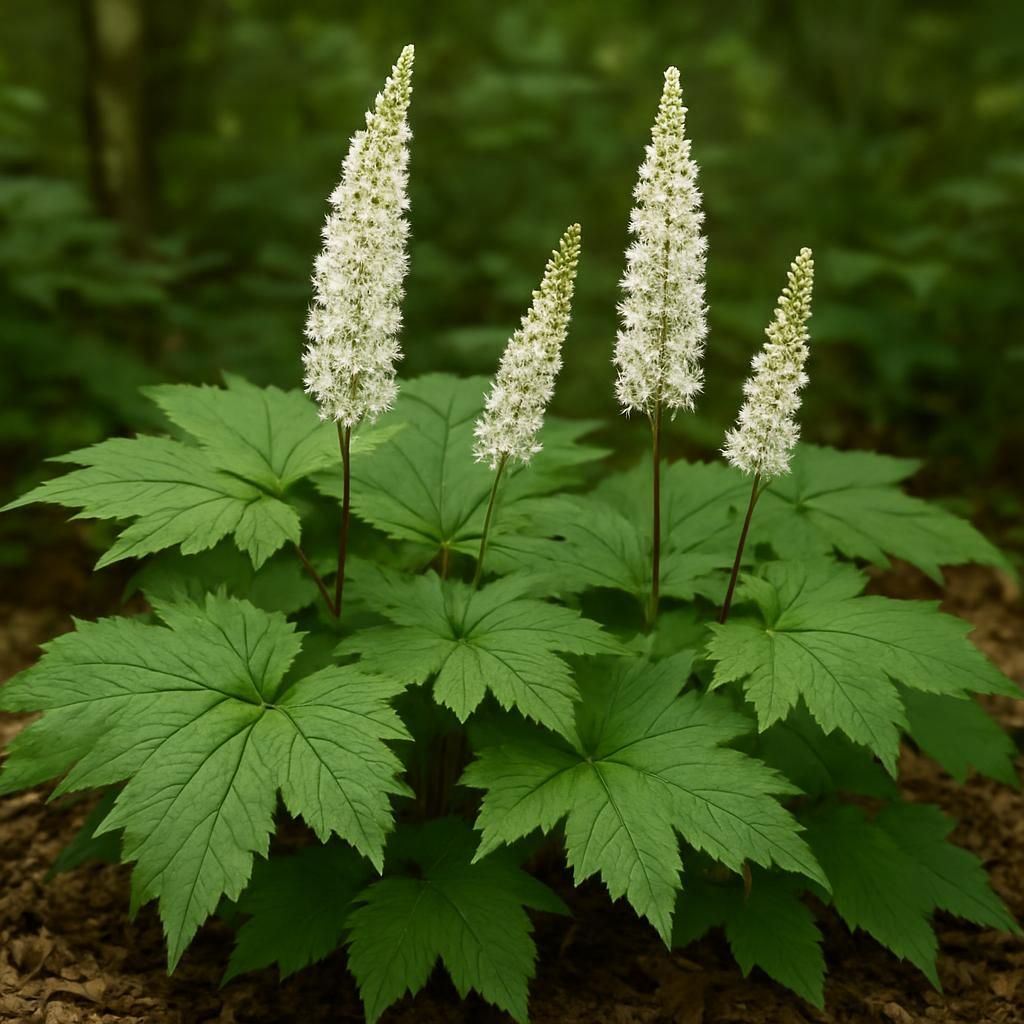
Introduction to Black Cohosh
Black Cohosh (Actaea racemosa) is a shade-loving herbaceous perennial native to eastern North American deciduous forests. It has been used for centuries by Indigenous peoples and later by European settlers for its rhizomes, which contain bioactive triterpene glycosides. Today it is grown primarily for the dried root and rhizome used in dietary supplements targeting menopausal symptoms. Successful cultivation hinges on replicating the cool, moist, organic-rich conditions of its native habitat while implementing rigorous organic management practices.
Botanical Profile of Black Cohosh
Black Cohosh belongs to the Ranunculaceae family. Mature plants produce palmately compound leaves up to 1 m across on sturdy 1–2.5 m stems. In mid-summer, tall racemes of small, creamy-white flowers appear, attracting specialized pollinators including bumblebees. The plant spreads slowly via thick, knobby rhizomes that are harvested after 4–6 years. Black Cohosh is distinct from related species such as Blue Cohosh due to its larger stature and different phytochemical profile.
Soil, pH, and Climate Requirements for Black Cohosh
Black Cohosh demands consistently moist, well-drained, high-organic-matter soils typical of rich cove forests. It performs best in USDA zones 3–8 under 60–90 % shade.
| Parameter | Ideal Range | Notes |
|---|---|---|
| Soil Type | Loamy, high in humus | Incorporate 5–8 cm leaf mold or compost |
| Soil pH | 5.5–6.5 | Avoid alkaline soils; test annually |
| Temperature | 15–24 °C daytime | Protect from late-spring frosts |
| Annual Rainfall | 100–150 cm | Supplemental irrigation required in drought |
| Shade Level | 60–90 % canopy | Use 70 % shade cloth in open fields |
| Elevation | 300–1 200 m | Performs well on north- or east-facing slopes |
Step-by-Step Planting & Propagation
- Site Preparation: Clear competing vegetation and incorporate 10–15 cm of well-rotted leaf compost. Install drip irrigation lines before planting.
- Rhizome Division: Harvest healthy 3–5-year-old rhizomes in early spring or fall. Cut into 5–8 cm sections each containing at least one bud.
- Spacing: Plant sections 30–45 cm apart in rows 60–90 cm wide; set buds 5 cm deep.
- Mulching: Apply 8–10 cm of shredded hardwood mulch immediately after planting to retain moisture and suppress weeds.
- First Season Care: Keep soil evenly moist; shade cloth may be required during establishment.
Care & Maintenance regimes for Black Cohosh
Consistent moisture and annual organic amendments are critical for high-quality rhizome production.
| Task | Schedule | Rate / Method |
|---|---|---|
| Watering | April–October | 2.5–4 cm per week via drip; maintain 60 % field capacity |
| Fertilizer | Early spring & post-harvest | 5 cm compost tea or 4-2-4 organic blend at 1 kg/10 m² |
| Pruning / Deadheading | After seed set (late summer) | Cut flowering stalks to 30 cm to redirect energy to rhizomes |
| Mulch Renewal | Every spring | Top-dress 5 cm fresh hardwood mulch |
| Weeding | Monthly during active growth | Hand-pull; avoid deep cultivation near roots |
Pests, Diseases & Organic Management
Black Cohosh is relatively pest-resistant but can suffer from slugs and snails, leaf miners, and occasional aphids. Fungal issues such as Botrytis and root rot occur in poorly drained sites. Management includes:
- Slug control: Beer traps and iron-phosphate baits.
- Leaf miner scouting: Remove and destroy affected leaves; encourage parasitic wasps.
- Fungal prevention: Ensure excellent drainage and apply compost tea monthly.
Harvesting, Curing & Optimal Storage
Harvest rhizomes in year 4–6 during dormancy (October–November). Wash gently, slice into 1 cm pieces, and dry at 35–38 °C with good airflow until brittle (moisture <10 %). Store in airtight containers in a cool, dark location; shelf life exceeds 24 months when properly cured.
Companion Planting for Black Cohosh
Black Cohosh grows well with other shade-tolerant woodland species. Recommended companions include Ginseng, Goldenseal, Wild Ginger, and Mayapple. These pairings improve biodiversity, enhance soil microbial activity, and provide additional income streams from multi-crop woodland systems. Avoid planting near aggressive spreaders that compete for moisture.