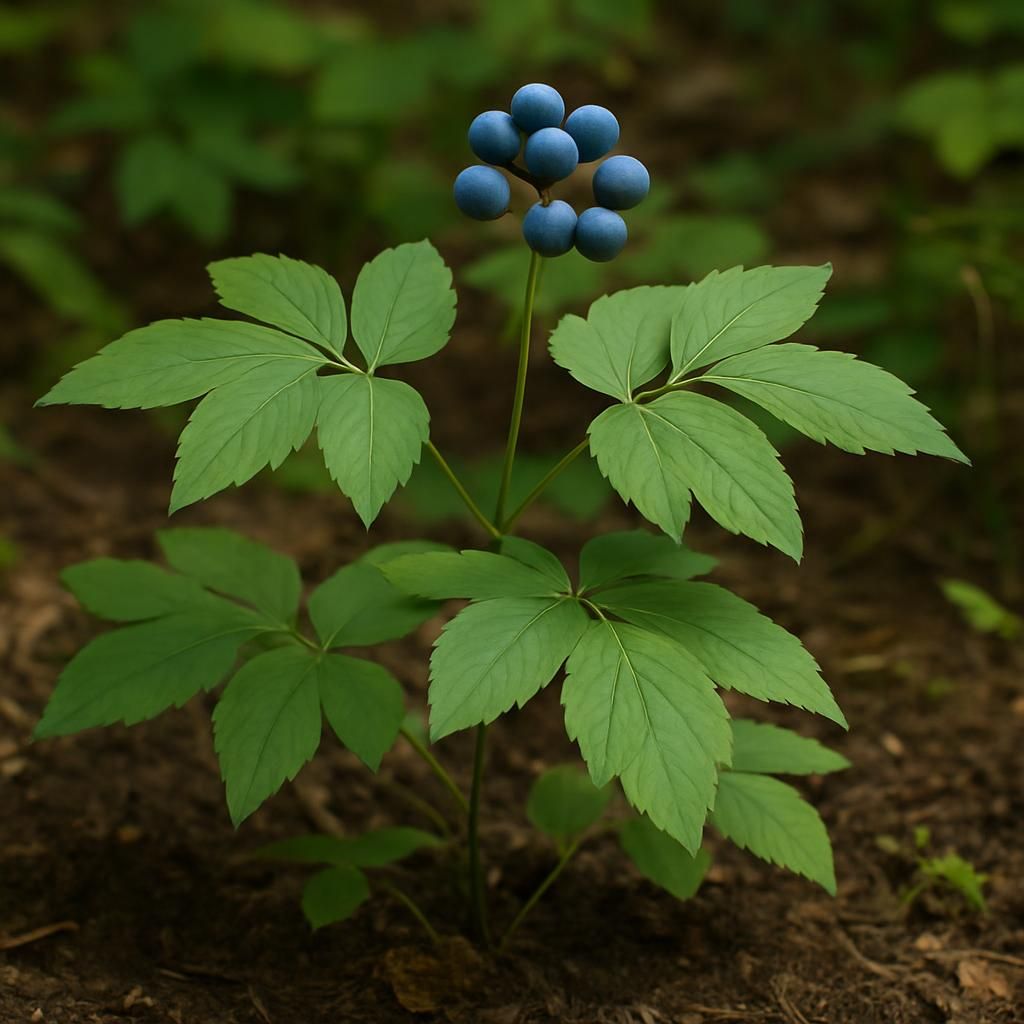
Introduction to Blue Cohosh
Blue Cohosh (Caulophyllum thalictroides) is a long-lived herbaceous perennial native to eastern North American deciduous forests. Historically used by Indigenous peoples and early settlers for its medicinal properties, the plant is now cultivated by specialty herb growers and forest farmers seeking to meet demand for its bioactive rhizomes while protecting wild populations. The plant produces compound leaves resembling those of meadow-rue and clusters of small, star-shaped flowers in spring, followed by striking metallic-blue seeds in late summer.
Commercial interest centers on the rhizome, which contains alkaloids and saponins used in traditional herbal formulations. Because the species grows slowly and requires specific woodland conditions, successful cultivation demands patience, site preparation, and adherence to organic practices. This guide delivers professional-grade information for growers establishing production beds or integrating Blue Cohosh into forest garden systems.
Botanical Profile of Blue Cohosh
Blue Cohosh belongs to the Berberidaceae family. Mature plants reach 30–90 cm in height with glaucous, ternately compound leaves that emerge in early spring. Yellowish-green to purplish flowers appear in April–May, giving way to pea-sized seeds that ripen to a deep blue by August. The plant spreads primarily through a thick, knotted rhizome system that can persist for decades.
Rhizomes contain caulophylline, methylcytisine, and other isoquinoline alkaloids. The plant is dioecious or polygamodioecious in some populations, though most cultivated stock is propagated vegetatively. Blue Cohosh is shade-tolerant and occupies the herbaceous layer of mature hardwood forests, often growing alongside ferns, trilliums, and wild ginger.
Soil, pH, and Climate Requirements for Blue Cohosh
Blue Cohosh thrives in cool, moist, well-drained woodland soils rich in organic matter. The species prefers a slightly acidic to neutral pH and consistent moisture without waterlogging. Avoid compacted or heavy clay soils unless heavily amended with leaf mold and aged bark.
| Parameter | Ideal Range | Notes |
|---|---|---|
| Soil Type | Loamy, humus-rich woodland | High organic matter essential |
| pH | 5.5–6.8 | Slightly acidic to neutral |
| Temperature Range | 10–24 °C daytime | Cool temperate climate preferred |
| Annual Rainfall | 900–1500 mm | Supplemental irrigation in dry spells |
| Light | 30–70% shade | Dappled canopy or shade cloth recommended |
| Elevation | 0–1200 m | Avoid frost pockets in low-lying areas |
Step-by-Step Planting & Propagation
- Site Selection: Choose a north- or east-facing slope with existing hardwood canopy or install 50–70% shade cloth. Remove invasive species and competing roots.
- Soil Preparation: Incorporate 5–8 cm of well-rotted leaf mold or aged hardwood bark into the top 20 cm of soil. Conduct a soil test and adjust pH with elemental sulfur if above 7.0.
- Rhizome Division: Harvest dormant rhizomes in late fall or early spring. Divide into 5–8 cm sections, each containing at least one bud. Dust cut surfaces with agricultural charcoal to prevent rot.
- Planting Depth & Spacing: Plant rhizomes horizontally 5–8 cm deep and 30–40 cm apart in rows 60 cm wide. Firm soil gently and water thoroughly.
- Seed Propagation: Fresh seed requires 90–120 days warm stratification followed by 90–120 days cold stratification. Germination may take 18–24 months; seedlings are slow to establish.
- Mulching: Apply 5–8 cm of shredded hardwood mulch immediately after planting to retain moisture and suppress weeds.
Care & Maintenance regimes for Blue Cohosh
Consistent moisture and organic fertility are critical during the first three growing seasons. Established plants require minimal intervention but benefit from annual leaf-mold top-dressing.
| Season | Watering Schedule | Fertilizer | Pruning/Maintenance |
|---|---|---|---|
| Spring | 25–40 mm/week if rainfall low | Apply 2–3 cm aged compost or leaf mold | Remove winter-damaged foliage |
| Summer | Maintain even soil moisture | Light side-dressing of fish emulsion (1:10) in June if growth is pale | Deadhead spent flowers if seed not desired |
| Autumn | Reduce watering as plants senesce | Top-dress with 3 cm hardwood bark | Cut back foliage after first frost |
| Winter | Minimal; protect from desiccation | None | Monitor for rodent damage under mulch |
Pests, Diseases & Organic Management
Blue Cohosh is relatively pest-resistant when grown in appropriate woodland conditions. Occasional issues include slugs, snails, and fungal leaf spots during unusually wet seasons. Practice sanitation by removing senesced foliage in late autumn. Use iron-phosphate slug baits or beer traps around young plantings. Improve air circulation and avoid overhead irrigation to reduce leaf-spot pressure. Powdery mildew rarely occurs but can be managed with diluted neem oil or potassium bicarbonate sprays if detected early.
Harvesting, Curing & Optimal Storage
Rhizomes reach harvestable size after 5–7 years. Dig plants in late autumn after foliage has yellowed. Shake off soil, trim tops to 2 cm, and wash gently under cool running water. Cure rhizomes on screened racks in a shaded, well-ventilated area at 20–25 °C for 7–10 days until the surface is dry to the touch. Store whole or sliced pieces in breathable paper bags or cardboard boxes in a cool (10–15 °C), dry location with 50–60% relative humidity. Properly cured rhizomes retain potency for 18–24 months.
Companion Planting for Blue Cohosh
Compatible woodland companions include wild ginger (Asarum canadense), trillium species, mayapple, and ferns that share similar moisture and shade requirements. These pairings improve biodiversity, enhance soil microbial activity, and provide natural mulch. Avoid planting near aggressive spreaders such as goutweed or English ivy. Ginseng and goldenseal make excellent long-term companions in forest garden systems, creating a multi-layered medicinal crop polyculture.
Blueberry and Raspberry can be integrated at the edges of the shade house where light levels increase slightly, providing additional revenue streams while maintaining the cool, moist microclimate Blue Cohosh requires.