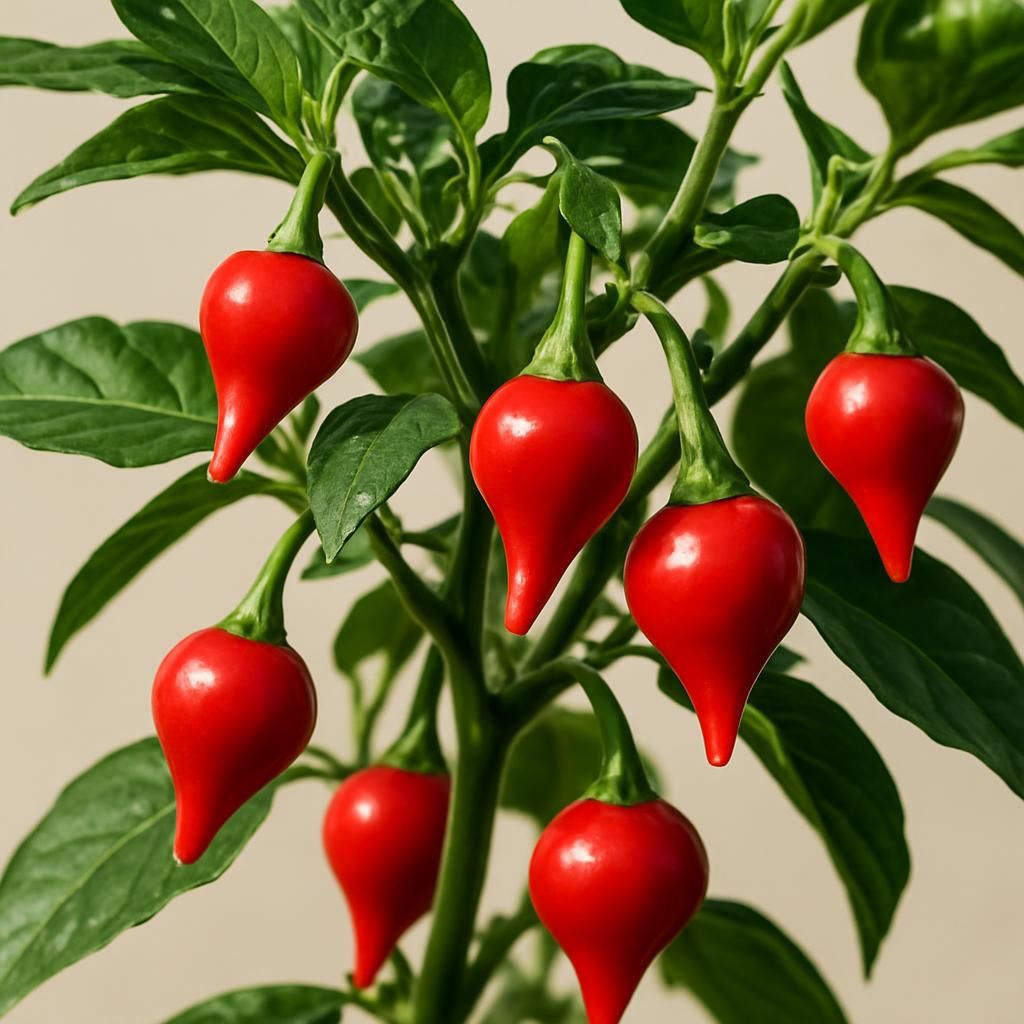
Introduction to Biquinho Pepper (Red)
Biquinho Pepper (Red) is a mild, fruity Capsicum chinense cultivar originating from Brazil, known for its distinctive small, teardrop-shaped fruits that ripen to a vibrant red. With a Scoville heat unit range of 500–1,000, it delivers gentle warmth without overwhelming spiciness, making it ideal for fresh eating, pickling, and garnishing. The plant forms a compact, bushy habit reaching 18–24 inches in height, producing heavy clusters of peppers that hang like small cherries.
Gardeners appreciate Biquinho Pepper (Red) for its early maturity (65–75 days from transplant), reliable productivity, and ornamental value. The glossy red fruits are often compared to Cherry Tomato in appearance but offer a unique sweet-tart flavor profile. Commercial small farms value its high market demand in specialty produce and its suitability for container production and vertical growing systems.
Botanical Profile of Biquinho Pepper (Red)
Biquinho Pepper (Red) belongs to the Solanaceae family and is classified within the species Capsicum chinense. The plant exhibits a determinate to semi-determinate growth habit with multiple branching stems that support dense foliage. Leaves are ovate, medium-green, and slightly wrinkled with prominent veins. Flowers are small, white with greenish-yellow anthers, and typically self-pollinating, although insect activity enhances fruit set.
The fruit is conical to teardrop-shaped, measuring 1–1.5 inches in length with a smooth, waxy skin that turns from green to bright red at maturity. The thin walls and mild placental heat make the entire fruit edible. Seeds are small, flat, and cream-colored, averaging 120–150 per fruit. The variety shows moderate drought tolerance once established but performs best with consistent moisture and nutrition.
Soil, pH, and Climate Requirements for Biquinho Pepper (Red)
Biquinho Pepper (Red) thrives in well-drained, fertile loam or sandy loam soils rich in organic matter. The root system is relatively shallow, making consistent moisture and good drainage critical to prevent root diseases. Raised beds or containers with high-quality potting mixes amended with compost provide optimal conditions.
| Parameter | Ideal Range | Notes |
|---|---|---|
| Soil Type | Loam / Sandy Loam | Well-drained, high organic matter |
| Soil pH | 6.0 – 6.8 | Slightly acidic to neutral |
| Temperature (Day) | 75–85°F (24–29°C) | Optimal fruit set and growth |
| Temperature (Night) | 60–70°F (15–21°C) | Avoid below 55°F to prevent blossom drop |
| Spacing | 18–24 in (45–60 cm) | Between plants; 24–30 in rows |
| Sunlight | Full sun (6–8+ hours) | Essential for fruit development |
| USDA Zones | 9–11 (or annual in cooler) | Protect from frost; use season extenders |
Step-by-Step Planting & Propagation
Start seeds indoors 8–10 weeks before the last expected frost. Sow seeds ¼ inch deep in sterile seed-starting mix at 80–85°F soil temperature. Germination typically occurs in 7–14 days. Maintain 70–75°F air temperature and provide 14–16 hours of supplemental light daily.
Harden off seedlings for 7–10 days before transplanting. Choose a location with full sun and amend beds with 2–3 inches of well-rotted compost. Transplant after soil temperatures reach at least 65°F, spacing plants 18–24 inches apart in rows 24–30 inches wide. Water thoroughly after planting and apply a light mulch layer to conserve moisture.
Care & Maintenance regimes for Biquinho Pepper (Red)
Consistent care ensures maximum productivity and fruit quality. Biquinho Pepper (Red) responds well to regular feeding and careful pruning to improve airflow and light penetration. Monitor soil moisture closely during flowering and fruiting stages.
| Task | Schedule | Details |
|---|---|---|
| Watering | 1–1.5 inches/week | Deep, even watering; increase during heat waves; avoid overhead wetting |
| Fertilizer | Every 2–3 weeks (transplant–harvest) | Balanced NPK (5-5-5) early; switch to high-phosphorus/potassium (2-5-8) at flowering |
| Pruning | Weekly from week 4 post-transplant | Remove lower leaves, suckers below first fork; pinch tips after 4–5 branches |
Side-dress with aged compost or organic fertilizer mid-season. Maintain mulch depth at 2–3 inches to suppress weeds and stabilize soil temperature. Support plants with stakes or cages if heavy fruit loads cause lodging.
Pests, Diseases & Organic Management
Common pests affecting Biquinho Pepper (Red) include aphids, thrips, and spider mites. Monitor undersides of leaves weekly. Use insecticidal soap, neem oil, or introduce beneficial insects such as ladybugs and lacewings for biological control.
Diseases of concern are bacterial spot, phytophthora blight, and powdery mildew. Practice crop rotation, avoid overhead irrigation, and remove infected plant material promptly. Apply copper-based fungicides or potassium bicarbonate sprays preventively during humid periods. Ensure good airflow through proper spacing and pruning.
Harvesting, Curing & Optimal Storage
Harvest Biquinho Pepper (Red) when fruits reach full red color and firm texture, typically 65–75 days after transplant. Use clean pruners to cut stems, leaving a short peduncle attached. Frequent picking encourages continuous production.
For fresh use, store unwashed peppers in the refrigerator crisper drawer for up to two weeks. For longer preservation, pickle in vinegar brine or dry whole fruits in a dehydrator at 135°F until brittle. Properly dried peppers retain quality for 6–12 months when stored in airtight containers away from light and heat.
Companion Planting for Biquinho Pepper (Red)
Biquinho Pepper (Red) benefits from strategic companion planting. Pair with basil to repel pests and enhance flavor. Marigolds deter nematodes and attract pollinators. Avoid planting near fennel or members of the Brassica family, which may compete for nutrients or attract shared pests.
Other beneficial pairings include onion and garlic for pest deterrence, and low-growing herbs such as oregano that provide ground cover and microclimate moderation. Rotate peppers with legumes such as peas to improve soil nitrogen levels for subsequent plantings.