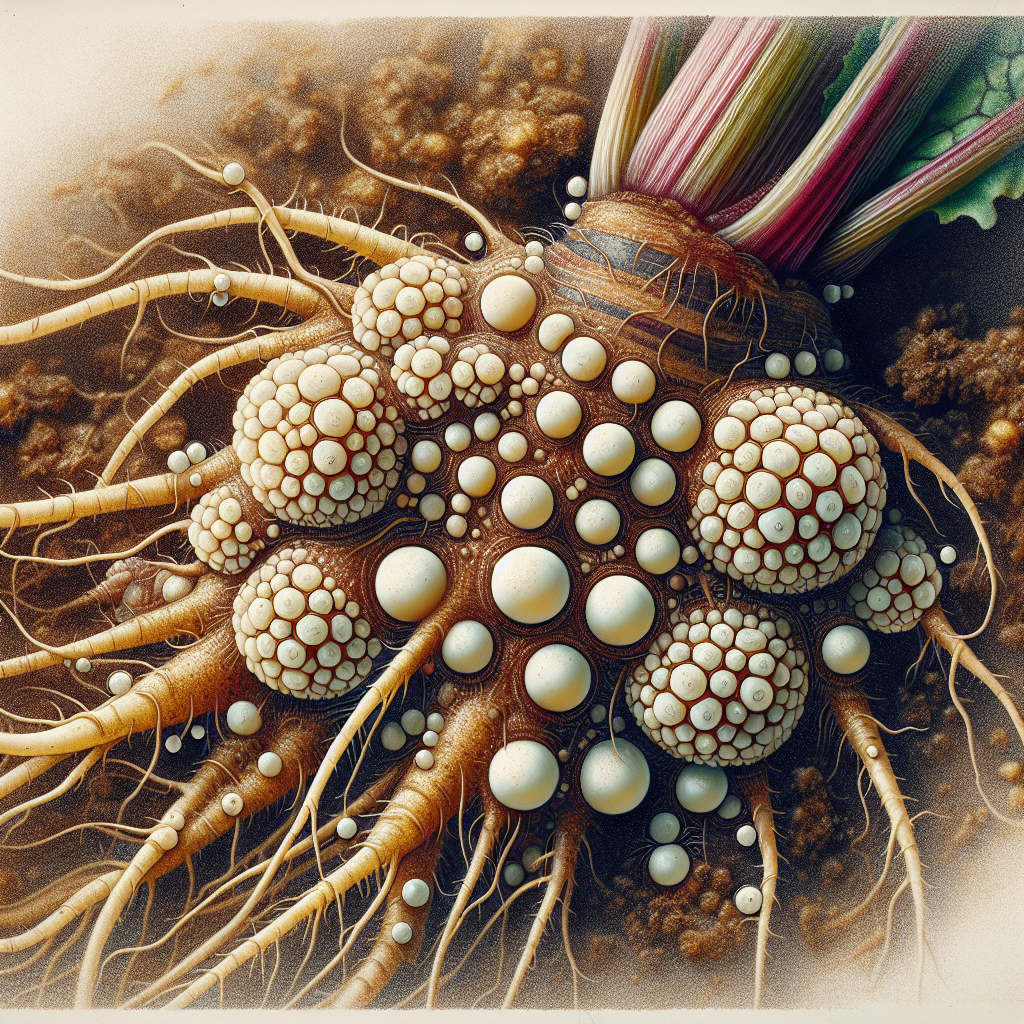
Introduction to beet cyst nematode
Beet cyst nematode, scientifically known as Heterodera schachtii, ranks among the most destructive soilborne pests affecting beets and related crops worldwide. This obligate parasite thrives in temperate regions, targeting the roots of host plants and forming durable cysts that can persist in soil for over a decade. Farmers growing sugar beet, table beets like Detroit Dark Red Beet, or other susceptible crops often face significant yield losses—up to 50% or more in heavily infested fields—due to stunted growth and poor root development.
First identified in the late 19th century in Europe, beet cyst nematode has spread globally through infested soil, equipment, and plant material. It poses a particular threat to sugar beet production, a multi-billion-dollar industry, where even low population levels can render fields uneconomical. Unlike foliar pests, its subterranean nature makes detection challenging until symptoms appear, often too late for simple remedies. This guide equips growers with diagnostic tools, lifecycle knowledge, organic controls, and prevention strategies to manage infestations effectively. For small farms struggling with pest identification, check out Why Misidentifying Plants Costs Small Farms Thousands - And How AI Camera Diagnosis Fixes It Fast.
Understanding beet cyst nematode is crucial because cysts survive harsh conditions, resisting drought, flooding, and many pesticides. Once established, populations build rapidly under favorable hosts, amplifying damage exponentially. Proactive scouting, soil testing, and integrated management are key to minimizing impacts while maintaining organic certification where applicable.
Identifying Symptoms & Damage
Diagnosing beet cyst nematode requires keen observation of above- and below-ground signs, as symptoms mimic nutrient deficiencies or root-knot nematodes. Early foliar indicators include yellowing of older leaves progressing inward, stunted plants with upright, sparse foliage, and wilting under moisture stress despite adequate irrigation. Affected plants often appear in patches, reflecting uneven soil infestation.
Root symptoms are diagnostic: inspect for small, white-to-brown lemon-shaped cysts (0.5-1 mm) clustered on roots, especially near the crown. Excised roots reveal stubby, swollen feeder roots with dark lesions; severe cases show beading or galls. Cross-sections may display necrotic tissue or cavities from female nematodes. Yield impacts vary by population density: 1-5 cysts per gram of soil cause minor losses, while over 20 trigger 30-70% reductions in beet weight and sugar content.
Differentiate from root rots or Fusarium wilt via lab confirmation—soil or root samples assayed for H. schachtii eggs or juveniles. Bioassays using susceptible Swiss chard or mustard seedlings can detect low levels. Damage peaks mid-season, compounding with Cercospora leaf spot, exacerbating losses. Regular monitoring in high-risk fields prevents surprises at harvest.
Lifecycle and Progression of beet cyst nematode
Heterodera schachtii completes 1-3 generations annually, synchronized with cool-season hosts. Dormant cysts hatch second-stage juveniles (J2) upon root exudates from susceptible plants like beets or crucifers. J2 penetrate roots near the tip, migrating intercellularly to vascular tissues, where males and females develop.
Females swell into cysts, protruding from roots, each containing 200-600 eggs. Post-egg-lay, females die, tan cysts harden with a chitinous layer, persisting 10-12 years. Males exit to fertilize females; unfertilized ones produce all-male offspring. Optimal hatching occurs at 15-20°C soil temperatures, slowing above 25°C or below 10°C.
Lifecycle progression: cysts → J2 hatching (2-6 weeks) → root penetration → maturation (4-6 weeks) → cyst formation → dormancy. Multiple cycles amplify populations 10-fold per season on continuous beets. Winter survival relies on cysts; summer droughts suppress activity. Understanding this enables timed interventions, like non-host periods to deplete hatch stimulants.
Environmental Triggers & Risk Factors
Beet cyst nematode flourishes in sandy loam soils (pH 6.5-8.0), moderate temperatures (10-25°C), and 40-70% moisture. High organic matter delays hatching; compacted or waterlogged soils hinder J2 movement. Risk escalates with continuous susceptible cropping—sugar beet, spinach, or kale—building populations geometrically.
Infested irrigation water, machinery, or volunteer plants spread cysts miles. Cool, moist springs trigger mass hatching; drought-stressed crops suffer amplified damage as nematodes aggregate. Alkaline soils favor persistence; acidic amendments suppress. Proximity to infested fields or history of beet culture flags high-risk zones. Climate change may extend ranges northward, per recent studies.
Organic Control & Treatment Plans
Organic management emphasizes cultural tactics, biofumigants, and resistant varieties—no synthetic nematicides allowed. Crop Rotation: Break cycles with 4-6 years of non-hosts like corn, wheat, or clover. Mustard or marigold cover crops release isothiocyanates, suppressing hatching 70-90%.
Resistant Varieties: Plant certified resistant sugar beets (e.g., polygenic tolerance) or trap crops like oilseed radish, stimulating hatch without full reproduction. Soil Solarization: Cover moist soil with clear plastic 4-6 weeks pre-planting, heating to 45°C+ kills J2.
Biologicals: Apply Purpurea ciliata or Paecilomyces lilacinus fungi; chitin amendments boost predators. Weed Control: Eliminate chickweed, shepherd's purse—common hosts. Treatment Plan: 1) Test soil (fall). 2) Rotate/grow mustard (2 years). 3) Solarize if viable. 4) Plant resistant beets. 5) Monitor post-harvest. Integrate with Spring Pest Patrol for holistic defense. Expect 80% reduction after 3 years.
Preventing beet cyst nematode in the Future
Prevention outperforms cure: source clean seed/seedlings, sanitize equipment (steam/hot water), and quarantine new fields. Annual soil testing (extraction assays) tracks populations below 1 cyst/g thresholds. Long rotations (8+ years) with cereals/grasses starve cysts; avoid susceptible volunteers.
GPS-map infested zones for precision planting. Promote biodiversity via polycultures suppressing hatch. Deep plowing buries cysts, reducing contact. Educate workers on hygiene. For enduring success, combine with soil health practices like Soil Health Mastery—healthy soils foster antagonists. Quarantine infested fields indefinitely if severe.
Crops Most Affected by beet cyst nematode
Sugar beet leads vulnerability, with global losses exceeding $100M yearly. Table beet varieties like Detroit Dark Red suffer similarly. Crucifers (cabbage, broccoli, radish Cherry Belle Radish) host nematodes, perpetuating infestations. Spinach, Swiss chard, quinoa amplify risks in rotations. Fewer impacts on solanaceous (tomato, potato) or grasses. Over 50 hosts total; consult extension for regionals.