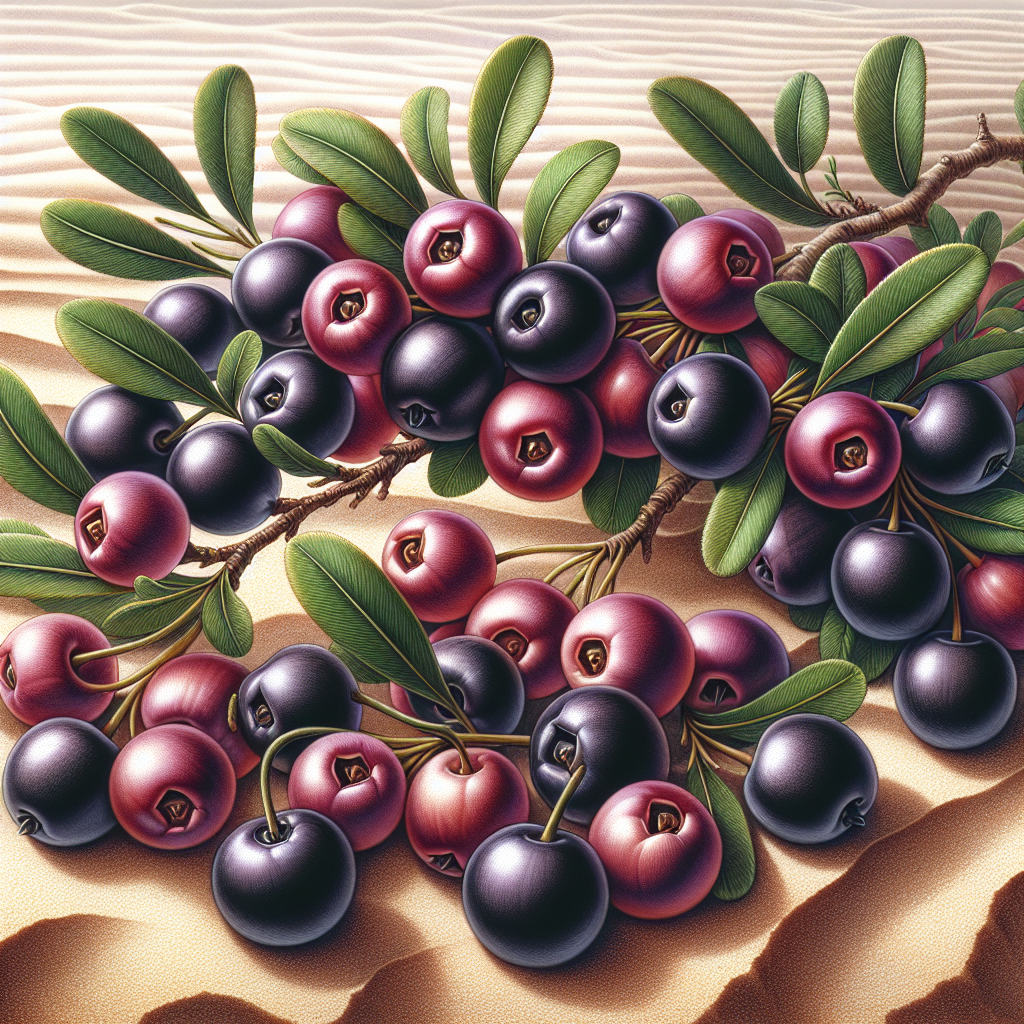
Introduction to Beach Cherry (Eugenia arnhemica)
Beach Cherry, scientifically known as Eugenia arnhemica, is a rugged, salt-tolerant shrub native to the coastal regions of northern Australia, particularly the Arnhem Land area. This underutilized gem belongs to the Myrtaceae family and thrives in sandy, saline soils where many other plants falter. Growing to 2-4 meters tall, it produces clusters of small, glossy red-to-black cherries that burst with a unique tangy-sweet flavor, reminiscent of a mix between cherry and native plum. These berries are not only delicious fresh but also excellent for jams, sauces, and desserts, packed with antioxidants, vitamin C, and potential anti-inflammatory compounds.
What sets Beach Cherry apart is its extraordinary adaptability to harsh coastal conditions—high winds, salt spray, poor drainage, and intense sun. It's a permaculture favorite for windbreaks, hedges, or edible landscapes, attracting native birds and pollinators while requiring minimal intervention once established. For small farms or home gardens in USDA zones 9-11 or equivalent subtropical climates, Beach Cherry offers reliable yields with low water needs, making it a smart choice amid climate challenges. Guava (crop) shares similar tropical traits but lacks the extreme salt tolerance of this Aussie native. This comprehensive guide equips growers with professional strategies to maximize productivity, drawing from botanical research and field trials in arid coastal zones.
Botanical Profile of Beach Cherry (Eugenia arnhemica)
Eugenia arnhemica is an evergreen shrub or small tree, typically reaching 2-5 meters in height and 2-3 meters wide, with a dense, rounded canopy. Leaves are opposite, lanceolate, 3-7 cm long, leathery, and dark green with prominent veins, providing year-round shade and wind protection. New growth flushes coppery-red, adding ornamental appeal. Flowers appear in spring-summer as small, white, fragrant clusters (panicles) that draw bees and butterflies, leading to fruit set in late summer to autumn.
Fruits are drupes, 1-2 cm diameter, starting green, ripening to glossy crimson then deep purple-black. Each contains a single hard seed, with edible flesh offering a sweet-tart profile (Brix 12-18) and subtle saltiness from its native habitat. Roots are shallow and fibrous, aiding drought tolerance but sensitive to waterlogging. As a dioecious or sub-dioecious species, plant multiple for cross-pollination, though self-fertile cultivars exist. Phenologically, it's photoperiod neutral but heat-loving, with peak growth at 25-35°C. In cultivation, it mirrors Mango (crop) in fruit development but excels in marginal soils. Hardiness: frost tender below -2°C, but recovers from light damage.
Soil, pH, and Climate Requirements for Beach Cherry (Eugenia arnhemica)
Beach Cherry demands well-drained, sandy or loamy soils mimicking its beach dune origins—avoid heavy clays to prevent root rot. Optimal pH is 5.5-7.5, tolerating mildly alkaline (up to 8.5) and saline conditions (EC >4 dS/m), outperforming many fruits in coastal spray zones. Incorporate 20-30% coarse sand or gravel for aeration; organic matter like compost boosts microbes without sogginess.
Climatically, it flourishes in hot, humid subtropics (Köppen Aw/As) with annual rainfall 800-1500 mm, but survives on 500 mm with irrigation. Full sun (6+ hours) is essential; partial shade reduces yields. Temperatures: thrives 18-38°C, tolerates brief dips to 5°C but not prolonged frost. Wind-resistant, it's ideal for exposed sites. Drought tolerance builds after year 2, needing 500-800 mm equivalent water annually. In cooler climates, use microclimates or containers. Read Why Summer Heatwaves Are Silently Killing Small Farm Yields - And 7 Organic Strategies to Fight Back for heat management tips applicable here. Mulch with seashells or pine bark to mimic habitat and suppress weeds.
Step-by-Step Planting & Propagation
Propagation
Seed propagation is straightforward: collect ripe berries, extract seeds, wash off pulp, and sow fresh in trays of sandy seed-raising mix. Germination occurs in 2-6 weeks at 25-30°C under mist. Scarify hard seeds or use gibberellic acid for 80% rates. Semi-hardwood cuttings (10-15 cm) in summer, dipped in 3000 ppm IBA, root in 4-8 weeks under intermittent mist. Grafting onto Eugenia rootstocks enhances vigor.
Planting
Plant in early spring or wet season. Site prep: dig 50x50 cm holes, amend with gypsum for sodic soils. Space 3-4 m apart for hedges, 5 m for trees. Water deeply post-planting (20-30 L/tree), then mulch 10 cm thick. Stake against wind. For pots, use 45-60 cm containers with excellent drainage. Initial fertilizer: 10-10-10 NPK at 50 g/plant, avoiding high nitrogen to prevent soft growth. Expect first fruits in 2-4 years from seed, 1-2 from cuttings.
Care & Maintenance regimes for Beach Cherry (Eugenia arnhemica)
Water young plants weekly (20 L), tapering to fortnightly; mature trees need none in rainy seasons. Fertilize thrice yearly: spring (high N), summer (balanced), autumn (high K for fruit). Use slow-release 8-4-12 with micronutrients; foliar seaweed extracts boost resilience. Prune post-harvest: remove deadwood, shape for airflow, tip-prune to encourage bushiness. Thin crowded fruits for size.
Irrigation: drip systems ideal, avoiding wet foliage. Mulch annually to retain moisture and cool roots. Monitor for nutrient deficiencies—yellow leaves signal iron in alkaline soils; apply chelated Fe. In sandy sites, add compost yearly. For container grows, repot every 2-3 years. Pest scouting weekly; hand-pull weeds. Yields: 5-15 kg/tree at maturity. Companion with nitrogen-fixers like Clover (crop) for soil health.
Pests, Diseases & Organic Management
Common pests include aphids, scale insects, and fruit flies; monitor undersides and tips. Blast with water, apply neem oil (2 ml/L) weekly, or introduce ladybirds. Birds love berries—use netting. Diseases: rare, but root rot from overwatering (Pythium/Phytophthora); ensure drainage, use biofungicides like Trichoderma. Leaf spots (Alternaria) treated with copper sprays. Organic IPM: yellow sticky traps, companion repellents like Marigold (crop), and beneficial nematodes for soil pests. Avoid overhead watering. Check Why 90% of Small Farms Fail at Pest Management - And 8 Organic Fixes That Actually Work for advanced strategies. Healthy plants resist most issues.
Harvesting, Curing & Optimal Storage
Harvest when fully colored (black-purple), firm but yielding slightly—twist or clip clusters. Peak season: 3-4 months, multiple picks. Yields peak at 10-20 kg/mature tree. Fresh berries last 1-2 weeks refrigerated; freeze whole or puree for 6-12 months. For drying: halve, dehydrate at 50°C 8-12 hours. Jams: cook with sugar/pectin (yield 50% weight). Process promptly to avoid fermentation. Store dried in airtight jars (6-12 months cool/dark). Market as 'native superfruit' for premium pricing.
Companion Planting for Beach Cherry (Eugenia arnhemica)
Beach Cherry pairs well with salt-tolerant companions enhancing biodiversity and soil. Underplant with Thai Basil (crop) for pest repulsion and aroma. Nitrogen-fixers like pigeon pea improve fertility. Nasturtium (crop) traps aphids, protecting cherries. Avoid water-hungry crops; pair with Yarrow (crop) for pollinators. Hedges with Thyme (crop) deter insects. In permaculture guilds: tall cherry shades low growers like sweet potato. Benefits: reduced pests, better pollination, microclimate moderation. See Why Companion Planting Feels Like Guesswork for Small Farms - And How AI Makes It Foolproof for optimization.