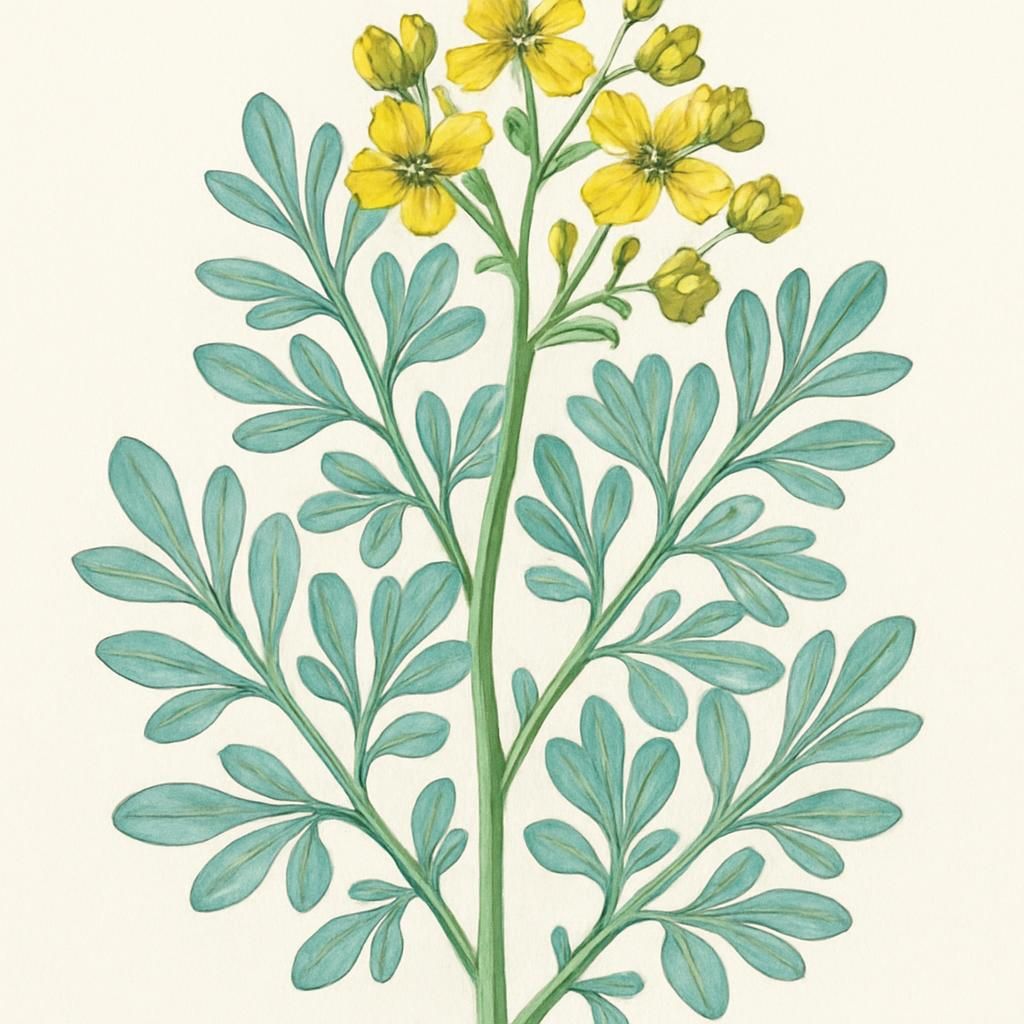
Introduction to Rue
Rue (Ruta graveolens) is an ancient Mediterranean herb valued for its pungent aroma, bitter flavor, and historical use in traditional medicine and pest control. Known for its blue-green foliage and small yellow flowers, rue has been cultivated since Roman times and remains popular in organic gardens for its ability to deter insects. While its strong scent and toxicity require careful handling, rue is a low-maintenance perennial that rewards growers with years of utility when planted correctly.
Botanical Profile of Rue
Rue belongs to the Rutaceae family and is a woody-based perennial that typically reaches 2–3 feet in height and spread. Its deeply divided, glaucous leaves emit a distinctive, sharp odor when crushed. Small, four-petaled yellow flowers appear in clusters during summer, followed by small seed capsules. The plant contains alkaloids such as rutin and is toxic if ingested in quantity, making it unsuitable for direct consumption without expert guidance.
Soil, pH, and Climate Requirements for Rue
Rue performs best in poor to moderately fertile, sharply drained soils. It is extremely drought-tolerant once established and intolerant of waterlogging. Ideal conditions are summarized below:
| Parameter | Ideal Range | Notes |
|---|---|---|
| Soil Type | Sandy loam or rocky | Excellent drainage essential |
| Soil pH | 6.5 – 8.0 | Slightly alkaline preferred |
| Temperature | 15–30 °C daytime | Hardy to −10 °C; protect young plants |
| Sunlight | Full sun (minimum 6 hrs) | More sun intensifies aroma |
| Spacing | 45–60 cm between plants | Rows 60–75 cm apart |
| USDA Zones | 5–9 | Mulch in colder zones for winter protection |
Step-by-Step Planting & Propagation
- Choose a site with full sun and excellent drainage; amend heavy clay with grit or raised beds.
- Sow seeds indoors 6–8 weeks before last frost or direct sow after soil warms above 15 °C.
- Lightly press seeds into moist seed-starting mix; germination occurs in 10–21 days at 18–22 °C.
- Transplant seedlings when they have 4–6 true leaves, spacing 45–60 cm apart.
- Alternatively, take 10–15 cm semi-ripe cuttings in late spring or divide established clumps in early spring.
Care & Maintenance regimes for Rue
Rue requires minimal intervention once established. The following table outlines recommended seasonal care:
| Season | Watering Schedule | Fertilizer | Pruning Schedule |
|---|---|---|---|
| Spring | Water deeply once weekly until established | Apply balanced organic fertilizer once | Pinch tips to encourage bushiness |
| Summer | Water only during prolonged drought | None required | Deadhead flowers after bloom |
| Autumn | Reduce watering; allow soil to dry | Light compost top-dress | Cut back by one-third to shape |
| Winter | Minimal; protect from excess rain | None | Remove damaged stems in late winter |
Pests, Diseases & Organic Management
Rue is generally pest-resistant due to its aromatic oils, but may occasionally host Aphids or suffer from root rot in poorly drained soils. Monitor for Spider mites in very dry conditions. Organic controls include strong water sprays, neem oil, and encouraging beneficial insects. Avoid overwatering to prevent fungal issues.
Harvesting, Curing & Optimal Storage
Harvest young leaves and stems in the morning once plants are 30 cm tall. Use gloves to avoid skin irritation. Dry leaves in a shaded, well-ventilated area until crisp, then store in airtight glass jars away from light. Dried rue retains potency for up to one year. Fresh leaves can be used immediately or frozen in ice cubes for later use.
Companion Planting for Rue
Rue repels Cabbage worms, flea beetles, and some nematodes, making it an excellent companion for brassicas, roses, and Tomato. Avoid planting near Basil or sage, as rue’s strong oils may inhibit their growth. Use rue as a border plant in vegetable gardens or near fruit trees for natural pest deterrence.