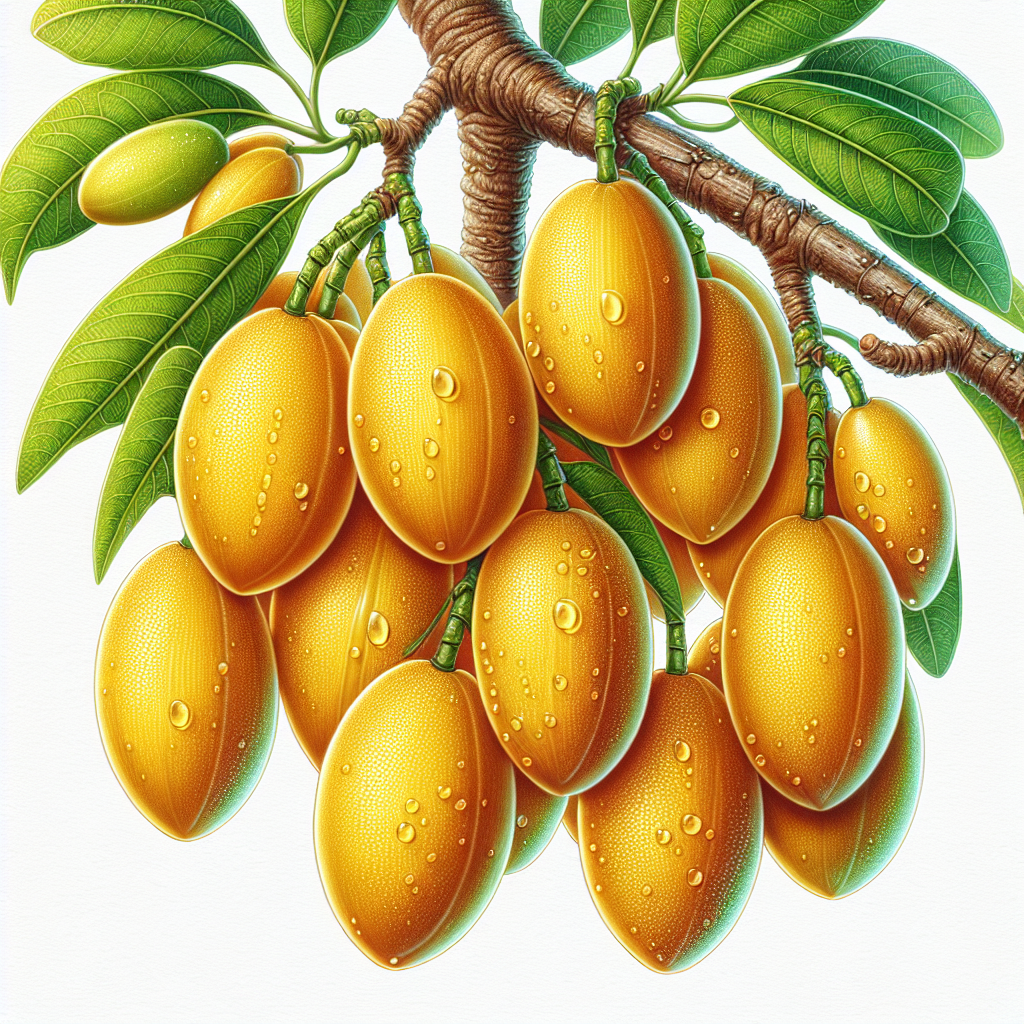
Introduction to Ambarella (Kedondong)
Ambarella (Kedondong), scientifically known as Spondias dulcis, is a versatile tropical fruit tree celebrated for its crisp, juicy fruits with a unique tangy-sweet flavor profile. Commonly referred to as June plum, Otaheite apple, or mak plu in various regions, this crop originates from Malesia and the Pacific Islands, now widely cultivated across Southeast Asia, India, the Caribbean, and tropical Americas. The tree produces clusters of oval-shaped, green-to-yellow fruits averaging 5-10 cm in length, rich in vitamin C, iron, and antioxidants, making them ideal for fresh eating, culinary uses like rujak salads, sambals, pickles, and refreshing juices.
Farmers value Ambarella for its rapid growth—reaching fruit-bearing age in just 3-4 years—and high productivity, with mature trees yielding 100-300 kg of fruit annually. It's drought-tolerant once established, wind-resistant, and serves multiple purposes: fruit production, shade tree, windbreak, and even livestock fodder from leaves. In agroforestry systems, it integrates well with other crops, enhancing biodiversity and soil health. However, success hinges on matching its tropical preferences for climate, soil, and care. This comprehensive guide draws from botanical expertise, field trials, and agricultural data to deliver professional-grade advice for home gardeners, smallholders, and commercial growers aiming for bountiful harvests. Whether you're in humid lowlands or experimenting in subtropical zones, mastering Ambarella cultivation can diversify your farm's income streams with minimal inputs.
Botanical Profile of Ambarella (Kedondong)
Ambarella belongs to the Anacardiaceae family, closely related to mango and cashew. It's an evergreen to semi-deciduous tree growing 10-20 meters tall with a broad, spreading canopy up to 12 meters wide. The compound leaves are pinnate, 20-60 cm long, with 9-25 leaflets that are glossy green, turning reddish before shedding in dry seasons. Flowers are small, fragrant, polygamous (hermaphroditic and male on the same tree), borne in large terminal panicles up to 30 cm long, appearing in flushes during the rainy season.
Fruits develop parthenocarpically (seedless) or with a single large seed, ripening 60-90 days post-flowering. Skin is waxy green, turning golden-yellow at maturity; flesh is translucent, fibrous yet crisp, with a pineapple-mango-citrus taste. Nutritionally, 100g provides 35 kcal, 1g protein, 8g carbs, 67mg vitamin C (112% DV), and minerals like potassium and phosphorus. Varieties include Thai types (smaller, sweeter), Filipino 'Siniguelas' (larger), and dwarf cultivars like 'Golden Dome' for smaller spaces. Root system is deep-taprooted with lateral spread, aiding drought resistance but requiring care during transplanting. Phenology: vegetative growth year-round in tropics, fruiting 1-2 times annually, peak June-August (hence 'June plum'). Pollinators include bees and flies; self-fertile but cross-pollination boosts yields.
Soil, pH, and Climate Requirements for Ambarella (Kedondong)
Ambarella excels in well-drained, fertile loamy soils but adapts to sands, clays, and even marginal lands with pH 5.5-7.5 (slightly acidic to neutral optimal). Avoid waterlogged sites to prevent root rot. Incorporate 20-30% organic matter like compost or gliricidia mulch pre-planting for microbial activity and nutrient retention. Test soil; amend heavy clays with gypsum (2-5 tons/ha) and sands with manure (10-20 kg/tree pit).
Climatically, it's a true tropical: USDA zones 10b-12, thriving at 24-32°C daytime, not below 10°C (growth halts, frost kills young trees). Annual rainfall 1200-2500 mm evenly distributed; supplement dry spells with drip irrigation (20-40 L/tree/week). Humidity >60% favors flowering; full sun (6-8+ hours) essential, tolerating partial shade initially. Windbreaks recommended in exposed areas. For subtropical trials, protect from chills using overhead covers. Read Why Summer Heatwaves Are Silently Killing Small Farm Yields - And 7 Organic Strategies to Fight Back for heat management tips applicable to Ambarella.
Step-by-Step Planting & Propagation
Propagation: Seeds germinate 2-4 weeks (viability 2-3 months); soak 24 hours, sow 2 cm deep in 50% sand:50% compost at 25-30°C. Yield 70-90% success. Grafting (veneer/cleft on 1-2 yr rootstock) produces true-to-type, earlier-fruiting trees (6-12 months). Air-layering (marcotting) for dwarfs: girdle branch, apply rooting hormone, wrap sphagnum, roots in 6-8 weeks.
Site Prep: Dig 60x60x60 cm pits, 4-6 m apart (5x5 m for dwarfs), fill with topsoil + 10 kg manure + 200g superphosphate + 100g lime if acidic. Plant at rainy onset; seedlings 30-50 cm tall, grafts 60-80 cm. Stake, mulch 10 cm thick with leaves/coconut husk.
Planting Steps: 1. Water root ball pre-extraction. 2. Place at original depth, spread roots. 3. Firm soil, create basin. 4. Water 20-30 L, mulch. Initial fertilizer: 100g NPK 15-15-15/tree, monthly first year. Prune leader at 1 m for bushy form. Survive rate >95% with care.
Care & Maintenance regimes for Ambarella (Kedondong)
Irrigation: Deep water young trees weekly (50 L), mature biweekly; deficit stress enhances flavor but reduces yield. Drip systems ideal for uniformity.
Fertilization: Annual: 1-2 kg N, 1 kg P, 1.5 kg K/tree split 3x (post-harvest, pre-flower, fruit-set). Foliar micronutrients (Zn, B, Fe) quarterly. Organic: compost 20 kg/tree/yr + pigeon pea green manure.
Pruning: Annual post-harvest: remove dead/crossing branches, thin canopy for light penetration (20-30% removal). Train to central leader or open vase. Height control: top at 4-6 m for harvest ease.
Weeding/Mulching: Keep 1-2 m radius weed-free; mulch conserves moisture, suppresses competitors. Intercrop legumes first 2 yrs.
Monitoring: Track growth (30-50 cm/yr), flowering (prune-induced). Yield builds: yr3 20kg, yr5 100kg+.
Pests, Diseases & Organic Management
Pests: Fruit flies (fruit flies)—bagging clusters at marble stage (kaolin clay or newspaper, 80% control). Aphids and mealybugs—neem oil (2-3 ml/L) sprays weekly. Leaf feeders like caterpillars—Bt kurstaki (5g/L). Bark borers—clear debris, copper fungicide paste wounds.
Diseases: Anthracnose (Colletotrichum)—preventive copper oxychloride pre-rainy. Phytophthora root rot—improve drainage, fosetyl-Al drench. Powdery mildew—sulfur dust. Learn organic fixes in Why 90% of Small Farms Fail at Pest Management - And 8 Organic Fixes That Actually Work.
Integrated Approach: Beneficials: ladybugs, predatory mites. Sanitation: remove fallen fruit. Resistant rootstocks. Threshold: scout weekly, intervene <10% damage.
Harvesting, Curing & Optimal Storage
Harvest at 'tree-ripe' (yellow-green, slight softness, 12-15% Brix) to avoid sap burn. Twist-pull or clip with secateurs; yield 50-150 fruits/tree/cluster. Peak 70-80% drop test. Avoid ground fruits (decay risk).
Curing: Shade-dry 2-3 days at 25°C to reduce latex, improve color. Do not refrigerate green fruits.
Storage: Ripe: 10-15°C, 85-90% RH, 2-4 weeks (ethylene-sensitive). Green: 12-14°C, 3-5 weeks. Market: crate single-layer, ventilate. Process: pickle green (vinegar-salt), juice ripe, dry slices. Postharvest losses <10% with hygiene.
Companion Planting for Ambarella (Kedondong)
Ambarella pairs excellently in polycultures. Nitrogen-fixers: pigeon pea, clover understory for soil fertility. Repellents: marigold, thai basil deter flies/aphids. Shade-tolerants: ginger, pineapple groundcover suppress weeds. Windbreaks: with coconut, banana. Avoid nitrogen-hoggers like corn. Benefits: 20-30% pest reduction, moisture retention, microclimate moderation. Space: intercrop 2-3 m radius yr1-3. See Why Companion Planting Feels Like Guesswork for Small Farms - And How AI Makes It Foolproof for strategies.