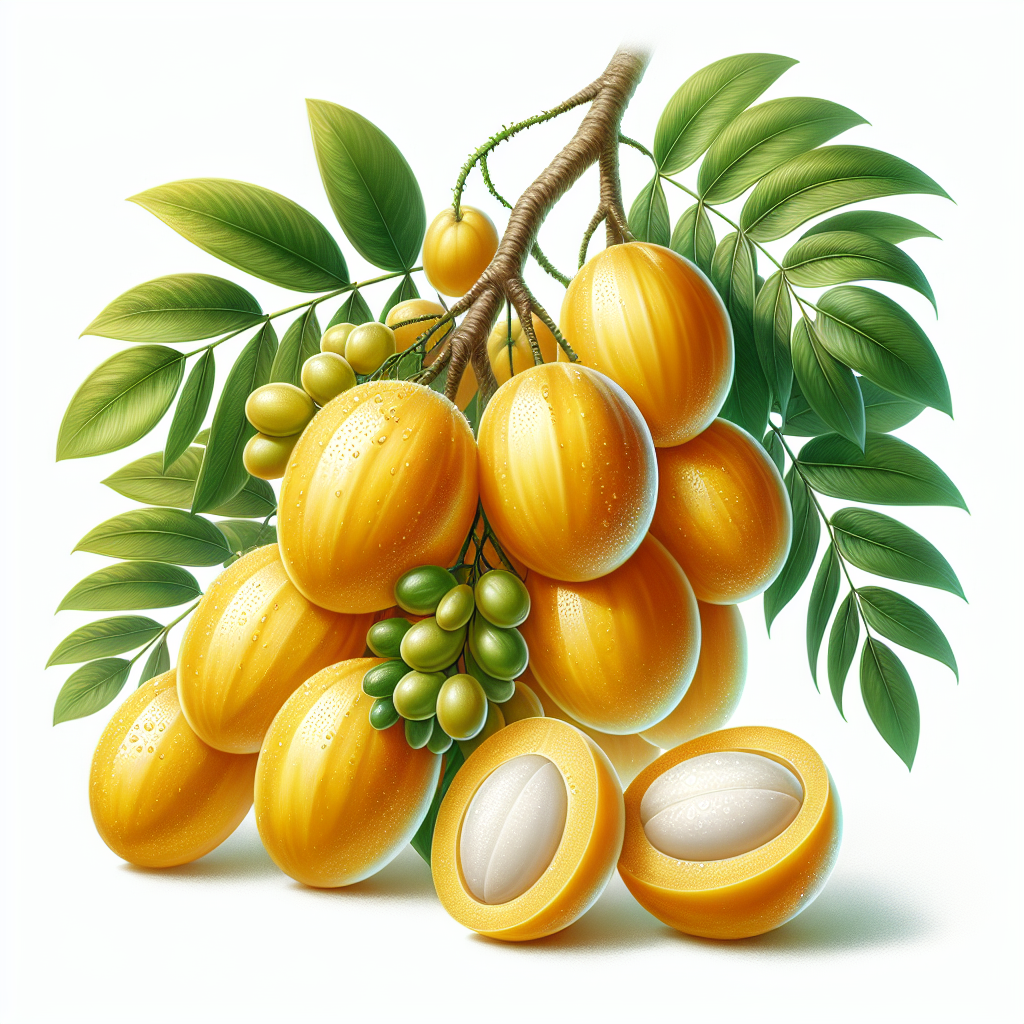
Introduction to Abiu (Gray)
Abiu (Gray), scientifically known as Pouteria caimito, is an exquisite tropical fruit tree that has captivated growers with its luscious, sweet fruits resembling a natural custard. Originating from the lush Amazon basin of South America, particularly Peru and Brazil, this evergreen tree has gained popularity in tropical and subtropical regions worldwide for its low-maintenance nature and high productivity. The fruits are oval to spherical, 5-10 cm long, with smooth, glossy yellow skin when ripe and translucent white, jelly-like flesh that melts in the mouth without the need for peeling. Each fruit contains 1-4 large seeds, and the flavor is a delightful blend of caramel, vanilla, and pear-like sweetness.
Why grow Abiu (Gray)? Beyond its delectable taste, the fruit is packed with antioxidants, fiber, and essential vitamins, making it a superfood for fresh eating, smoothies, desserts, and even ice cream production. Mature trees can yield 100-300 fruits per season, offering substantial returns for small farms and home orchards. It's particularly suited for permaculture systems due to its shade tolerance and nitrogen-fixing associations. For those in USDA zones 10-12 or equivalent, Abiu represents a resilient, profitable crop in the era of climate-resilient agriculture. Mango (crop) growers often pair it successfully in mixed orchards.
This comprehensive guide draws from decades of botanical research and field trials, providing actionable steps from propagation to harvest. Whether you're a seasoned horticulturist or a novice tropical farmer, mastering Abiu cultivation can diversify your yields and enhance farm biodiversity.
Botanical Profile of Abiu (Gray)
Abiu (Gray) belongs to the Sapotaceae family, closely related to mamey sapote and canistel. The tree grows to 10-20 meters tall in its natural habitat, though grafted cultivars are often dwarfed to 6-8 meters for easier management. It features a straight trunk with smooth, grayish bark and a dense, pyramidal canopy of elliptical leaves, 10-25 cm long, that are glossy green above and slightly fuzzy underneath. New leaves emerge bronze-red, providing ornamental appeal.
Flowers are small, greenish-white, and hermaphroditic, clustered along branchlets in axillary panicles. Pollination is primarily by bees and other insects, with peak flowering from April to June in the Southern Hemisphere. Fruits mature 4-6 months later, typically November to February. The 'Gray' designation refers to select cultivars with superior fruit quality, thinner skin, and higher yields compared to wild types.
Nutritionally, 100g of ripe Abiu fruit offers approximately 50 calories, 12g carbohydrates, 1.5g protein, and negligible fat. It's exceptionally high in vitamin C (up to 40mg/100g) and beta-carotene, supporting immune health and vision. Seeds yield a buttery oil used in cosmetics. Botanically, Abiu's latex-rich sap deters some pests, contributing to its relative disease resistance.
Soil, pH, and Climate Requirements for Abiu (Gray)
Abiu (Gray) demands well-drained, fertile soils rich in organic matter. Loamy or sandy loam with 20-30% organic content is ideal; heavy clays lead to root rot. Soil depth should exceed 1.5 meters to accommodate the deep taproot system. Incorporate compost or aged manure at 10-20 kg per planting hole to boost microbial activity.
Optimal pH ranges from 5.5-7.0, slightly acidic to neutral. Test soil annually and amend with lime if below 5.5 or sulfur if above 7.5. Abiu tolerates poor soils better than many tropicals but responds dramatically to mulching with leaf litter or wood chips to retain moisture and suppress weeds.
Climatically, Abiu thrives in equatorial tropics: temperatures of 24-32°C (75-90°F) daytime, not dropping below 15°C (59°F) at night. Annual rainfall of 1500-2500 mm evenly distributed is perfect; supplement with drip irrigation during dry spells (less than 3 months). It withstands short droughts once established but hates waterlogging. Humidity above 70% prevents fruit cracking. In marginal areas, use frost protection like overhead sprinklers. For heatwave resilience, see Why Summer Heatwaves Are Silently Killing Small Farm Yields - And 7 Organic Strategies to Fight Back. Windbreaks are essential in exposed sites, as young trees are brittle.
Step-by-Step Planting & Propagation
Propagation: Seed propagation is straightforward but results in variable offspring; use fresh seeds from ripe fruits, which germinate in 2-4 weeks at 25-30°C. Scarify by nicking the hard seed coat and soak in water 24 hours. For uniformity, graft onto seedling rootstock using cleft or veneer methods—'Gray' scions yield in 3-4 years versus 7-10 for seedlings.
Site Preparation: Select full sun (6-8 hours daily) with wind protection. Space trees 8-10m apart (100-150 trees/ha). Dig holes 60x60x60 cm, fill with topsoil + 20kg compost + 500g rock phosphate.
Planting: Plant during rainy season. Place graft union 10cm above soil. Water deeply immediately after.
Initial Care: Stake if needed. Mulch 10cm thick to 2m radius. Irrigate weekly until established (6 months).
Air-layering works for mature trees: girdle branches in rainy season, apply rooting hormone, bag with moist sphagnum—roots form in 2-3 months. Maintain 80% humidity for success.
Care & Maintenance regimes for Abiu (Gray)
Watering: Deep, infrequent irrigation: 40-60L/week per tree post-planting, reducing as roots expand. Mature trees need 1000-2000L/month in dry periods.
Fertilization: Balanced NPK 10-10-10 at 200g/tree/year 1, increasing 50% annually to 1kg by year 5. Foliar sprays of micronutrients (Zn, B, Mn) bi-monthly during flowering. Organic option: compost tea + chicken manure.
Pruning: Annual light pruning post-harvest: remove deadwood, watersprouts, and crowded branches for airflow. Train to central leader for dwarfs.
Weed Control: Mulch perpetually; slash mow understory. Avoid herbicides near roots.
Pest scouting weekly; interplant with legumes for soil health.
Pests, Diseases & Organic Management
Abiu is relatively pest-resistant, but vigilance is key. Common issues:
- Aphids Aphids (pest): Cluster on new growth. Blast with water; neem oil 1-2% weekly.
- Scale insects Scale insects (pest): On branches. Prune infested parts; horticultural oil.
- Fruit flies Fruit flies (pest): Bait traps with protein hydrolysate + malathion (organic: methyl eugenol).
Diseases:
- Anthracnose Anthracnose (disease): Wet weather leaf spots. Copper fungicide, improve airflow.
- Root rot Root rot (disease): Overwatering. Solarize soil; Trichoderma drench.
Organic IPM: Introduce predatory beetles, ladybugs. Companion with marigolds. For broader strategies, refer to Why 90% of Small Farms Fail at Pest Management - And 8 Organic Fixes That Actually Work. Monitor for Mealybugs (pest) on fruits.
Harvesting, Curing & Optimal Storage
Harvest when skin turns vivid yellow and fruits detach easily (120-150 days post-bloom). Yield peaks at 10-15 years. Twist or clip with secateurs, avoiding latex sap on skin.
Fruits don't ripen well off-tree; harvest mature green for local markets. Store at 13-15°C, 85-90% RH for 3-4 weeks; room temp ripens in 3-5 days. For export, wax and refrigerate at 10°C.
Postharvest: Dip in 1% calcium hypochlorite. Process into pulp for freezing (yields 60% recoverable).
Companion Planting for Abiu (Gray)
Abiu's canopy suits understory planting. Excellent companions:
- Banana Banana (crop): Shade tolerance, windbreak.
- Pineapple Pineapple (crop): Groundcover, suppresses weeds.
- Papaya Papaya (crop): Fast yield, nitrogen accumulator.
- Legumes like pigeon pea: Fix N, attract pollinators.
Avoid water-hungry crops. Interplant Guava (crop) for pest diversion. See Why Companion Planting Feels Like Guesswork for Small Farms - And How AI Makes It Foolproof for optimization.