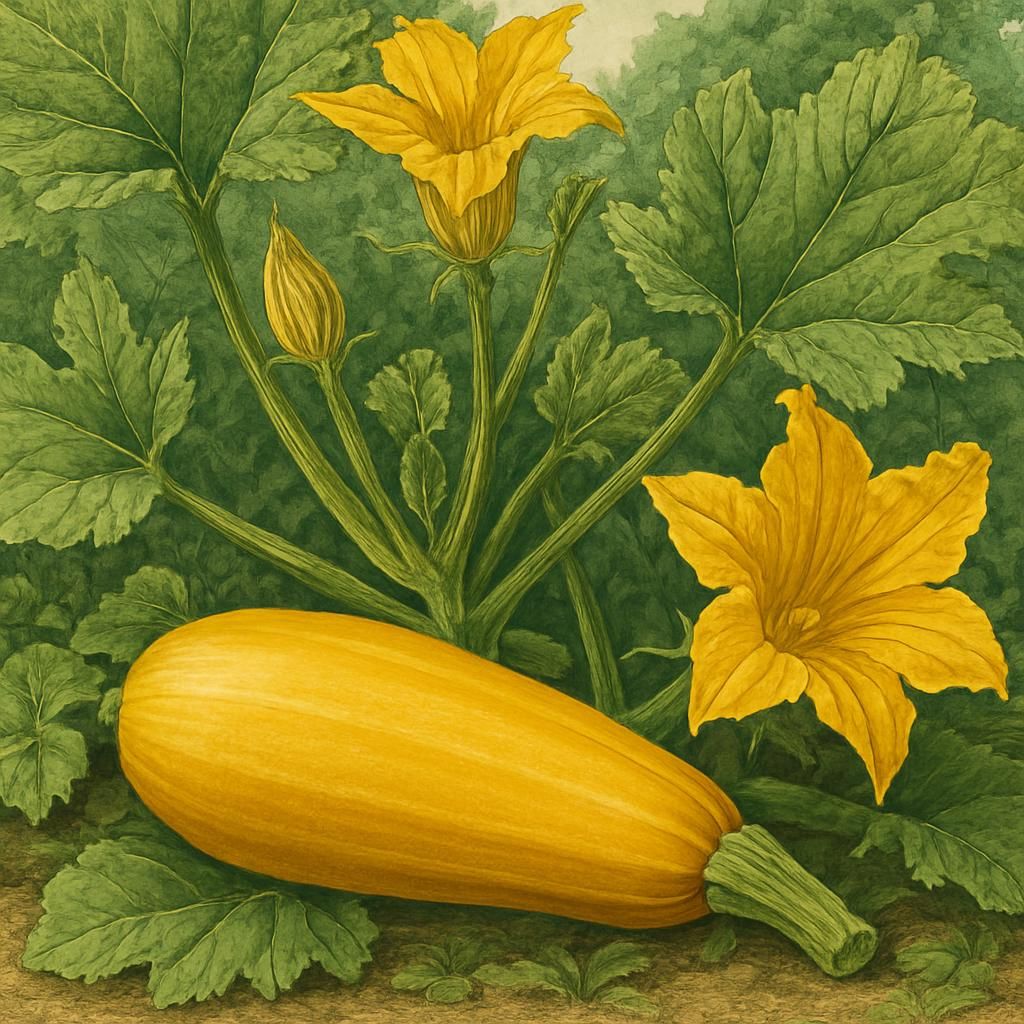
Introduction to Zucchini (Golden Glory)
Zucchini, scientifically known as Cucurbita pepo, is a popular summer squash variety grown for its ease of cultivation and delicious fruit. The 'Golden Glory' variety is particularly noted for its striking golden yellow color, which not only makes it an attractive addition to any garden but also a nutritious and tasty option in the kitchen. This easy-to-grow crop is perfect for home gardens as well as larger agricultural operations.
Botanical Profile of Zucchini (Golden Glory)
Golden Glory zucchini belongs to the Cucurbitaceae family, sharing its lineage with other squashes like Butternut Squash and Pumpkin. It is an annual plant producing large, lobed leaves and hollow stems. The plant is monoecious, bearing both male and female flowers, which encourages prolific fruiting with adequate pollination.
Soil, pH, and Climate Requirements for Zucchini (Golden Glory)
Golden Glory zucchini thrives in warm climates and well-draining, fertile soils rich in organic matter. Understanding the ideal growing conditions is crucial for maximizing yield and quality.
| Condition | Ideal Range |
|---|---|
| Soil Type | Well-draining loam |
| Soil pH | 6.0 - 7.5 |
| Temperature | 65-85°F (18-29°C) |
| Moisture | Moderate, consistent |
Step-by-Step Planting & Propagation
Zucchini is usually propagated from seeds. Here's a step-by-step guide to ensure healthy growth:
- Seed Selection: Purchase high-quality Golden Glory seeds from a reputable supplier.
- Sowing: Direct sow seeds outdoors after the last frost date. Sow seeds 1 inch deep and 24-36 inches apart.
- Germination: Zucchini seeds typically germinate within 7-14 days in warm soil.
- Transplanting: If started indoors, harden plants off for about a week before transplanting to avoid transplant shock.
Care & Maintenance Regimes for Zucchini (Golden Glory)
Proper care and maintenance play a pivotal role in the successful cultivation of Golden Glory zucchini.
| Task | Frequency |
|---|---|
| Watering | 1-2 inches per week, depending on rainfall |
| Fertilizing | Apply balanced fertilizer every 4-6 weeks |
| Pruning | Remove dead or diseased leaves regularly |
Watering should be consistent but avoid overhead irrigation to reduce the risk of diseases. Fertilize with a balanced NPK formula to support plant growth and fruit production.
Pests, Diseases & Organic Management
Golden Glory zucchini, like other cucurbits, is susceptible to various pests and diseases. Notable threats include Aphids, Spider Mites, and Squash Bugs. Diseases like Powdery Mildew and Bacterial Wilt can also affect the plant.
Organic management strategies include:
- Integrated Pest Management (IPM): Use beneficial insects and natural predators to control pest populations.
- Neem Oil: Apply neem oil as a natural pesticide to deter pests.
- Crop Rotation: Practice crop rotation with non-cucurbit crops to break disease and pest cycles. Read more about crop rotation in our Crop Diseases Under the Microscope.
Harvesting, Curing & Optimal Storage
Harvest zucchini when the fruits are about 6-8 inches long for the best texture and flavor. Use a sharp knife to cut the fruit from the vine, leaving a short stem intact to prolong storage life. Store harvested zucchini in a cool, dry place or refrigerate and use within a few days for peak freshness.
Companion Planting for Zucchini (Golden Glory)
Companion planting can enhance the growth and protect zucchini from pests. Consider growing Golden Glory alongside:
- Nasturtium: Acts as a trap crop for aphids.
- Marigold: Deters nematodes and encourages pollinators.
- Herbs like Basil: Improve flavor and deter pests.
Explore more on companion planting in our blog on Summer Companion Planting: 10 Organic Pairings to Boost Small Farm Resilience.