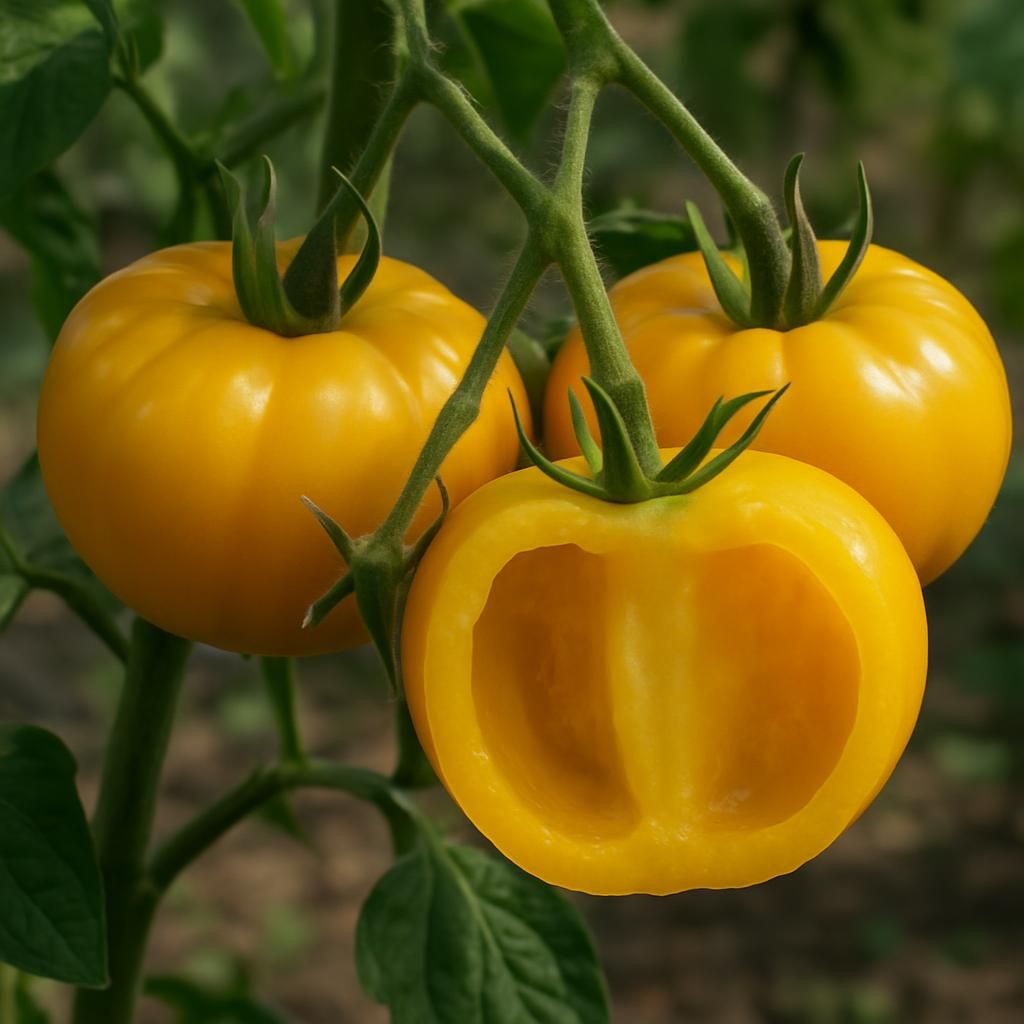
Introduction to Yellow Stuffer Tomato
Yellow Stuffer Tomato stands out among heirloom varieties for its distinctive hollow interior and sturdy walls, making it a favorite for gourmet kitchens and market growers seeking unique produce. Developed as a specialized stuffing tomato, the variety produces large, blocky yellow fruits that hold their shape exceptionally well when baked or grilled. Growers appreciate its moderate productivity and attractive color that appeals to chefs and home cooks alike. With careful attention to cultural practices, Yellow Stuffer Tomato delivers consistent results across a wide range of climates.
Botanical Profile of Yellow Stuffer Tomato
Yellow Stuffer Tomato belongs to the Solanaceae family and shares the same botanical characteristics as other cultivated tomatoes. Plants are indeterminate, producing continuous flushes of fruit throughout the growing season when supported properly. The foliage is typical of tomato plants with compound leaves that provide good coverage while allowing airflow. Fruits average 8–12 ounces with thick, meaty walls surrounding a spacious seed cavity, giving the variety its signature stuffing capability. The yellow coloration results from reduced lycopene and elevated carotenoid pigments.
Soil, pH, and Climate Requirements for Yellow Stuffer Tomato
Successful cultivation begins with understanding optimal environmental parameters. The following table summarizes ideal growing conditions:
| Parameter | Ideal Range | Notes |
|---|---|---|
| Soil Type | Loamy, well-drained | High organic matter improves structure |
| Soil pH | 6.2–6.8 | Avoid below 6.0 to prevent nutrient lockup |
| Temperature (Day) | 70–85°F (21–29°C) | Optimal fruit set occurs in this range |
| Temperature (Night) | 60–70°F (15–21°C) | Below 55°F risks blossom drop |
| Sunlight | Full sun, 8+ hours | Consistent light improves flavor |
| Spacing | 24–36 inches between plants | Rows 4–5 feet apart for airflow |
| Frost Sensitivity | Tender | Transplant after last spring frost |
Step-by-Step Planting & Propagation
Start seeds indoors 6–8 weeks before the last expected frost. Sow seeds ¼ inch deep in sterile seed-starting mix and maintain soil temperature at 75–80°F for rapid germination. Transplant seedlings into 4-inch pots once two true leaves appear, burying stems up to the first leaves to encourage strong root development. Harden off plants for 7–10 days before moving outdoors. Set transplants in prepared beds after soil has warmed to at least 60°F, spacing plants 24–36 inches apart in rows 4–5 feet wide. Install stakes, cages, or trellises at planting time to support heavy fruit loads.
Care & Maintenance regimes for Yellow Stuffer Tomato
Consistent care maximizes yield and fruit quality. The schedule below outlines key tasks:
| Task | Frequency | Details |
|---|---|---|
| Watering | 1–2 inches per week | Deep, infrequent watering; mulch to retain moisture |
| Fertilizer | Every 3–4 weeks | Balanced NPK early; switch to high-potassium after fruit set |
| Pruning | Weekly | Remove suckers below first flower cluster; maintain 1–2 main stems |
| Mulching | At planting | 3–4 inches organic mulch suppresses weeds and conserves water |
| Support | Ongoing | Tie vines every 8–10 inches to prevent breakage |
Monitor leaf color and growth rate to adjust fertility. Avoid excessive nitrogen after flowering begins to prevent lush foliage at the expense of fruit.
Pests, Diseases & Organic Management
Yellow Stuffer Tomato faces common tomato threats including Aphids, Spider Mites, Hornworms, and fungal issues such as Early Blight and Septoria Leaf Spot. Scout plants twice weekly, focusing on undersides of leaves and new growth. Introduce beneficial insects such as lady beetles and lacewings for aphid control. Apply neem oil or insecticidal soap at the first sign of mites or whiteflies. Practice crop rotation and remove crop debris at season end to reduce overwintering pathogens. Copper-based fungicides provide organic protection against early and late blight when applied preventively during humid periods.
Harvesting, Curing & Optimal Storage
Harvest Yellow Stuffer Tomatoes when fruits reach full yellow color and slight softening at the blossom end. Cut stems with pruners rather than pulling to avoid plant damage. For market sales, pick at the breaker stage and allow ripening at 65–70°F. Store ripe fruit at 55–60°F with 85–90% humidity for up to 10 days. Avoid refrigeration below 50°F, which causes flavor loss and mealy texture. Gently wipe clean before packing to preserve the attractive yellow skin.
Companion Planting for Yellow Stuffer Tomato
Strategic pairings enhance growth and reduce pest pressure. Plant Basil nearby to repel insects and improve flavor. Marigold and Nasturtium deter nematodes and aphids while attracting pollinators. Avoid planting near Fennel or Walnut trees, which can inhibit tomato growth. Interplant with Lettuce or Radish to maximize bed space and provide living mulch. These combinations create a balanced ecosystem that supports healthy, productive Yellow Stuffer Tomato plants throughout the season.