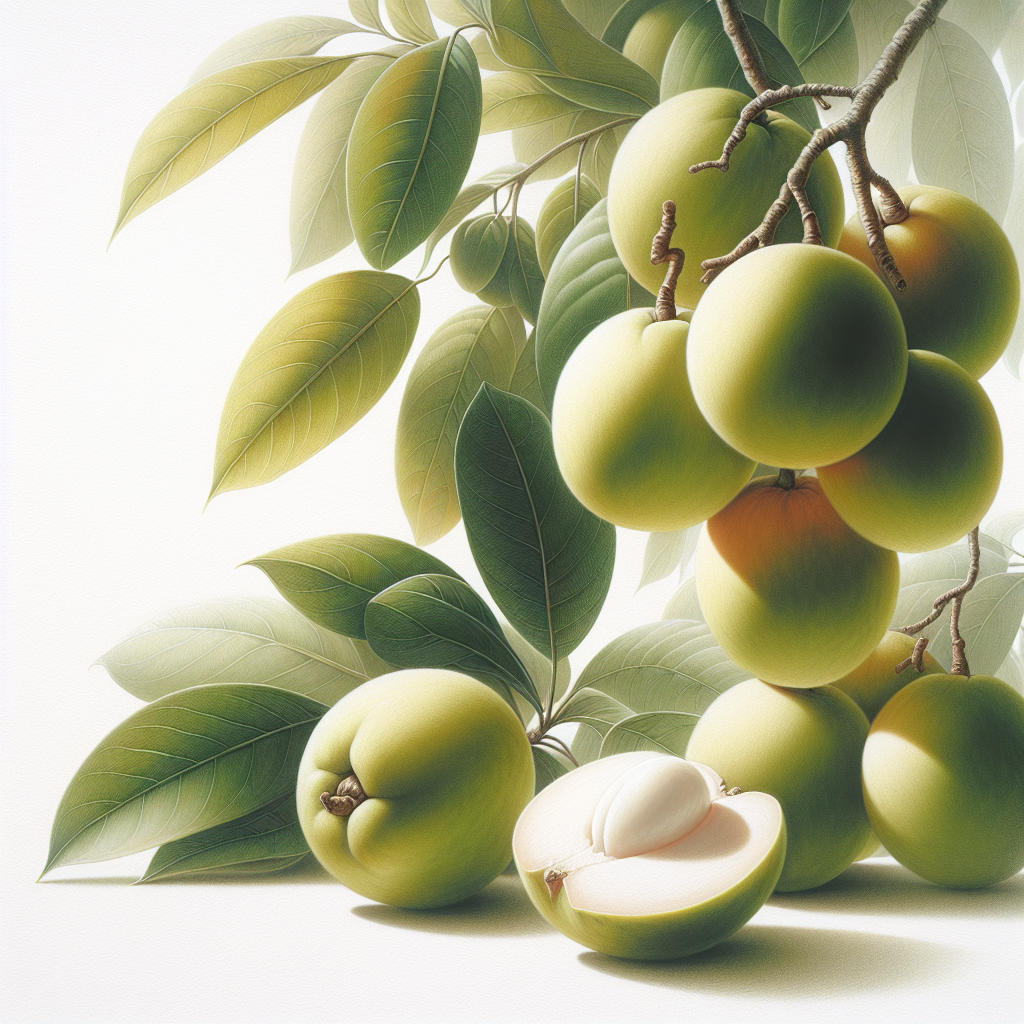
Introduction to White Sapote (Suebelle)
White Sapote (Suebelle), a select cultivar of Casimiroa edulis, stands out among tropical fruit trees for its delectable, custard-like fruit that combines notes of vanilla, peach, and banana in a buttery texture. Originating from Central America, the 'Suebelle' variety was developed for its consistent heavy bearing, large fruit size (up to 4-6 inches), and resistance to splitting—making it a top choice for commercial growers and home orchardists alike. Unlike its black sapote cousin, white sapote offers green-skinned fruits that ripen to yellow, with flesh that's eaten fresh, in smoothies, or ice cream.
This comprehensive guide dives deep into every aspect of growing White Sapote (Suebelle), from site selection to post-harvest handling. With proper care, trees can produce 200-500 pounds of fruit annually after 4-5 years, thriving in USDA zones 9-11. For growers pairing it with other subtropicals, consider interplanting with Hass Avocado for shared climate needs and pollination benefits. Success hinges on frost protection, deep watering, and organic pest strategies, yielding fruits rich in vitamins A, C, and fiber.
Botanical Profile of White Sapote (Suebelle)
White Sapote (Suebelle) belongs to the Rutaceae family, closely related to citrus, with a botanical profile suited to warm, humid environments. Trees grow 15-30 feet tall with a broad, rounded canopy of glossy, evergreen leaves that provide dense shade. The 'Suebelle' cultivar features hermaphroditic flowers—small, greenish-white clusters blooming in late winter to spring—capable of self-pollination, though cross-pollination with other varieties like 'Pierson' boosts yields by 20-30%.
Fruit development spans 6-9 months, with mature specimens weighing 8-16 ounces, featuring a thin, smooth skin over creamy white flesh surrounding 3-6 large seeds. Nutritionally, 100g provides 150 calories, 20g carbs, and antioxidants like saponins, which contribute to its sedative folklore uses. Root systems are shallow and wide-spreading (up to 3x canopy width), demanding mulch to retain moisture. Compared to mango, white sapote has lower heat requirements but similar drought tolerance once established.
Growth is moderate, reaching fruiting size in 3-4 years from grafted stock. 'Suebelle' excels in uniformity, with minimal alternate bearing—a common issue in wild types. Leaves emit a mild citrus scent when crushed, aiding in companion planting identification.
Soil, pH, and Climate Requirements for White Sapote (Suebelle)
White Sapote (Suebelle) demands well-drained, fertile soils with pH 6.0-7.5 to prevent chlorosis. Sandy loam or loamy soils enriched with 4-6 inches of organic matter yield best results; heavy clays lead to root rot. Test soil annually, amending with dolomite lime if pH drops below 6.0. For small farms combating poor soils, integrate strategies from Soil Health Mastery: 5 Proven Strategies for Small Farms to Build Fertile Ground Without Breaking the Bank.
Optimal climate: 65-85°F year-round, with minimal frost. Thrives in subtropical zones (AHS heat zones 9-11), tolerating brief dips to 28°F but suffering damage below 25°F. High humidity (60-80%) enhances fruit quality, but prolonged drought stresses trees—aim for 40-60 inches annual rainfall or equivalent irrigation. Wind protection is critical; plant in sheltered microclimates. Mulch 6-8 inches deep with wood chips to moderate soil temps and suppress weeds.
Elevations up to 3,000 feet work if summers are warm. Avoid saline soils (>2,000 ppm); irrigate with low-EC water. In marginal areas, use frost blankets or overhead sprinklers during cold snaps.
Step-by-Step Planting & Propagation
Propagation: Grafted trees are essential for 'Suebelle'—seedlings vary wildly and take 7-10 years to fruit. Source from reputable nurseries; cleft or whip grafts on C. edulis rootstock ensure vigor. Air-layering works for mature clones: girdle branches in spring, apply rooting hormone, wrap in sphagnum—roots form in 8-12 weeks.
Site Prep: Select full sun (6-8 hours daily). Dig holes 3x root ball width, 2x depth, incorporating compost and 1 lb 10-10-10 fertilizer. Space 20-25 feet apart for mature canopy.
Planting: Spring or fall in frost-free areas. Plant at soil grade, water deeply (20-30 gal), then mulch. Stake if windy. Initial irrigation: weekly for first year, tapering to biweekly.
Pruning at Plant: Remove crossing branches; train to central leader for airflow. Fertilize monthly first year with citrus mix.
Care & Maintenance regimes for White Sapote (Suebelle)
Watering: Deep, infrequent—1-2 inches weekly during bloom/fruit set. Drip irrigation ideal; avoid overhead to prevent fungal issues. Established trees drought-tolerant but drop fruit if stressed.
Fertilization: Annual regime: 1 lb N per tree year 1, increasing 1 lb/year to 10 lbs mature. Split into 3 apps (Feb, May, Aug) using 8-3-9 or citrus formula. Foliar micronutrients (Fe, Zn, Mn) quarterly prevent deficiencies.
Pruning: Annual post-harvest—thin canopy 20-30% for light penetration. Remove water sprouts, deadwood. Dwarfing rootstocks keep trees 12-15 ft.
Weed Control: Mulch + shallow cultivation. Cover crops like clover suppress competition.
Winter Protection: In zone 8b, use microclimates, wraps, or grow in 25-gal pots for mobility.
Monitor for nutrient lockout; soil drench with chelated iron if yellowing occurs.
Pests, Diseases & Organic Management
Common pests: Aphids cluster on new growth—blast with water or neem oil (1-2% solution weekly). Scale insects on bark; horticultural oil smothers. Mealybugs in crotches—alcohol swabs or ladybugs.
Diseases: Root rot from overwatering—improve drainage, use biofungicides like Trichoderma. Anthracnose causes fruit spots—copper sprays at bloom. Phytophthora in wet soils—phosphite drenches prevent.
Organic IPM: Release predatory mites for thrips; reflective mulch deters whiteflies. For detailed organic fixes, see Why 90% of Small Farms Fail at Pest Management - And 8 Organic Fixes That Actually Work. Scout weekly; maintain 4-inch trunk clearance from soil.
Harvesting, Curing & Optimal Storage
Harvest when fruit yellows slightly, 3/4 full size—tree-ripen risky due to falls. Clip with pruners, leaving stem. Yields peak Oct-Dec in Southern Hemisphere.
Curing: Room temp (65-75°F) 5-10 days to soften. Refrigerate ripe fruit 2-3 weeks at 45°F, 90% humidity. Shelf life 1-2 weeks post-ripening.
Post-harvest: Dip in 1% calcium chloride for firmness. Market fresh or process into pulp—freezes well for 12 months.
Companion Planting for White Sapote (Suebelle)
Pair with nitrogen-fixers like pigeon pea for soil enrichment. Guava shares pest predators, deterring fruit flies. Underplant with thyme or marigolds to repel nematodes. Avoid shallow-rooted grasses competing for water. Benefits from Thai Basil for aphid control. Strategic companions enhance biodiversity, reducing inputs by 25%.