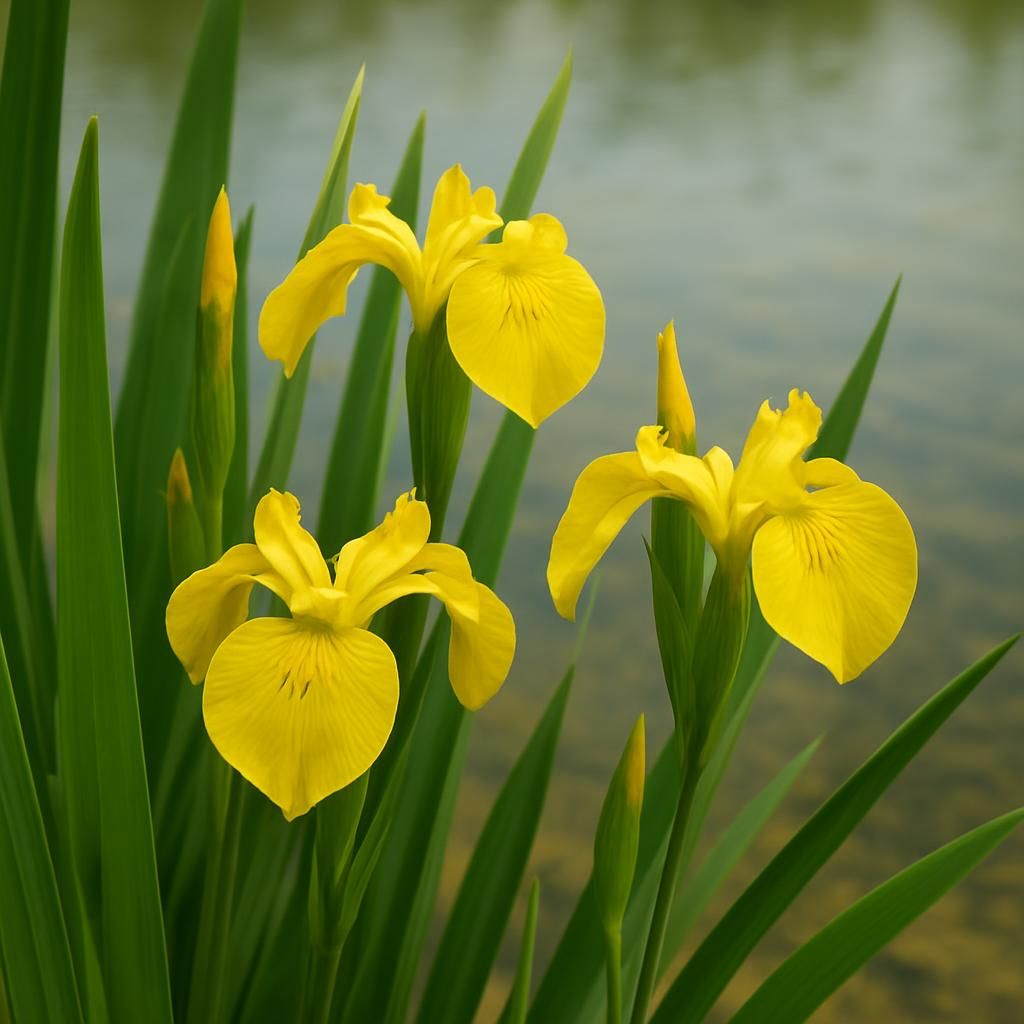
Introduction to Water Iris
Water Iris (Iris pseudacorus), also known as yellow flag iris, is a vigorous marginal aquatic plant that excels in wetland gardens, pond edges, and constructed treatment systems. Its sword-like foliage and bright yellow flowers provide both ornamental value and functional water filtration. Commercial growers value it for cut-flower production, while ecological landscapers use it for erosion control and nutrient uptake in stormwater basins. This definitive guide delivers professional-grade agronomic recommendations for successful, high-yield cultivation.
Botanical Profile of Water Iris
Iris pseudacorus belongs to the Iridaceae family and is native to Europe, western Asia, and North Africa. It produces thick rhizomes that spread horizontally just beneath the soil surface, sending up fans of linear, glaucous leaves that can reach 1–1.5 m in height. In late spring to early summer, each flowering stalk bears 4–7 showy yellow blooms with purple-veined falls. The plant is fully hardy in USDA zones 4–9 and tolerates brief flooding up to 30 cm deep. Rhizomes store carbohydrates that fuel rapid spring growth and allow the plant to survive winter dormancy.
Soil, pH, and Climate Requirements for Water Iris
Water Iris performs best in consistently moist to saturated soils with high organic matter. It tolerates a wide pH range but achieves optimal nutrient uptake and flowering in slightly acidic to neutral conditions. Temperature, light, and water depth directly influence rhizome health and bloom density.
| Parameter | Ideal Range/Value | Notes |
|---|---|---|
| Soil Type | Loamy or silty clay with >5% OM | Heavy clay ok if amended; avoid pure sand |
| Soil pH | 6.0–7.0 | Tolerates 5.5–8.0; lime if below 5.5 |
| Water Depth | 0–15 cm standing water | Up to 30 cm tolerated for short periods |
| Temperature Range | 15–28 °C daytime / 5–12 °C night | Hardy to –20 °C; protect young plants |
| Light Requirement | Full sun (≥6 h direct) | Partial shade reduces flowering |
| Salinity Tolerance | <2 dS/m EC | Sensitive to road salt and brackish water |
Step-by-Step Planting & Propagation
- Site Preparation: Excavate planting beds to 30 cm depth and incorporate 5–8 cm of well-rotted compost or aged manure. Level the surface and create shallow furrows 10 cm deep.
- Rhizome Selection: Choose firm, disease-free rhizomes with at least two growing fans and visible root initials. Soak in a 1:10 hydrogen peroxide solution for 10 minutes to reduce pathogens.
- Spacing: Plant rhizomes 30–45 cm apart in rows 60 cm wide. Orient the growing tip slightly upward and cover with 5–8 cm of soil.
- Watering In: Immediately flood the bed to 5 cm depth and maintain moisture until new shoots emerge (7–14 days).
- Division Propagation: Every 3–4 years, lift clumps in early spring or fall, divide rhizomes into 15 cm sections with one fan each, and replant immediately. This maintains vigor and prevents overcrowding.
Care & Maintenance regimes for Water Iris
Consistent water levels, moderate fertility, and timely sanitation keep stands productive for 8–10 years. Over-fertilization promotes foliage at the expense of flowers and can trigger algal blooms in ponds.
| Task | Schedule | Rate / Method |
|---|---|---|
| Water Level | Maintain 5–15 cm year-round | Adjust seasonally; lower in winter |
| Fertilizer | Early spring & post-bloom | 5-10-10 NPK at 50 g/m²; organic alternatives: fish emulsion 1:20 |
| Mulching | Spring & fall | 5 cm layer of coarse bark or gravel |
| Pruning / Sanitation | Late fall after frost | Cut foliage to 15 cm; remove spent stalks |
| Division | Every 3–4 years | Early spring or fall; replant immediately |
Pests, Diseases & Organic Management
Water Iris is relatively pest-resistant but can suffer from Iris borer, aphids, and slugs and snails. Fungal issues include Botrytis and root rot in stagnant conditions. Implement integrated management:
- Scout weekly for chewed leaves or rhizome tunnels.
- Apply floating row covers in early spring to exclude iris borers.
- Use iron-phosphate slug baits around pond margins.
- Improve circulation and divide clumps to reduce Botrytis pressure.
- Apply neem oil or insecticidal soap at first sign of aphids.
Harvesting, Curing & Optimal Storage
Cut-flower harvest occurs when the first bud on the stalk shows color but has not fully opened. Use clean, sharp shears and place stems immediately in 4 °C water with floral preservative. Rhizomes for propagation or sale are lifted in early fall after foliage yellows. Rinse soil, trim roots to 5 cm, and cure in a shaded, well-ventilated area at 15–20 °C for 7–10 days. Store cured rhizomes in mesh bags at 2–5 °C with 70–80 % RH for up to 6 months. Check monthly for soft spots or mold.
Companion Planting for Water Iris
Pair Water Iris with other marginal aquatics to create resilient, biodiverse plantings. Recommended companions include Taro, Pickerelweed, and Hardy Water Lily for layered water coverage and pollinator support. Avoid aggressive spreaders such as Cattail that can outcompete iris rhizomes. In constructed wetlands, interplant with Rice or Juncus effusus to enhance nutrient filtration while maintaining visual interest.