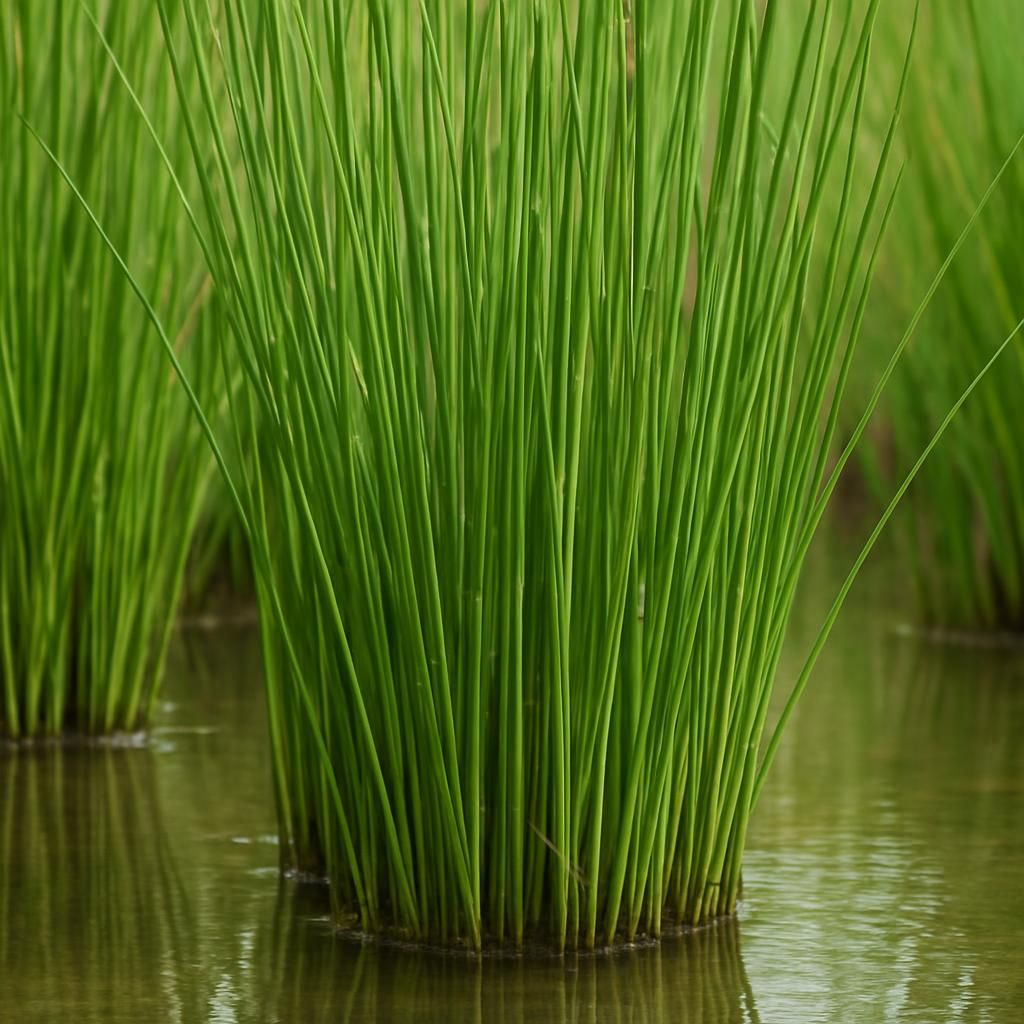
Introduction to Juncus effusus
Juncus effusus is a versatile perennial rush native to wetlands across temperate regions worldwide. Its dense, upright stems and fibrous root systems make it an excellent choice for stabilizing shorelines, filtering agricultural runoff, and producing traditional basketry materials. Commercial growers value its rapid establishment and tolerance of poor drainage, while ecological projects utilize its ability to improve water quality and support biodiversity. The plant's evergreen foliage and low nutrient demands position it as a resilient option for both small-scale specialty farms and large wetland restoration initiatives.
Botanical Profile of Juncus effusus
Juncus effusus belongs to the Juncaceae family and features cylindrical, leafless stems that can reach 30–100 cm in height. The stems are smooth, bright green, and contain internal pith that provides buoyancy in flooded conditions. Small, inconspicuous brown flowers appear in dense clusters near the stem tips during late spring to summer. The plant spreads primarily through short rhizomes and produces abundant seeds that germinate readily in moist seedbeds. Its fibrous root network penetrates up to 30 cm deep, anchoring soil and facilitating nutrient uptake from anaerobic environments.
Soil, pH, and Climate Requirements for Juncus effusus
Juncus effusus performs best in consistently moist to saturated soils with high organic matter content. It tolerates a wide pH range but prefers slightly acidic to neutral conditions. The following table outlines ideal growing parameters:
| Parameter | Ideal Range | Notes |
|---|---|---|
| Soil Type | Loamy to clay loam | High organic matter improves establishment |
| Soil pH | 5.5–7.0 | Tolerates 4.5–8.0 with reduced vigor |
| Soil Moisture | Saturated to 5 cm standing water | Avoid prolonged drought |
| Temperature Range | 10–30°C (50–86°F) | Hardy to -20°C (-4°F) |
| USDA Hardiness Zones | 4–9 | Performs across temperate climates |
| Light Requirements | Full sun to partial shade | Full sun maximizes stem density |
| Salinity Tolerance | Low to moderate | Sensitive to high salt concentrations |
Step-by-Step Planting & Propagation
Propagation of Juncus effusus is achieved through both seed and division. For seed propagation, sow fresh seed in late winter or early spring on the surface of a moist seed-starting mix; do not cover as light is required for germination. Maintain temperatures between 15–20°C and keep the medium consistently wet. Germination typically occurs within 14–30 days. For vegetative propagation, divide established clumps in early spring or fall, ensuring each division contains several stems and intact roots. Plant divisions 15–20 cm apart in prepared beds or directly into wetland margins. In restoration sites, plugs or bare-root divisions establish faster than seed.
Care & Maintenance regimes for Juncus effusus
Once established, Juncus effusus requires minimal intervention. The following table provides recommended schedules for water management, fertilization, and pruning:
| Season | Water Management | Fertilizer Application | Pruning Schedule |
|---|---|---|---|
| Spring | Maintain 2–5 cm standing water or saturated soil | Apply 5–10 kg N/ha organic compost | Remove dead stems before new growth |
| Summer | Ensure consistent moisture; irrigate during dry spells | Top-dress with 3–5 kg N/ha if growth stalls | Cut back flowering stems after seed set |
| Autumn | Reduce water depth to 1–2 cm | Apply slow-release organic fertilizer | Remove senescing foliage for tidiness |
| Winter | Allow natural flooding or maintain 1 cm water | No fertilizer required | Minimal pruning; remove debris only |
Pests, Diseases & Organic Management
Juncus effusus is generally resistant to most pests and diseases, but occasional issues include Aphids feeding on young stems and Fungus gnats in overly wet nursery conditions. Fungal leaf spots may appear under prolonged high humidity; improve airflow and avoid overhead irrigation to reduce incidence. For organic control of aphids, introduce lady beetles or apply insecticidal soap. Maintain diverse plantings to discourage pest buildup. In restoration settings, monitor for invasive competitors such as Phragmites and remove them manually.
Harvesting, Curing & Optimal Storage
Harvest stems for fiber or basketry when they reach full height but before flowering, typically in mid-to-late summer. Cut stems at the base with sharp shears, leaving 5 cm of stubble to encourage regrowth. Bundle stems loosely and hang in a well-ventilated, shaded area to air-dry for 7–14 days. Once fully dry, store bundles in a cool, dry location away from direct sunlight. Properly cured stems retain flexibility for up to two years when kept in paper or breathable fabric packaging.
Companion Planting for Juncus effusus
Juncus effusus integrates well with other wetland species. Pair it with Rice in constructed treatment wetlands to enhance nutrient uptake and water filtration. It also complements Cattail and Pickerelweed in shoreline stabilization projects. In ornamental or rain-garden settings, combine with moisture-loving perennials such as Iris and Lobelia to create diverse, pollinator-supporting plantings. Avoid aggressive competitors that may outcompete young rush seedlings during establishment.