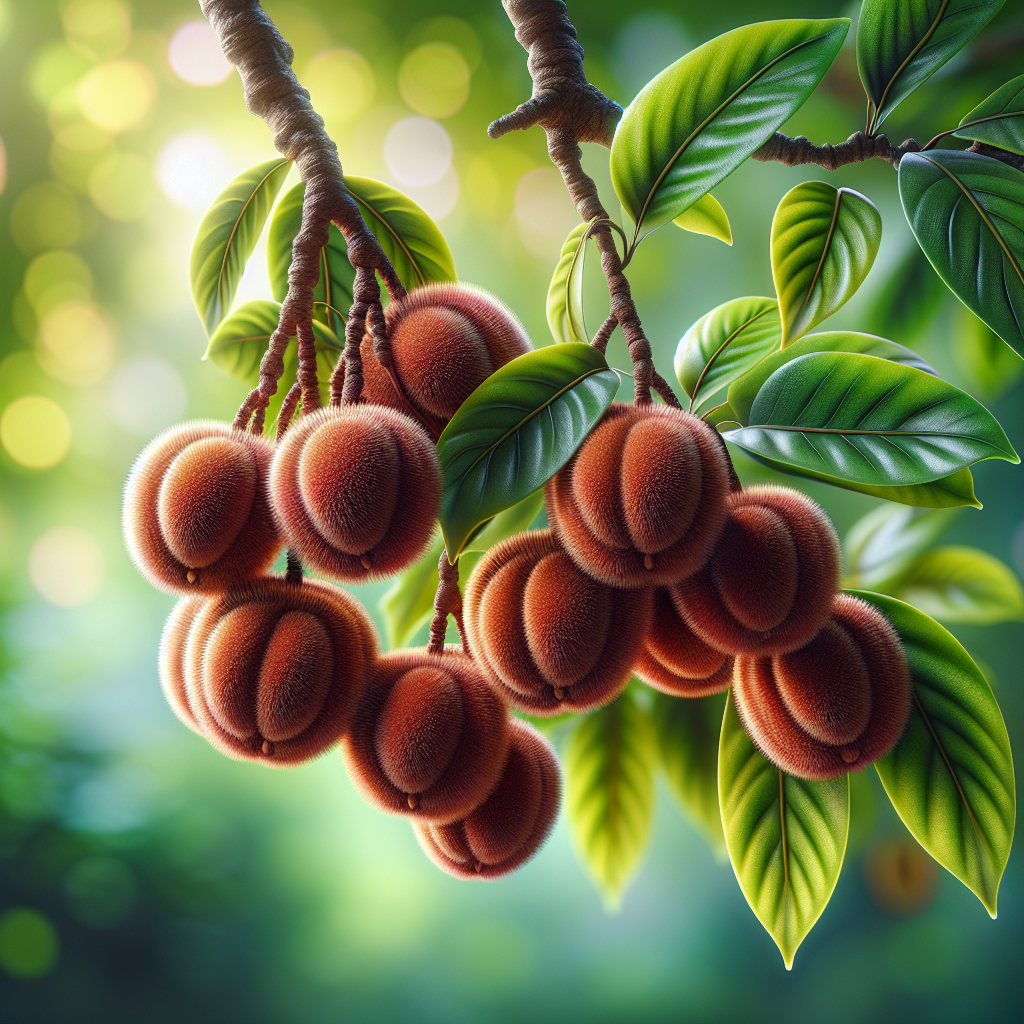
Introduction to Velvet Apple (Mabolo)
Velvet Apple, commonly called Mabolo or butter fruit, is an exotic tropical fruit tree (Diospyros blancoi) renowned for its distinctive rust-colored, fuzz-covered skin and aromatic, sweet flesh. Native to the Philippines, this evergreen species has gained popularity in Southeast Asia, parts of India, and tropical regions worldwide due to its unique flavor profile—reminiscent of a mix between apple and persimmon with nutty undertones—and its high nutritional value, including vitamins A and C, fiber, and antioxidants. The fruit's velvety exterior not only protects the creamy interior but also makes it a standout in markets where novelty drives demand.
Commercially, Mabolo trees can yield 50-100 kg of fruit per mature tree annually, with peak production starting 5-7 years after planting. Its wood is also valued for furniture, adding economic versatility for farmers. However, successful cultivation requires understanding its specific tropical needs, from propagation to pest management. This deep-dive guide equips growers with professional-grade strategies to maximize yields, combat challenges like fruit fly infestations, and integrate it into diverse agroforestry systems. For similar tropical fruit cultivation insights, see our guide on Mango (crop).
Growers appreciate Mabolo's resilience to drought once established, though young trees demand careful watering. Its flowers are dioecious (separate male and female trees), necessitating proper pollination planning for fruit set. With rising global interest in exotic fruits, Mabolo represents a lucrative niche for small farms and orchards, potentially fetching premium prices at $2-5 per kg in urban markets.
Botanical Profile of Velvet Apple (Mabolo)
Diospyros blancoi belongs to the Ebenaceae family, closely related to the common persimmon (Diospyros kaki). It is an evergreen tree growing 10-20 meters tall with a dense canopy of glossy, elliptical leaves (10-20 cm long) that remain vibrant year-round. The tree's bark is rough and dark, while young branches are pubescent.
Flowers are small, creamy-white, and fragrant: males in panicles, females solitary or paired. Pollination relies on insects like bees, with female trees producing 50-200 fruits per season. Fruits are spherical to ovoid, 5-10 cm in diameter, with a thick, rusty-brown velvet skin that peels easily when ripe. The flesh is white to yellowish, soft, and seed-filled (up to 4 large seeds), ripening 4-6 months after flowering.
Mabolo exhibits astringency in unripe fruits due to tannins, which dissipates as it ripens. Varieties include 'Native Mabolo' (wild type) and cultivated selections like 'Improved Mabolo' with larger, less astringent fruits. Root systems are deep and extensive, aiding drought tolerance but making transplanting challenging. For companion tropical trees, consider Guava (crop), which shares similar growth habits.
Soil, pH, and Climate Requirements for Velvet Apple (Mabolo)
Mabolo thrives in well-drained, fertile loamy soils rich in organic matter, with sandy loam ideal for root development. Avoid heavy clay or waterlogged areas to prevent root rot. Optimal pH is 5.5-7.0; test soil annually and amend with lime for acidity or sulfur for alkalinity. Incorporate 10-20 kg of compost per planting hole to boost microbial activity and nutrient retention.
Climatically, it demands USDA zones 10-12, with temperatures of 20-35°C (68-95°F). It tolerates brief dips to 10°C but suffers frost damage below 5°C. Annual rainfall of 1500-2500 mm is perfect, supplemented by irrigation in dry spells. High humidity (60-80%) aids fruit set, but excellent air circulation prevents fungal issues. Full sun (6-8 hours daily) is essential for fruit quality; partial shade reduces yields by 30-50%.
In suboptimal conditions, mulching with 10 cm of organic material conserves moisture and moderates soil temperature. For heatwave-prone areas, refer to Why Summer Heatwaves Are Silently Killing Small Farm Yields - And 7 Organic Strategies to Fight Back for tailored resilience tactics.
Step-by-Step Planting & Propagation
Propagation
Seed propagation is simplest: extract seeds from ripe fruits, wash off pulp, and sow fresh in 1:1:1 sand-soil-compost mix. Germination occurs in 2-4 weeks at 25-30°C. For uniformity, use grafting (veneer or cleft) onto seedling rootstocks, achieving 80-90% success. Air-layering works for mature branches, rooting in 6-8 weeks.
Planting
- Site Selection: Choose elevated, wind-sheltered spots with good drainage. Space trees 8-10 m apart (100-150 trees/ha).
- Pit Preparation: Dig 60x60x60 cm holes, fill with topsoil + 20 kg FYM + 500g superphosphate + 200g muriate of potash.
- Planting Time: Rainy season (May-July in tropics) for root establishment.
- Planting: Place grafted saplings at original depth, stake, and mulch. Plant 1 male per 10-20 females for pollination.
- Initial Care: Water deeply weekly for first year; apply 50g NPK monthly.
Expect first fruits in 3-5 years from grafts. Prune at planting to encourage bushy growth.
Care & Maintenance regimes for Velvet Apple (Mabolo)
Irrigation: Young trees need 40-50 liters weekly; mature ones are drought-tolerant but yield better with 2-3 irrigations/month in dry seasons. Drip systems save 30% water.
Fertilization: Year 1-3: 200g NPK (10:20:10) quarterly. Mature: 1-2 kg/tree annually, split into 3 doses. Foliar sprays of micronutrients (Zn, B) post-flowering boost set by 20%.
Pruning: Annually after harvest, remove deadwood, watersprouts, and inward branches for light penetration. Train to central leader for 4-5 m height.
Weeding & Mulching: Keep basin weed-free; mulch with paddy straw or cocoa husk to suppress growth and retain moisture.
Training: For high-density planting (5x5 m), use modified leader system. Monitor for biennial bearing; thin fruits if overloaded.
Pests, Diseases & Organic Management
Pests:
- Fruit flies: Bait with methyl eugenol traps; bag fruits.
- Mealybugs: Neem oil (2%) sprays; introduce ladybugs.
- Scale insects: Horticultural oil; prune infested parts.
- Aphids: Soap sprays; reflective mulches.
Diseases:
- Anthracnose: Copper fungicides; sanitation.
- Powdery mildew: Sulfur dust; improve airflow.
- Phytophthora root rot: Drainage; biofungicides like Trichoderma.
Organic IPM: Scout weekly, use pheromone traps, and release predatory insects. For broader strategies, check Why 90% of Small Farms Fail at Pest Management - And 8 Organic Fixes That Actually Work. Avoid chemicals near harvest.
Harvesting, Curing & Optimal Storage
Harvest when fruits turn rusty-brown and emit sweet aroma (120-150 days post-bloom). Twist or clip with shears; yield peaks October-December. Handle gently to avoid skin abrasion.
Curing: Ripen off-tree at 25-28°C with ethylene (banana peels) for 3-5 days to reduce astringency.
Storage: Fresh: 10-15°C, 85-90% RH for 2-4 weeks. Processed: Dry slices or puree freezes well. Market promptly as shelf life is short.
Post-harvest losses minimized by waxing or modified atmosphere packaging.
Companion Planting for Velvet Apple (Mabolo)
Pair with nitrogen-fixers like pigeon pea for soil enrichment and shade-tolerant undercrops like ginger or turmeric. Avoid water-hogging crops like banana. Legumes (peanuts, soybeans) suppress weeds; marigolds deter nematodes. Interplant with Thyme (crop) for pest repulsion. Benefits include 15-20% yield boost via microclimate moderation and biodiversity. For more, see Why Companion Planting Feels Like Guesswork for Small Farms - And How AI Makes It Foolproof.