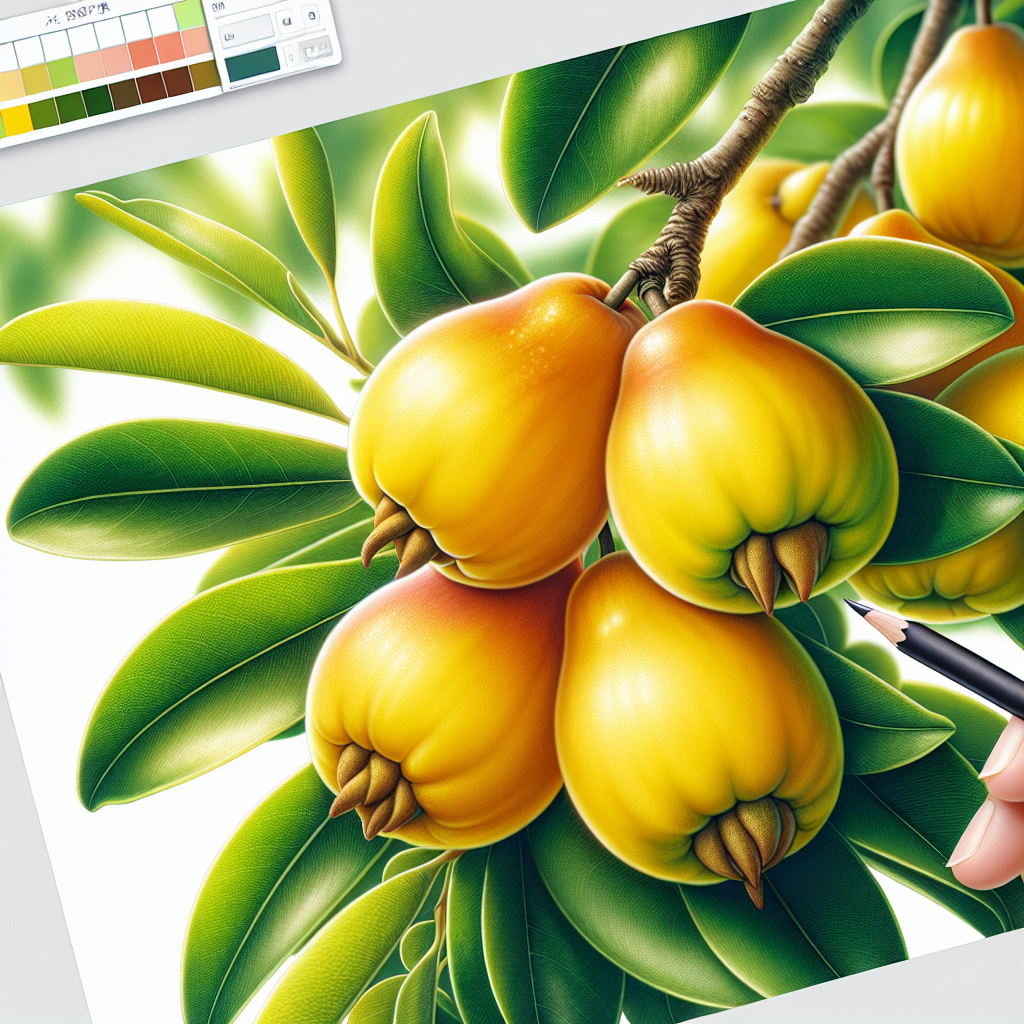
Introduction to Ubajay (Eugenia pyriformis)
Ubajay (Eugenia pyriformis), also known as pear guava or Brazilian pear, is an underappreciated gem in subtropical agriculture. This Myrtaceae family member produces distinctive pear-shaped fruits with glossy yellow skin, creamy white flesh, and a flavor blending pineapple, guava, and citrus notes. Native to the Atlantic Forest regions of southern Brazil, particularly Paraná and Santa Catarina, Ubajay trees have been cultivated for centuries by local communities for fresh eating, juices, jams, and liqueurs.
What sets Ubajay apart is its resilience to humid conditions and resistance to many common fruit tree pests, making it ideal for small farms diversifying into exotic crops. Fruits weigh 50-150 grams, ripening from green to vibrant yellow, with peak season in late summer (December-February in the Southern Hemisphere). Yields can reach 50-80 kg per mature tree annually under optimal management. For growers eyeing high-value markets, Ubajay commands premium prices—often $10-20/kg in urban centers—due to limited supply outside Brazil. Similar to guava, it offers year-round ornamental appeal with glossy evergreen leaves and fragrant white flowers.
This comprehensive guide draws from traditional Brazilian agroforestry practices and modern horticultural research, providing step-by-step protocols for propagation, care, and pest management. Whether establishing a backyard orchard or scaling for commercial production, mastering Ubajay cultivation unlocks a profitable, low-maintenance crop. Read our detailed Fall Companion Planting Guide: Boost Yields and Soil Health for Small Farms and Gardens for synergistic planting strategies.
Botanical Profile of Ubajay (Eugenia pyriformis)
Eugenia pyriformis is an evergreen tree growing 5-12 meters tall in natural settings, though grafted cultivars are often pruned to 4-6 meters for easier harvesting. The trunk reaches 30-50 cm diameter, with smooth reddish-brown bark that peels in patches. Leaves are opposite, lanceolate, 6-12 cm long, leathery, and deep green with prominent veins, emitting a mild spicy aroma when crushed.
Flowers emerge in clusters from leaf axils, featuring four white petals, numerous stamens, and a sweet honey scent that attracts bees. Pollination is primarily entomophilous, with self-fertile varieties predominant, though cross-pollination boosts fruit set. Fruits develop over 90-120 days, starting as green nubs and maturing to pear-shaped, 5-8 cm long, with a thin, waxy yellow rind. The single central seed is small and enclosed in a tough pit, unlike the numerous seeds in common guava.
Root system is fibrous and shallow, extending 2-3 times the canopy width, making it sensitive to mechanical damage but tolerant of wet soils. Phenology aligns with subtropical rhythms: vegetative flush in spring, flowering in early summer, and harvest in late summer-autumn. Hardiness zones are 10-11 (USDA), with young trees frost-sensitive below -2°C but mature specimens enduring brief dips to -5°C. For related subtropical options, explore Apple Guava (crop).
Soil, pH, and Climate Requirements for Ubajay (Eugenia pyriformis)
Ubajay thrives in deep, well-drained loamy soils rich in organic matter, with pH 5.5-7.0 optimal. It tolerates clay loams and sandy soils but dislikes heavy compaction or waterlogging beyond short periods. Soil preparation should include 20-30 cm deep tillage, incorporation of 10-15 kg/m² compost or well-rotted manure, and raised beds (30-50 cm) in high-rainfall areas to prevent root rot.
Climate-wise, Ubajay demands frost-free conditions with average temperatures 18-28°C. It excels in humid subtropical zones (Köppen Cfa/Cfb), receiving 1200-2000 mm annual rainfall evenly distributed, supplemented by irrigation during dry spells. Full sun (6-8 hours daily) is essential; partial shade reduces yields by 30-50%. Wind protection via hedgerows is critical, as strong gusts damage flowers and fruits. Humidity above 60% favors growth, but prolonged drought stresses trees, dropping fruit set below 20%.
Soil testing is non-negotiable: amend acidic soils with dolomitic lime (1-2 tons/ha) to reach pH 6.0-6.5, and alkaline ones with sulfur or peat. Micronutrients like zinc and boron often deficient in Brazilian soils—apply foliar sprays at 0.5% chelated formulas pre-flowering. Mulch with 10 cm organic layers (pine bark, straw) conserves moisture and suppresses weeds, mimicking forest floor conditions.
Step-by-Step Planting & Propagation
Propagation Methods: Seed propagation is straightforward but slow (3-5 years to fruit); use fresh seeds stratified in moist sand at 25°C for 30 days, germinating in 20-40 days at 80-90% rates. For commercial speed, air-layering or grafting onto Otaheite apple (Syzygium malaccense) rootstock yields fruit in 18-24 months. Chip budding in spring achieves 70-85% take.
Site Preparation: Select sites with north-south row orientation for even light. Space trees 6-8 m apart (150-200 trees/ha), digging 60x60x60 cm pits filled with topsoil + 5 kg compost + 200g superphosphate + 50g potassium sulfate. Plant in early spring post-frost, aligning graft union 10 cm above soil.
Planting Protocol: Water-in thoroughly (50L/tree), stake for first year, and apply 10 cm mulch. Initial pruning shapes to central leader with 4-6 scaffold branches at 60-80 cm height. Irrigate weekly (30-50L/tree) until established. For small farms, propagate via stem cuttings dipped in 3000 ppm IBA, rooting in 4-6 weeks under mist.
Care & Maintenance regimes for Ubajay (Eugenia pyriformis)
Irrigation: Drip systems deliver 20-40L/tree/week, adjusted via tensiometers (40-60 kPa). Deficit irrigation post-fruit-set enhances flavor but risks sunburn.
Fertilization: Annual program: February (post-harvest) 200g NPK 10-10-10/tree; May (pre-flowering) 300g 6-30-30 + 50g micronutrients; August 400g organic manure. Foliar urea (2%) monthly during growth flushes.
Pruning: Annual winter dormant pruning removes deadwood, watersprouts, and inward branches, opening canopy for light penetration. Tip-bearing habit requires minimal summer pinching to promote fruiting spurs.
Weed Control: Mulch + shallow cultivation; cover crops like clover between rows fix nitrogen and reduce erosion.
Monitoring: Track growth with calipers (20-30 cm/year diameter increment target); leaf analysis for N 2.5-3%, K 1-1.5%.
Pests, Diseases & Organic Management
Key Pests: Fruit flies (fruit-flies) and scale insects (scale-insects) primary threats. Deploy kaolin clay sprays, protein baits, and yellow sticky traps (20/ha). Mealybugs controlled with neem oil (2%) + insecticidal soap rotations.
Diseases: Anthracnose causes fruit rot; prevent with copper oxychloride pre-flowering and post-rain. Phytophthora root rot managed via raised beds, biofumigants (mustard cover crops), and Trichoderma inoculants. Powdery mildew rare but treat with potassium bicarbonate (1%).
Organic IPM: Encourage predators like ladybugs; sanitation removes fallen fruits. Btk sprays target caterpillars. Refer to Why 90% of Small Farms Fail at Pest Management - And 8 Organic Fixes That Actually Work for advanced tactics.
Harvesting, Curing & Optimal Storage
Harvest when fruits yellow 80%, detach easily with gentle twist (Brix 12-16°). Use clippers for clusters, handling singly to avoid bruises. Yields peak years 5-15; hand-harvest every 3-5 days over 4-6 weeks.
Post-Harvest: Cure at 20-25°C, 85% RH for 3-5 days to soften and aromatize. Store at 10-12°C, 90% RH for 4-6 weeks (no chilling injury above 8°C). For processing, freeze at -18°C or dry at 60°C.
Market Prep: Grade by size/color; hydrocool to 15°C. Shelf life 7-10 days at 20°C. High-value uses: fresh, smoothies, or guava-style pastes.
Companion Planting for Ubajay (Eugenia pyriformis)
Pair with nitrogen-fixers like pigeon pea for soil enrichment and Thai Basil for pest repulsion. Understory pineapple suppresses weeds, provides groundcover. Avoid legumes prone to shared pathogens. Marigolds deter nematodes; yarrow attracts beneficials. Intercrop rows with ginger for shade tolerance and revenue diversification. This polyculture boosts biodiversity, mimicking native Atlantic Forest for resilient yields.