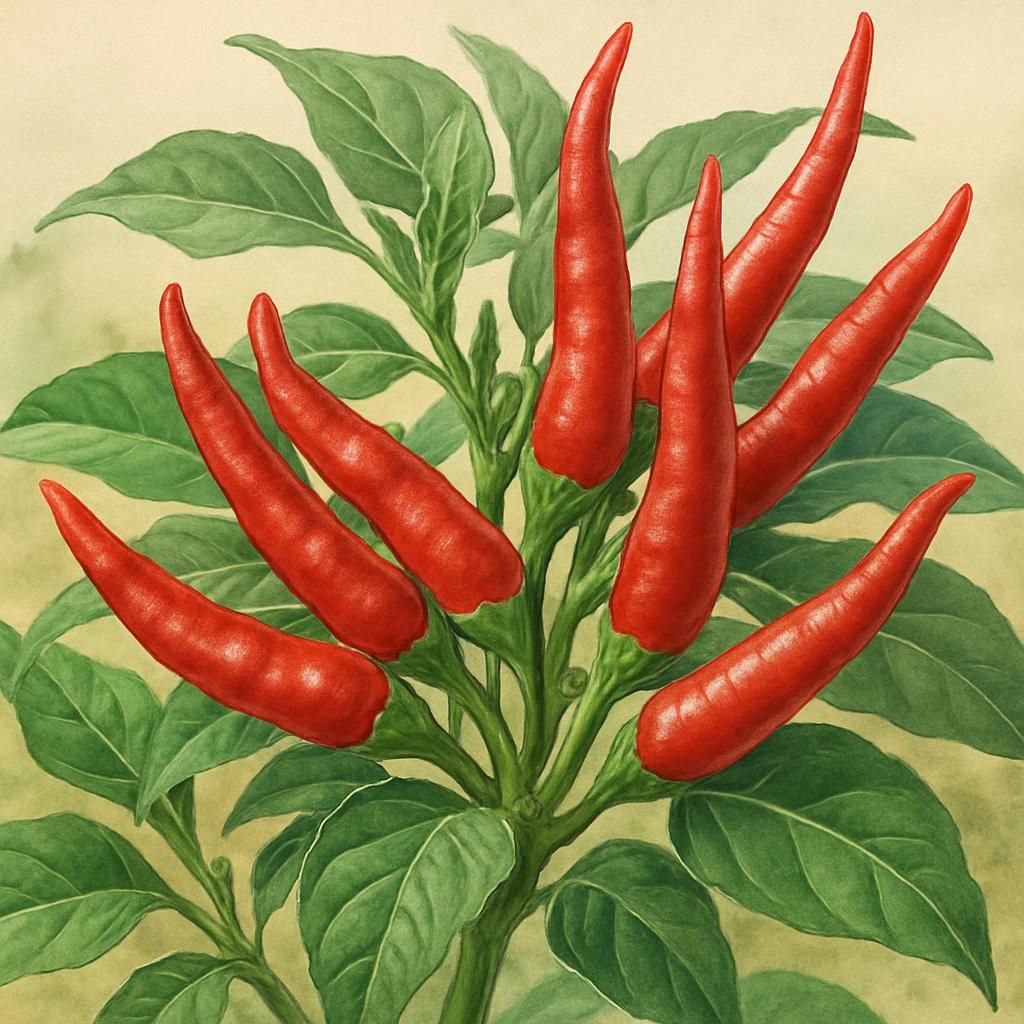
Introduction to Takano Tsume (Hawk Claw)
Takano Tsume (Hawk Claw) is a distinctive Japanese chili pepper variety recognized for its curved, talon-shaped pods that deliver a sharp, fruity heat with subtle citrus undertones. Originating from traditional Japanese breeding programs, this pepper has gained international attention among chefs and home gardeners for both its ornamental appeal and culinary versatility. The plant produces prolific clusters of small, thin-walled fruits that mature from green to a vibrant scarlet red. Its compact growth habit and high productivity make it suitable for container culture, raised beds, and open-field production in suitable climates. Professional growers value Takano Tsume for its consistent performance and market appeal in specialty pepper production.
Botanical Profile of Takano Tsume (Hawk Claw)
Takano Tsume belongs to the species Capsicum annuum and exhibits the characteristic solanaceous growth pattern with alternate, ovate leaves and terminal clusters of small white flowers. The plant typically reaches 60–90 cm in height with a bushy, upright structure supported by moderately woody stems. Fruits measure 4–7 cm in length, displaying a pronounced hook or claw shape that gives the variety its common name. The thin-walled pods contain 20–40 small, cream-colored seeds and develop a glossy texture at maturity. Flowering occurs continuously under optimal conditions, with fruit set favored by daytime temperatures between 24–30 °C.
Soil, pH, and Climate Requirements for Takano Tsume (Hawk Claw)
Successful cultivation of Takano Tsume requires well-drained, fertile soil with consistent moisture retention and protection from extreme temperature fluctuations. The variety performs best in full sun with at least 8 hours of direct light daily and benefits from wind protection during early establishment. Organic matter content should be maintained at 4–6 % to support vigorous root development and nutrient uptake.
| Parameter | Ideal Range | Notes |
|---|---|---|
| Soil Type | Loamy to sandy loam | High drainage prevents root diseases |
| Soil pH | 6.0–6.8 | Slightly acidic optimizes nutrient availability |
| Temperature (Day) | 24–30 °C | Critical for fruit set and pod development |
| Temperature (Night) | 18–22 °C | Prevents blossom drop |
| Frost Tolerance | None | Protect below 10 °C |
| Annual Rainfall | 600–900 mm | Supplemental irrigation required in dry periods |
| Sun Exposure | Full sun (8+ hours) | Maximizes capsaicin and flavor compounds |
| Spacing | 45–60 cm between plants | 75–90 cm between rows for airflow |
Step-by-Step Planting & Propagation
Start seeds indoors 8–10 weeks before the last expected frost date. Sow seeds 0.5 cm deep in sterile seed-starting mix maintained at 26–28 °C with bottom heat. Germination typically occurs within 7–14 days. Once seedlings develop their first true leaves, transplant into 10 cm pots and harden off gradually over 7–10 days. Transplant outdoors when soil temperatures reach a minimum of 18 °C and all danger of frost has passed. Space plants 45–60 cm apart in rows 75–90 cm wide. For container growing, select pots of at least 20 L volume with excellent drainage. Direct seeding is possible in warm climates after soil has warmed to 20 °C, but indoor-started transplants generally produce earlier and more uniform crops.
Care & Maintenance regimes for Takano Tsume (Hawk Claw)
Consistent irrigation, balanced nutrition, and strategic pruning are essential for maximizing fruit quality and yield. Drip irrigation or soaker hoses are preferred to keep foliage dry and reduce disease pressure. Mulch with 5–8 cm of organic material to conserve moisture and suppress weeds. Side-dress with compost tea or balanced organic fertilizer every 3–4 weeks during active growth. Remove lower leaves and suckers to improve airflow and reduce disease incidence. Support plants with stakes or cages once they reach 40 cm to prevent lodging under heavy fruit loads.
| Growth Stage | Watering Frequency | Fertilizer Type & Rate | Pruning Action |
|---|---|---|---|
| Seedling (0–4 wks) | Keep evenly moist | Dilute fish emulsion (1:10) weekly | None |
| Vegetative (4–8 wks) | 2–3 times per week | Balanced NPK 5-5-5 every 3 weeks | Pinch growing tip at 30 cm for bushiness |
| Flowering | 3 times per week | High-phosphorus (2-5-3) every 2 weeks | Remove lower leaves below first branch |
| Fruiting | Daily light watering | Potassium-rich (2-3-6) every 10–14 days | Remove damaged or diseased foliage weekly |
| Late Season | Reduce to maintain firmness | Stop nitrogen; apply compost tea only | Cut back 30 % of foliage to ripen remaining fruit |
Pests, Diseases & Organic Management
Takano Tsume is susceptible to common solanaceous pests including aphids, thrips, and spider mites. Monitor weekly with yellow sticky traps and release beneficial insects such as lady beetles and lacewings at the first sign of infestation. Organic sprays of neem oil or insecticidal soap applied early morning or late evening provide effective control without harming pollinators. Fungal diseases such as powdery mildew and early blight can be minimized through proper spacing, drip irrigation, and removal of infected leaves. Crop rotation with non-solanaceous crops every 3–4 years reduces soil-borne pathogen buildup. Copper-based fungicides may be used as a last resort under certified organic guidelines.
Harvesting, Curing & Optimal Storage
Harvest Takano Tsume pods when they reach full red coloration and firm texture, typically 70–85 days after transplant. Use clean pruners to cut stems 1 cm above the fruit to avoid damaging the plant. For fresh use, store at 7–10 °C with 85–90 % relative humidity for up to two weeks. For drying, spread pods in a single layer in a well-ventilated area at 25–30 °C until brittle (7–10 days). Store dried peppers in airtight glass jars away from light and moisture; properly cured pods retain quality for 12–18 months. For maximum capsaicin retention, avoid temperatures above 35 °C during drying.
Companion Planting for Takano Tsume (Hawk Claw)
Strategic companion planting enhances Takano Tsume productivity and pest resistance. Thai Basil planted nearby repels aphids and thrips while attracting beneficial pollinators. Marigold borders deter nematodes and provide visual pest monitoring. Nasturtium acts as a trap crop for aphids and improves soil fertility when turned under. Avoid planting near fennel or other members of the Apiaceae family, which may inhibit pepper growth. Interplanting with tomato or eggplant is possible but maintain 1 m spacing to reduce shared disease pressure. Clover living mulch between rows fixes nitrogen and suppresses weeds without competing for resources.