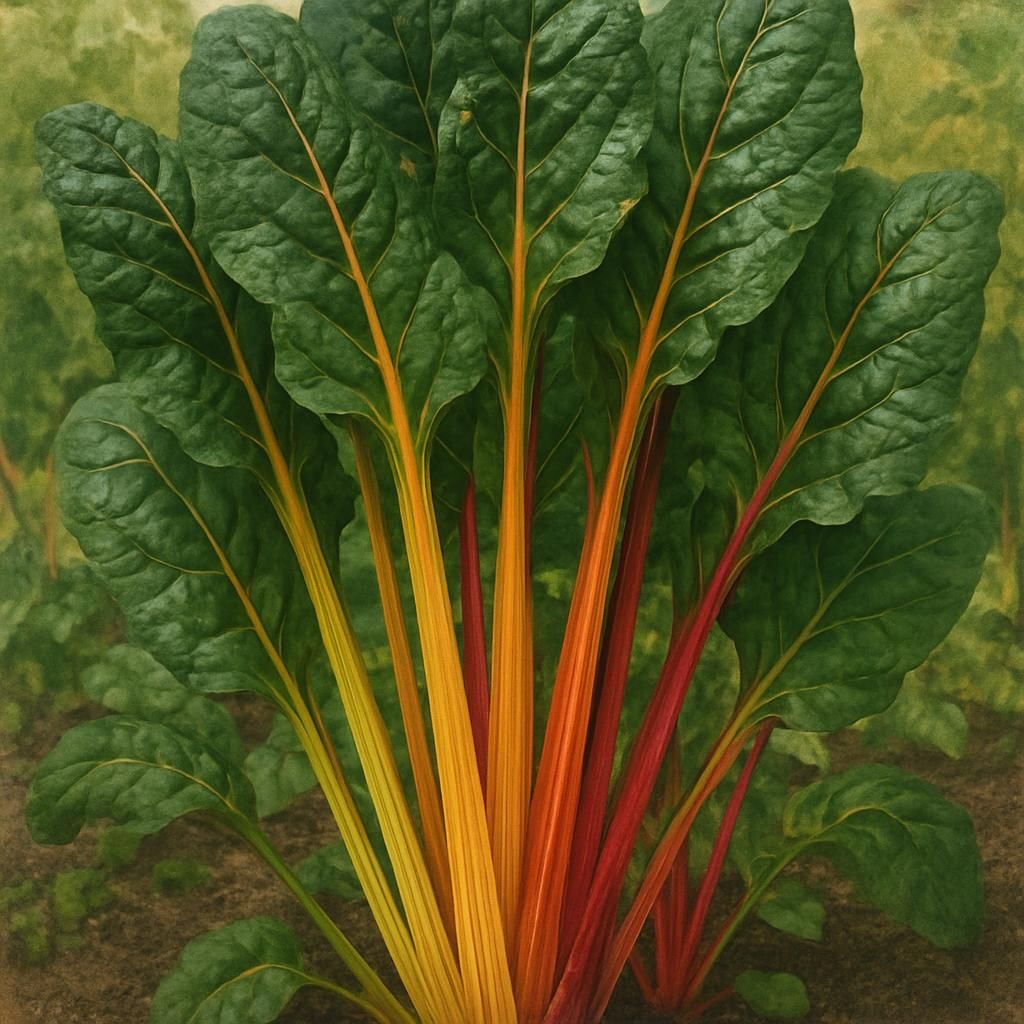
Introduction to Swiss Chard (Bright Lights)
Swiss Chard (Bright Lights) is a beautiful, colorful variety of Swiss chard that features stems in a rainbow of hues, including gold, pink, orange, purple, red, and white with dark green leaves. It's not only visually stunning but also packed with nutrients, making it an attractive and healthy addition to any garden.
Botanical Profile of Swiss Chard (Bright Lights)
Swiss Chard Bright Lights belongs to the Amaranthaceae family and is a subspecies of the common beet. Unlike beets, Swiss chard is primarily grown for its nutritious leaves and colorful stalks. It’s a biennial plant often grown annually and is distinguished by its high tolerance to both cold and heat.
Soil, pH, and Climate Requirements for Swiss Chard (Bright Lights)
To successfully grow Swiss Chard Bright Lights, meeting soil, pH, and climate conditions is crucial. This adaptable plant can thrive in different environments, but optimum conditions will yield the best results. Below is a table summarizing these ideal conditions:
| Parameter | Ideal Condition |
|---|---|
| Soil Type | Well-drained, loamy or sandy soil |
| Soil pH | 6.0 to 7.0 |
| Sunlight | Full sun to partial shade |
| Temperature | 10-29°C (50-85°F) |
| Hardiness Zones | 2-10 |
Step-by-Step Planting & Propagation
- Timing: Begin sowing seeds directly outdoors in early spring, 2-3 weeks before the last frost, or start indoors 4-6 weeks prior.
- Soil Preparation: Amend the soil with organic matter like compost to improve fertility and drainage.
- Sowing Seeds: Plant seeds 1/2 inch deep and 12 inches apart to prevent overcrowding.
- Germination: Expect germination within 7-14 days depending on temperature.
- Thinning: Once seedlings are about 2 inches tall, thin them to stand 12-18 inches apart.
Care & Maintenance Regimes for Swiss Chard (Bright Lights)
Proper care ensures maximum yield and vibrant colors. Here's a detailed maintenance schedule:
| Activity | Frequency/Timing |
|---|---|
| Watering | 1-2 inches per week, more during heat |
| Fertilizer | Apply balanced fertilizer monthly |
| Pruning | Remove yellowing leaves regularly |
Pests, Diseases & Organic Management
Common pests that affect Swiss Chard Bright Lights include Spider Mites and Aphids. These can be effectively managed with insecticidal soap and strong water jets. Diseases like Leaf Spot Diseases and Downy Mildew can be controlled using organic fungicides and by ensuring proper air circulation.
For a deeper dive into disease management, check out Crop Diseases Under the Microscope: 9 Organic Fixes for Small Farm Resilience.
Harvesting, Curing & Optimal Storage
Swiss Chard Bright Lights can be harvested continuously. Start harvesting leaves when they reach 6-8 inches, allowing center leaves to grow for future harvests. Store them in a refrigerator wrapped loosely in plastic for up to 10 days.
Companion Planting for Swiss Chard (Bright Lights)
Ideal companions include Lettuce, Onion, and Garlic. Avoid planting near Cabbage and other brassicas as they may attract similar pests.
To benefit from small-scale companion planting strategies, visit Spring Companion Planting: 8 Organic Pairings to Maximize Small Farm Yields.