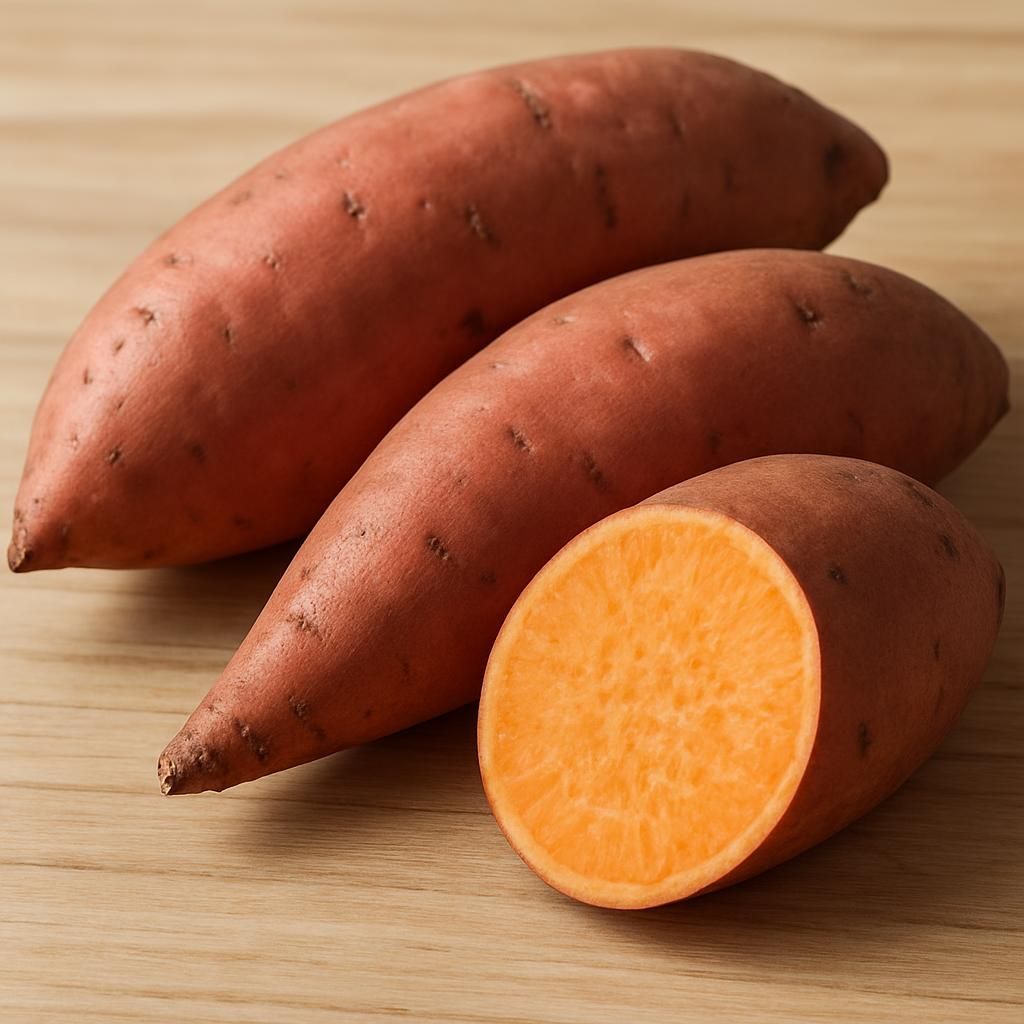
Introduction to Sweet Potato (Jewel)
Sweet Potato (Jewel) is a warm-season root crop valued for its vibrant orange flesh, rich nutritional profile, and excellent storage qualities. Jewel produces uniform, medium-sized tubers with smooth copper skin and moist, sweet flesh that retains quality after curing. Its vigorous vines and dependable performance make it a favorite among commercial growers and home gardeners seeking high yields of marketable roots.
Botanical Profile of Sweet Potato (Jewel)
Ipomoea batatas belongs to the Convolvulaceae family and is a herbaceous perennial grown as an annual in temperate regions. The plant produces trailing vines up to 2 meters long with heart-shaped leaves and adventitious roots that swell into storage tubers. Jewel is a selection known for its consistent orange flesh color, high dry-matter content, and resistance to cracking. Unlike true yams, sweet potatoes form from modified adventitious roots rather than rhizomes.
Soil, pH, and Climate Requirements for Sweet Potato (Jewel)
Jewel thrives in well-drained, sandy loam soils that warm quickly in spring. Heavy clay soils should be amended with organic matter to improve aeration and prevent waterlogging. The crop performs best in full sun with at least 6–8 hours of direct light daily and requires a frost-free growing season of 100–140 days.
| Parameter | Ideal Range | Notes |
|---|---|---|
| Soil Type | Sandy loam to loamy sand | Excellent drainage essential |
| Soil pH | 5.8–6.5 | Slightly acidic; avoid alkaline soils |
| Temperature (Day) | 24–32°C (75–90°F) | Optimal vine and root growth |
| Temperature (Night) | 15–21°C (59–70°F) | Cooler nights improve tuber quality |
| Growing Season Length | 100–140 frost-free days | Minimum soil temp 18°C (65°F) at planting |
| Spacing | 30–38 cm (12–15 in) between plants | Rows 90–120 cm (36–48 in) apart |
Step-by-Step Planting & Propagation
- Source certified disease-free slips (rooted cuttings) or produce your own by sprouting mother roots in moist sand at 24–29°C.
- Prepare raised beds or ridges 20–25 cm high to ensure drainage and soil warming.
- Plant slips 30–38 cm apart in rows 90–120 cm wide once soil reaches 18°C; bury the lower two nodes and water thoroughly.
- Apply a light starter fertilizer high in phosphorus to encourage root establishment.
- Use black plastic mulch or row covers for the first 3–4 weeks to suppress weeds and retain warmth.
Care & Maintenance regimes for Sweet Potato (Jewel)
Consistent moisture during the first 40–60 days promotes canopy development, while reduced irrigation in the final 3–4 weeks enhances sugar concentration. Side-dress with nitrogen at 4–6 weeks if vines appear pale. Minimal pruning is required; remove only damaged or diseased foliage.
| Growth Stage | Water Schedule | Fertilizer Application | Pruning/Maintenance |
|---|---|---|---|
| Establishment (0–4 wks) | 25–30 mm/week; keep soil moist | 5-10-10 at planting (broadcast) | Remove weeds; mulch beds |
| Vegetative (4–8 wks) | 20–25 mm/week; deep soak twice weekly | Side-dress 20–25 kg N/ha at 4–6 wks | Scout for pests; cultivate between rows |
| Tuber Bulking (8–12 wks) | 15–20 mm/week; taper near harvest | No additional N; maintain K levels | Minimal pruning; remove diseased leaves |
| Pre-Harvest (last 3 wks) | Reduce to 10 mm/week if rainfall low | None | Cease cultivation to avoid root injury |
Pests, Diseases & Organic Management
Major insect pests include Aphids, Wireworms, and Root-knot nematodes. Fungal issues such as Southern blight and Black rot can be managed through crop rotation, resistant varieties, and soil solarization. Encourage beneficial insects with flowering borders and apply neem oil or insecticidal soap for soft-bodied pests. Maintain field sanitation by removing crop debris after harvest.
Harvesting, Curing & Optimal Storage
Harvest when foliage begins to yellow, typically 100–120 days after planting. Use a garden fork to gently lift roots, taking care not to bruise the skin. Cure freshly dug tubers at 29–32°C and 85–90% humidity for 5–7 days to heal wounds and convert starches to sugars. Store cured roots at 13–15°C with 85–90% relative humidity; avoid refrigeration. Properly cured Jewel sweet potatoes maintain quality for 4–6 months.
Companion Planting for Sweet Potato (Jewel)
Jewel grows well alongside Okra, Southern peas, and Marigold. These pairings help suppress nematodes, attract pollinators, and improve soil structure. Avoid planting near Potato to reduce shared pest pressure. Incorporate Clover as a living mulch between rows to fix nitrogen and suppress weeds.
For additional organic soil strategies, see The Hidden Power of Mulching: 8 Organic Strategies to Transform Small Farm Soil.