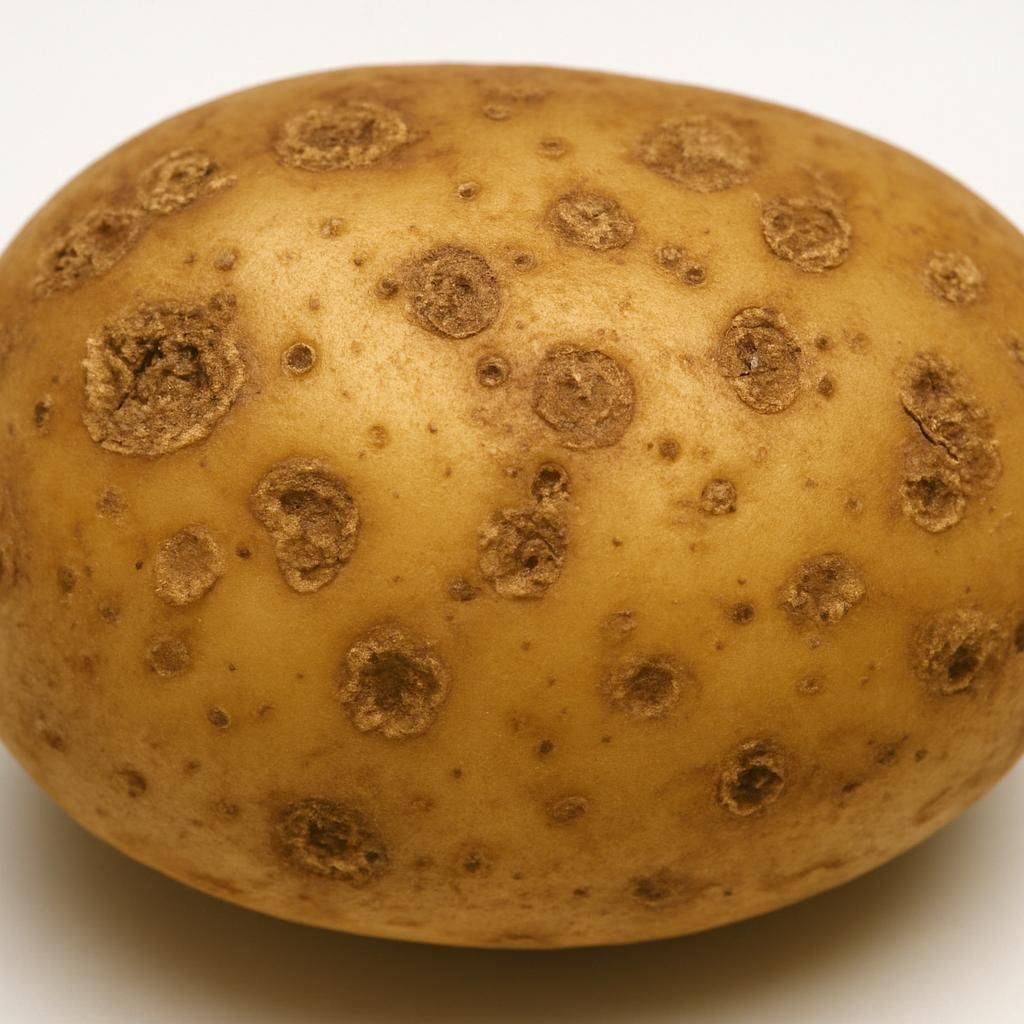
Introduction to streptomyces soil rot
Streptomyces soil rot, also known as common scab, is a chronic soil-borne disease caused by several species of filamentous actinomycetes, primarily Streptomyces scabies. These Gram-positive bacteria produce spores that persist in soil for many years, making eradication difficult once established. The disease primarily affects underground storage organs, creating superficial to deep corky lesions that reduce marketability even when yield is not severely impacted. Because the pathogen is not a true fungus but a filamentous bacterium, many conventional fungicides are ineffective, requiring growers to focus on soil health, pH management, and resistant varieties.
The economic impact is greatest on potatoes, beets, radishes, and carrots where cosmetic damage leads to downgrading or rejection. The pathogen spreads mainly through infected seed tubers, contaminated irrigation water, and movement of infested soil on equipment. Unlike many fungal diseases, Streptomyces soil rot does not produce airborne spores; instead, it survives as resilient spores in soil aggregates and crop debris. Understanding its biology is essential for developing long-term suppression strategies rather than relying on seasonal chemical interventions.
Identifying Symptoms & Damage
Early symptoms appear as small, tan to brown raised or pitted lesions on the surface of tubers, roots, or corms. As the disease progresses, lesions enlarge and develop a corky, netted, or deeply pitted appearance that may coalesce into large scabby areas. In severe cases, entire tubers or roots become deformed and unmarketable. Above-ground symptoms are rare, though severely affected plants may show slight stunting or chlorosis due to compromised root function.
Damage is primarily cosmetic and quality-related rather than yield-reducing in most crops. Lesions do not penetrate deeply into the vascular tissue, so plants rarely wilt or die. However, secondary invaders such as Fusarium or soft-rot bacteria can colonize scab lesions, leading to storage rots. Diagnosis is confirmed by observing the characteristic corky lesions and by laboratory isolation of Streptomyces species on selective media. Visual inspection of harvested produce remains the most practical field diagnostic method.
Lifecycle and Progression of streptomyces soil rot (MUST INCLUDE A MARKDOWN TABLE OF LIFECYCLE STAGES)
The pathogen survives as dormant spores in soil for up to 10–20 years. Germination occurs when soil moisture and temperature are favorable and susceptible host tissue is present. The bacteria colonize young, rapidly expanding tissues of underground organs, producing thaxtomin toxins that kill host cells and stimulate corky wound periderm formation. Spores are returned to the soil as lesions mature and crop debris decomposes.
| Lifecycle Stage | Description | Typical Duration | Key Conditions |
|---|---|---|---|
| Spore Survival | Dormant, thick-walled spores persist in soil aggregates and crop residue | Years to decades | Dry, alkaline soils favor longevity |
| Germination & Infection | Spores germinate near developing tubers/roots; thaxtomin toxins initiate lesion formation | 2–6 weeks after planting | Soil temperature 15–25 °C, low moisture |
| Lesion Development | Corky raised or pitted lesions form as host responds with wound periderm | 4–10 weeks | Continues through tuber bulking |
| Spore Return to Soil | Infected tissue decomposes, releasing new spores into soil | At harvest and post-harvest | Mechanical injury increases spread |
Environmental Triggers & Risk Factors
Soil pH above 5.5 is the strongest predictor of disease severity; alkaline conditions favor Streptomyces growth while suppressing antagonistic microbes. Low soil moisture during tuber initiation and early bulking increases infection because the pathogen is more competitive under dry conditions. High soil temperatures (above 20 °C) during the same period further promote disease. Sandy or coarse-textured soils that dry quickly and have low organic matter content are particularly prone to outbreaks.
Continuous potato or root-crop production without rotation allows spore populations to build. Use of infested seed tubers or transplants is a major introduction pathway. Irrigation with water from ponds or rivers containing soil particles can also spread spores. Manure from animals fed infected tubers may contain viable spores, although composting at high temperatures reduces viability.
Organic Control & Treatment Plans (MUST INCLUDE A MARKDOWN TABLE OF TREATMENT OPTIONS AND FREQUENCIES)
Organic management emphasizes prevention through soil pH adjustment, resistant varieties, and cultural practices. Lowering soil pH to 5.0–5.2 with elemental sulfur or acidifying fertilizers is the most effective long-term strategy. Maintaining consistent soil moisture through drip irrigation during tuber set reduces infection. Incorporation of green manures such as mustard or buckwheat stimulates antagonistic microbes. Biological seed treatments containing Bacillus subtilis or Trichoderma species can provide modest suppression when combined with cultural methods.
| Treatment Option | Application Method | Frequency / Timing | Notes |
|---|---|---|---|
| Elemental Sulfur | Broadcast and incorporate 300–600 kg/ha to lower pH | Pre-plant, every 2–3 years | Monitor pH annually; avoid over-acidification |
| Resistant Varieties | Plant cultivars with known scab resistance | Every season | Examples: Russet Burbank Potato, Yukon Gold Potato |
| Drip Irrigation | Maintain soil moisture at 60–70% field capacity during tuber initiation | Daily or as needed | Prevents rapid drying that favors pathogen |
| Mustard Green Manure | Incorporate 4–6 weeks before planting | Once per rotation cycle | Biofumigation effect reduces spore viability |
| Bacillus subtilis Seed Treatment | Dust or slurry on seed pieces | At planting | Provides competitive exclusion in rhizosphere |
| Compost Tea / Microbial Inoculants | Foliar or soil drench | Every 14–21 days during early growth | Boosts beneficial microbial diversity |
Preventing streptomyces soil rot in the Future
Long-term prevention centers on maintaining soil pH between 5.0 and 5.2 and implementing a minimum 3-year rotation that excludes potatoes and other susceptible root crops. Avoid planting in fields with a history of scab unless pH has been corrected. Always plant certified, disease-free seed and sanitize equipment between fields. Incorporate organic matter to improve soil structure and moisture retention, which indirectly suppresses the pathogen. Monitor soil pH every 1–2 years and adjust sulfur applications accordingly. In high-risk areas, consider planting less susceptible crops such as Sweet Corn or Cabbage during rotation years.
Crops Most Affected by streptomyces soil rot
Potato is the most economically important host, with nearly all commercial cultivars showing some susceptibility. Other highly affected crops include beet, radish, carrot, turnip, and parsnip. Sweet Potato and Cassava can also develop scab lesions under favorable conditions. Less commonly, the disease has been reported on Onion and Garlic when grown in heavily infested alkaline soils. Brassica crops are generally tolerant, making them useful rotational options.