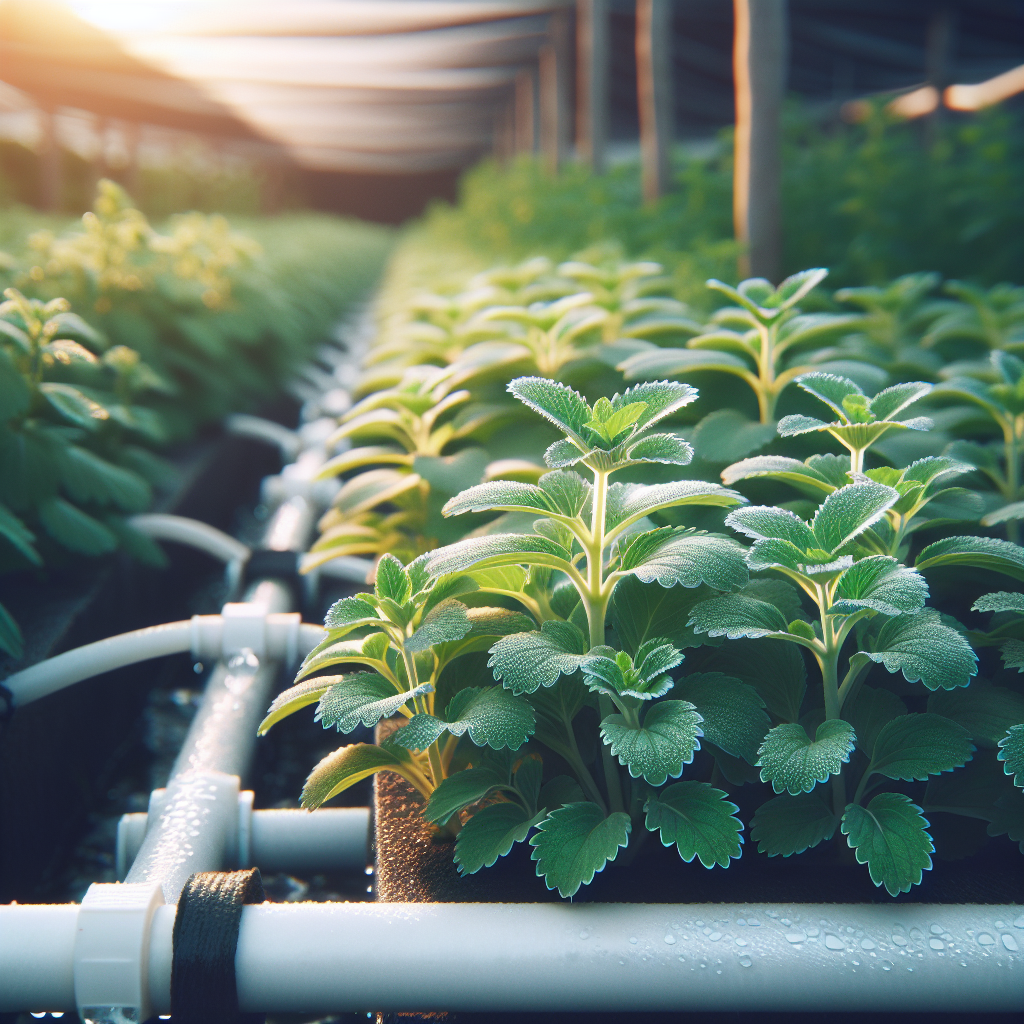
Introduction to Stevia
A small subtropical herb in the daisy family, stevia has moved from a traditional South American sweetening plant to a globally important specialty crop. Indigenous Guaraní communities used the leaves for centuries to sweeten herbal infusions and medicinal drinks long before the plant entered commercial agriculture. Modern interest centers on stevioside and rebaudioside compounds, especially rebaudioside A, which provide sweetness without the caloric load of cane sugar.
For growers, stevia is not difficult in principle, but it is unforgiving of a few common mistakes: cold soil, waterlogging, low light, and delayed harvest. It behaves as a short-lived tender perennial in frost-free climates and as a warm-season annual in temperate regions. Its market value depends heavily on leaf quality, so management should prioritize vegetative growth, clean foliage, and harvest before full bloom. Although often compared conceptually with Sugarcane because both are associated with sweetness, stevia is managed very differently: it is harvested for leaves rather than stalk juice, and subtle environmental stress can sharply affect both yield and glycoside profile.
Commercially, stevia has become attractive to diversified farms because it fits niche herb, tea, dried leaf, and value-added sweetener markets. Home gardeners also favor it because a few plants can produce enough leaves for household use. Success depends on understanding that stevia is closer to a high-value medicinal or culinary herb than to a broadacre field crop.
Botanical Profile of Stevia
Stevia rebaudiana is a member of the Asteraceae family. It is a branching herbaceous plant that usually reaches 30 to 90 cm in height, though under ideal warm conditions it may exceed that range. The stems are slender, somewhat brittle, and become more branched with repeated pinching or cutting. Leaves are opposite, lanceolate to oblanceolate, lightly serrated toward the upper margins, and most concentrated in sweetness when plants are actively vegetative.
The root system is relatively fine and shallow compared with deep-rooted perennial herbs. This shallow rooting pattern explains why stevia is highly sensitive to surface drying, yet also quick to suffer in compacted or saturated soil. Roots need oxygen; when pore space is filled with water for prolonged periods, root decline and crown rot follow rapidly.
Stevia is quantitatively and qualitatively influenced by photoperiod. It is generally considered a short-day plant, meaning flowering is promoted as day length shortens below a critical threshold. Once floral initiation begins, leaf production slows, stems become woodier, and sweetness balance may shift. For growers focused on leaf yield, the ideal strategy is to maximize vegetative growth and harvest just before significant flowering.
The flowers are small, white, and arranged in modest terminal clusters. They are not the commercial target in most systems, and allowing heavy bloom usually reduces leaf quality. Seed set can be poor and variable, and viability is often inconsistent. This is one reason vegetative propagation is strongly preferred in professional production.
Steviol glycoside content varies by genetics, environment, harvest stage, and post-harvest handling. Some cultivars are selected for higher rebaudioside A, which tends to have a cleaner sweetness and less bitterness than high-stevioside lines. If sourcing planting material, growers should choose named or tested clones when possible rather than relying on mixed seed lots.
Soil, pH, and Climate Requirements for Stevia
Stevia prefers light to medium-textured, well-drained soils rich in organic matter. Sandy loam or loam is ideal because it allows enough drainage to prevent root disease while retaining sufficient moisture for the shallow root zone. Heavy clay can be used only if deeply amended and formed into raised beds. In poorly drained ground, even short periods of standing water can cause yellowing, stunting, stem blackening at the base, and rapid plant loss.
The optimal soil pH is generally 6.0 to 7.5, with best performance often observed around 6.2 to 6.8. Below pH 5.5, nutrient imbalances and reduced vigor are common, particularly with calcium and magnesium availability. Above pH 7.5, iron and manganese uptake can be impaired, leading to interveinal chlorosis in young leaves. If pH correction is needed, make changes well ahead of planting: lime acidic soils several months before transplanting, and use elemental sulfur cautiously for alkaline conditions.
Stevia is highly frost sensitive. Growth is strongest at daytime temperatures of about 20 to 30°C, with ideal leaf expansion often occurring around 24 to 28°C. Growth slows noticeably below 15°C, and chilling injury may appear when nights dip near 5 to 7°C. Frost can kill top growth outright. In tropical or subtropical zones, stevia can persist for multiple years, though productivity often declines after the first or second heavy cutting cycle unless plants are rejuvenated.
Light is critical. Full sun is preferred in most climates, especially where summers are not excessively harsh. In very hot inland regions with intense afternoon heat above 35°C, light afternoon shade can reduce leaf scorch and moisture stress, but too much shade lowers glycoside accumulation and produces lanky stems. Aim for at least 6 to 8 hours of direct light daily.
Stevia performs best where relative humidity is moderate and airflow is good. Prolonged leaf wetness from overhead irrigation, especially in humid weather, encourages foliar disease. Drip irrigation is strongly preferred.
Moisture management should target evenly moist but never saturated soil. A practical field benchmark is to keep the upper 10 to 15 cm of soil consistently damp, not muddy, with about 60 to 80% of field capacity during active vegetative growth. If soil from the root zone squeezes into a shiny, sticky mass and water films appear around the fingers, it is too wet. If it turns dusty and fails to form a weak crumb, it is too dry. Overwatered stevia often shows generalized yellowing, limp stems despite wet soil, slow growth, and a sour smell in the root zone. Underwatered plants wilt in midday, develop smaller tougher leaves, and may show browning at leaf edges.
For deeper background on building a suitable rooting environment, see soil health tips.
Step-by-Step Planting & Propagation
Propagation from cuttings is the most reliable way to establish uniform, high-quality stevia. Start with healthy mother plants free of virus symptoms, leaf spotting, or mite injury. Take 7 to 10 cm softwood cuttings from non-flowering shoots. Remove the lower leaves, leaving 2 to 4 leaves at the top, and trim large leaves by half if humidity control is difficult. Dip the base in a mild rooting hormone if desired, then place in a sterile medium such as perlite with peat, coco coir with perlite, or a propagation mix with excellent aeration.
Maintain high humidity around cuttings for the first 7 to 10 days and a medium temperature of roughly 22 to 26°C. Bright indirect light is preferable during rooting; intense direct sun can desiccate unrooted cuttings. Roots often form in 10 to 21 days. Harden plants gradually by reducing humidity and increasing light over a week before transplanting.
Seed propagation is possible but less dependable. Use fresh seed, because viability declines quickly. Surface sow or cover very lightly, as stevia seed benefits from light for germination. Maintain a temperature of 21 to 24°C and even moisture without saturating the tray. Germination may be uneven and rates can be disappointingly low. Expect considerable variation in vigor and sweetness from seedlings.
To plant in the field, begin site preparation 2 to 4 weeks in advance. Incorporate well-finished compost at a moderate rate, enough to improve structure without making soil excessively lush and water-retentive. Raised beds 15 to 25 cm high are especially valuable in regions with spring rain or heavier soils. Install drip lines before transplanting.
Transplant only after all danger of frost has passed and soil temperatures are reliably above 15°C, ideally closer to 18°C. Cold soil delays establishment and increases disease susceptibility. Space plants about 25 to 35 cm apart within rows, with rows 45 to 60 cm apart for hand-managed systems. Wider spacing improves airflow but may reduce early canopy closure; tighter spacing can increase total leaf yield per area if disease pressure is low and fertility is balanced.
At transplanting, set the root ball at the same depth it occupied in the tray or pot. Do not bury the crown. Water in thoroughly to settle the soil, then allow the surface to dry slightly before the next irrigation to encourage root exploration. Organic mulches such as fine straw or shredded leaves can help conserve moisture, but keep mulch a few centimeters away from the stem base to prevent crown rot.
In containers, choose at least a 20 to 25 cm pot for a single mature plant, with excellent drainage and a loose potting mix. Container stevia dries faster than field-grown plants and may need irrigation every 1 to 2 days in hot weather.
Care & Maintenance regimes for Stevia
Stevia responds best to moderate, steady fertility. Excess nitrogen can push soft, weak growth with reduced flavor quality and greater pest pressure, while insufficient fertility limits branching and leaf area. A balanced pre-plant fertility program is usually preferable to repeated heavy feeding. If soil is reasonably fertile, a modest side-dressing of compost or a light application of organic balanced fertilizer after establishment is sufficient. In commercial terms, fertility should support leaf production without forcing lush, watery tissue.
Nitrogen should be applied carefully. Visual deficiency appears as pale green older leaves and slow canopy expansion. Excess nitrogen appears as unusually large, soft leaves, elongated internodes, and delayed concentration of sweet compounds. Potassium is important for overall plant resilience, water regulation, and leaf quality. Calcium helps maintain tissue strength and reduces stress sensitivity in fluctuating moisture conditions.
Irrigation should be frequent enough to prevent root-zone drying, but each event should be sized to avoid prolonged saturation. In sandy soils during warm weather, this may mean small daily or near-daily applications through drip. In loam, irrigation every 2 to 4 days may suffice depending on rainfall and evapotranspiration. The goal is moisture consistency in the top rooting profile, not deep soaking followed by drought. Stevia does not tolerate severe moisture swings well; such fluctuations can reduce leaf yield and induce bitter notes.
Pinching is one of the most useful management tools. When young plants reach roughly 15 to 20 cm tall, pinch the growing tip to encourage branching. More branches mean more harvestable leaves and a bushier architecture less prone to lodging. After the first cut, regrowth can be managed similarly if climate length permits a second harvest.
Weed control is essential during establishment because stevia seedlings and young transplants compete poorly. Mechanical cultivation should be shallow to avoid damaging roots near the soil surface. Organic mulches, landscape fabric in small-scale systems, or stale seedbed techniques can be effective. Avoid allowing aggressive weeds to overtop the crop, since shading rapidly lowers vigor.
In perennial or overwintering systems, cut plants back lightly after harvest but do not scalp them to the ground if cool weather is approaching. In frost-free climates, older plants may become woody and less productive; replacement with fresh propagated material every 1 to 3 years often maintains better commercial quality.
For protected cultivation, ensure strong airflow. Greenhouse-grown stevia can become tender and disease-prone if humidity is excessive and temperatures remain warm at night. Ventilation, moderate feeding, and disciplined watering are key.
Pests, Diseases & Organic Management
Stevia is not the most pest-prone herb, but several problems recur, especially under warm, humid, or protected conditions. Aphids may cluster on tender shoot tips, causing curling, sticky honeydew, and sooty mold. Whiteflies can colonize the undersides of leaves in greenhouses or sheltered tunnels. Spider mites become serious in hot, dry environments, producing fine stippling, bronzing, and webbing under severe infestations. Thrips may scar leaves and distort new growth.
The strongest organic defense is crop hygiene and balanced growth. Overfed, weak, succulent plants are more attractive to sap-feeding insects. Encourage beneficial insects by maintaining diverse flowering borders nearby, but avoid creating dense, humid canopies around the crop itself. If intervention is needed, insecticidal soap or neem-based products can help on soft-bodied pests, provided coverage reaches leaf undersides. Apply in cooler parts of the day to reduce phytotoxicity.
Common disease issues include damping-off in propagation, root rot in wet soils, and foliar fungal problems where leaves stay wet for long periods. Rhizoctonia, Pythium, and other soilborne pathogens thrive in waterlogged media and poorly drained beds. Symptoms include sudden collapse, constricted dark stems at the crown, and decayed roots. Prevention is far superior to treatment: use clean propagation media, sanitize trays, avoid overwatering, and maintain drainage.
Leaf spots may appear from fungal or bacterial causes, especially after overhead irrigation or frequent rain. Remove badly affected foliage, increase spacing if canopies are dense, and irrigate early in the day if overhead watering is unavoidable. Copper-based products may have a place in organic systems for persistent bacterial issues, but should be used judiciously and according to label restrictions.
Nematodes can be problematic in sandy soils with repeated herb production. Stunted plants, patchy growth, and poor root development may indicate Root-knot nematode pressure. Rotation with non-host or suppressive crops, soil solarization in hot regions, and high-organic-matter management can help reduce populations.
The most important diagnostic rule with stevia is to distinguish drought stress from root disease. Both can cause wilting. If the soil is wet and plants wilt, suspect root oxygen deprivation or crown/root rot rather than lack of irrigation.
Harvesting, Curing & Optimal Storage
Harvest timing has a direct effect on both sweetness and total yield. In most systems, the best harvest window is just before flowering or at the very earliest bloom stage, when steviol glycoside concentration is typically high and leaves are still abundant and tender. Waiting too long often leads to reduced leaf quality, more stemmy material, and lower market appeal.
For a first harvest, plants are usually cut once they are well branched and 30 to 50 cm tall, depending on spacing, climate, and intended market. Use clean shears and cut stems 10 to 15 cm above ground level to preserve nodes for regrowth if conditions allow a second flush. Harvest after dew has dried but before the day becomes extremely hot. Mid-morning is often ideal.
Handle harvested stevia gently and keep it shaded. Heat buildup in piles can darken leaves and reduce quality. If marketing dried leaves, strip leaves from stems promptly or dry small stems in thin layers, then thresh later. Drying should be fast enough to preserve green color but gentle enough to avoid volatilizing aromatic components or scorching tissue.
Ideal drying conditions are around 35 to 45°C with strong airflow and low humidity. At higher temperatures, leaf color may fade and flavor quality may decline. In a dehydrator or drying room, spread leaves in a thin single layer. Leaves are sufficiently dry when they feel crisp and crumble easily rather than bending. Final moisture for safe storage should generally be below about 10%, with 8% or lower preferred for longer holding if humidity control is uncertain.
For fresh use, leaves can be refrigerated briefly in a breathable container, but they are perishable and lose quality quickly. Dried leaves should be stored in airtight containers away from light, heat, and moisture. Opaque glass jars, foil-lined pouches, or sealed food-grade containers are ideal. Under cool, dark, dry storage, well-dried stevia leaves can maintain usable quality for many months. If leaves become leathery, smell musty, or show condensation inside the container, they were stored too wet and should be discarded.
If processing into powder, grind only fully dry leaves and sieve out coarse stem fragments. Powder should be packed immediately because its increased surface area makes it more sensitive to moisture uptake and aroma loss.
Companion Planting for Stevia
Stevia benefits most from companions that support pollinators and beneficial insects, improve soil structure, and avoid excessive shading or root competition. Good companions include compact herbs and flowers such as basil, alyssum, marigold, chamomile, and calendula in diversified garden systems. These can attract predatory insects and parasitoids that help suppress Aphids and Whiteflies while keeping the planting biologically active.
Because stevia prefers evenly moist but well-aerated soil, avoid pairing it too closely with aggressive, thirsty, sprawling crops that dominate the root zone or cast dense shade. Large cucurbits and very vigorous solanaceous crops can overwhelm it unless spacing is generous. A low, managed herb border is often more suitable than mixed dense intercropping.
Legumes can be useful nearby in rotation or as adjacent strips, but direct competition from tall or vining legumes should be prevented. The best companions are those that share similar irrigation needs without demanding heavy nitrogen. Stevia generally performs better with moderate fertility than in heavily manured mixed beds.
In small farms and market gardens, companion planning should also account for harvest access. Since stevia is cut for leaf quality, place companions so they do not interfere with airflow, drying of foliage after rain, or repeated cutting passes. A practical design is stevia on raised beds with insectary strips nearby rather than crowded into the same narrow row. For broader layout ideas, consult a companion planting guide.
The most successful companion strategy is ecological rather than decorative: maintain biodiversity around the crop, keep the stevia canopy sunny and ventilated, and avoid neighboring plants that create prolonged humidity or nutrient imbalance.