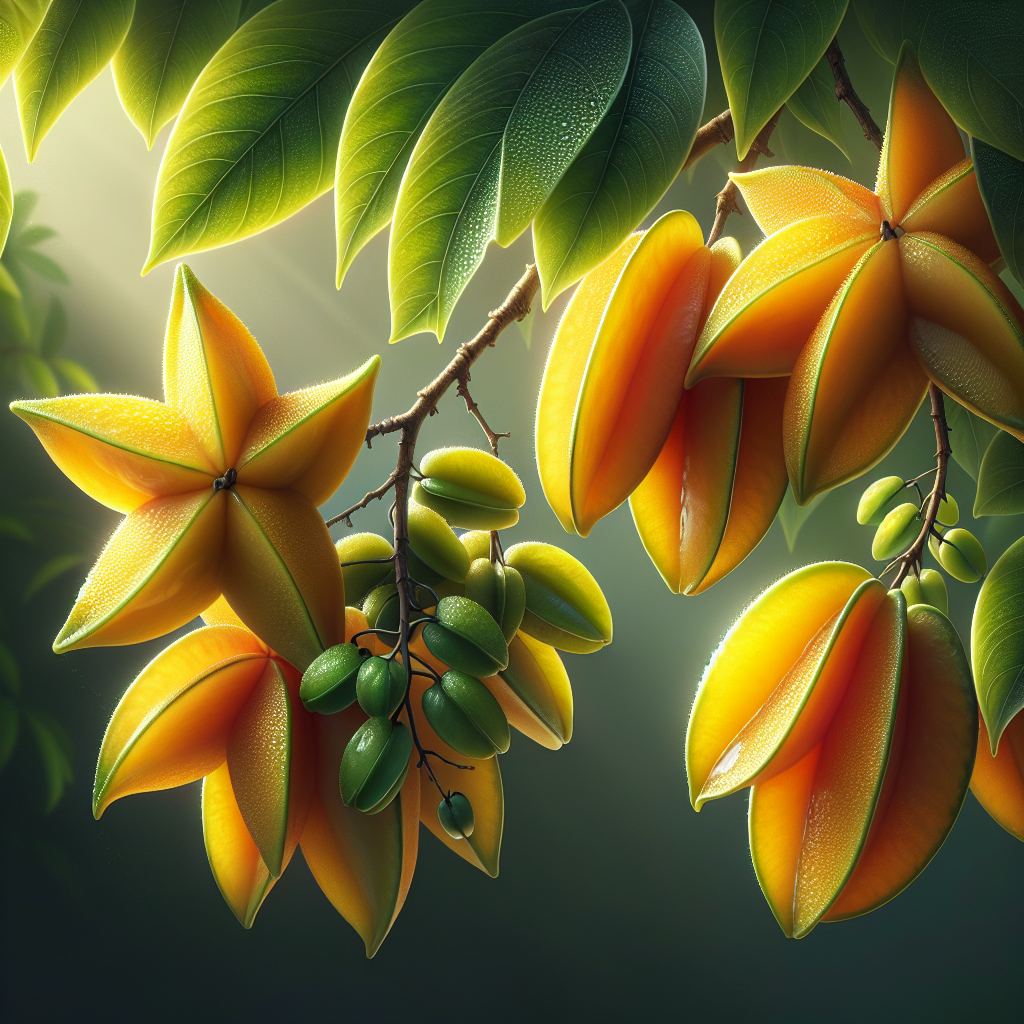
Introduction to Starfruit (Arkin)
Starfruit, scientifically known as Averrhoa carambola 'Arkin', is a captivating tropical fruit tree renowned for its distinctive star-shaped fruits that slice into perfect five-pointed stars. The Arkin variety stands out among starfruit cultivars for its superior sweetness, smaller seed count, and crisp texture, making it a favorite for fresh eating, juicing, and culinary applications. Native to Southeast Asia and Indonesia, this evergreen tree has gained global popularity in subtropical regions like Florida, Hawaii, and Queensland due to its ornamental appeal, year-round productivity, and nutritional profile packed with vitamin C, fiber, and antioxidants.
Growing Starfruit (Arkin) offers small-scale farmers and home gardeners a high-value crop with excellent market potential. Trees typically reach 20-30 feet in height but can be pruned to 10-15 feet for easier management. Fruits weigh 0.25-0.5 pounds each, with thin, waxy skin that's edible, reducing waste. Yields begin in 2-3 years from seed or grafted stock, peaking at 100-200 pounds per mature tree annually. This guide provides professional-grade advice on cultivation, drawing from decades of agronomic research to maximize your success. For similar tropical fruits, check the Dragon Fruit (crop) wiki page.
Botanical Profile of Starfruit (Arkin)
Starfruit (Arkin) belongs to the Oxalidaceae family, characterized by its slender, upright growth habit and pinnate leaves that fold at night, giving it a unique "sleeping" appearance. The tree produces small, fragrant purple-pink flowers in clusters year-round in tropical climates, leading to fruit set every 2-3 months. Arkin fruits are medium-sized (4-6 inches long), with golden-yellow skin when ripe, juicy translucent flesh, and minimal seeds—often just 1-4 small ones compared to 10+ in wild types.
Key botanical traits include a shallow, fibrous root system that demands excellent drainage to prevent rot, and a preference for full sun (6-8 hours daily). The wood is lightweight and brittle, so wind protection is essential. Pollination is primarily self-fertile, but cross-pollination with other cultivars like 'Kary' boosts yields by 20-30%. Nutritionally, 100g of fruit provides 30-40 calories, 91% water, 2.8g fiber, and 91% of daily vitamin C needs. Arkin is parthenocarpic to some degree, producing seedless fruits under optimal conditions, enhancing its commercial appeal.
Soil, pH, and Climate Requirements for Starfruit (Arkin)
Starfruit (Arkin) thrives in fertile, well-draining sandy loam or loamy soils with organic matter content of 3-5%. Heavy clay soils lead to root rot, so amend with 30-50% sand or perlite if needed. Ideal pH is 5.5-6.5—slightly acidic to neutral; test soil annually and adjust with sulfur for high pH or lime for low. Mulch with 4-6 inches of organic material like coconut coir or pine bark to retain moisture and suppress weeds, but keep mulch 6 inches from the trunk to avoid fungal issues.
Climatically, Arkin requires USDA zones 10-11 or equivalent, with minimum temperatures above 28°F (-2°C) to avoid damage. Optimal growth occurs at 70-90°F (21-32°C) daytime and 60-75°F (15-24°C) nights. It tolerates brief droughts but prefers 50-70 inches of annual rainfall, evenly distributed. High humidity (60-80%) aids fruit set, but stagnant air promotes fungal diseases. In marginal areas, use frost blankets or microclimates near south-facing walls. For heatwave strategies, see Why Summer Heatwaves Are Silently Killing Small Farm Yields - And 7 Organic Strategies to Fight Back. Salt tolerance is moderate; avoid coastal exposure without leaching.
Step-by-Step Planting & Propagation
Propagation Methods: Grafted trees are recommended for Arkin, ensuring true-to-type fruiting in 18-24 months versus 5-7 years from seed. Air-layering yields 80-90% success: select a 1-2 year-old branch, girdle 1-inch wide, apply rooting hormone (IBA 5000 ppm), wrap in moist sphagnum moss and plastic, root in 6-8 weeks. Cuttings root poorly; use semi-hardwood 6-8 inches long under mist propagation.
Site Preparation: Choose a sunny site with 15-20 ft spacing for standard trees, 10 ft for dwarfs. Dig holes 2x wider than root ball, 12-18 inches deep. Incorporate 4-6 lbs compost, 1 lb bone meal, and 0.5 lb potash per hole.
Planting Steps: 1. Plant in early spring or rainy season. 2. Soak bare-root stock 24 hours; keep grafted pots moist. 3. Position graft union 4-6 inches above soil. 4. Backfill, firm soil, water deeply (10-15 gallons). 5. Stake if windy; apply 3-inch mulch layer.
Initial Care: Irrigate every 3-5 days for first 6 months to establish roots. Fertilize monthly with balanced 10-10-10 at 1 lb/tree, increasing to quarterly.
Care & Maintenance regimes for Starfruit (Arkin)
Watering: Deep water weekly (1-2 inches) once established, more during fruiting (every 4-5 days). Use drip irrigation to maintain even moisture; overwatering causes cracking.
Fertilization: Apply 1-2 lbs NPK 8-3-9 annually per mature tree, split into 4 applications. Micronutrients like zinc, iron, and manganese via foliar sprays every 3 months prevent deficiencies—yellowing leaves signal issues.
Pruning: Annually after harvest, remove deadwood, watersprouts, and crossing branches. Tip-prune to encourage bushiness; maintain open center for light penetration. Height control: top at 12-15 ft.
Weed & Mulch Management: Keep basin weed-free; mulch replenishes yearly. Monitor for nutrient competition.
Pollination Boost: Hand-pollinate flowers with soft brush during peak bloom for 15-20% yield increase.
Pests, Diseases & Organic Management
Common Pests: Aphids, mealybugs, and fruit flies attack tender growth. Control with neem oil (2% solution weekly) or insecticidal soap. Scale insects on bark: prune infested areas, apply horticultural oil dormant sprays. Birds peck ripe fruit—net trees.
Diseases: Anthracnose causes fruit rot; ensure airflow, apply copper fungicide preventively. Phytophthora root rot from poor drainage—improve soil, use raised beds. Powdery mildew in humid conditions: sulfur sprays, potassium bicarbonate.
Organic IPM: Introduce ladybugs for aphids; reflective mulches deter flies. For detailed strategies, see Why 90% of Small Farms Fail at Pest Management - And 8 Organic Fixes That Actually Work. Rotate copper with biofungicides like Bacillus subtilis.
Harvesting, Curing & Optimal Storage
Harvest when fruits turn dull yellow to orange, thumb-pressure yields slightly (specific gravity 1.00-1.03). Cut clusters with shears; yield 50-100 fruits/tree first year, up to 400 mature. Avoid pulling to prevent trunk damage.
Curing: Ripen at 68-77°F (20-25°C), 85-90% humidity 3-5 days for sweetness. No ethylene needed.
Storage: Fresh: 45-50°F (7-10°C), 90-95% RH, lasts 3-4 weeks. Refrigerate slices in airtight containers up to 1 week. Juice freezes 6-12 months. Market ripe for premium prices; process green for longer shelf life.
Companion Planting for Starfruit (Arkin)
Pair Arkin with Thai Basil for pest repulsion (aphids, flies) and pollinator attraction. Marigold suppresses nematodes; Guava provides windbreak and shade tolerance synergy. Avoid Potato or water-hungry crops competing for moisture. Legumes like Pigeon pea fix nitrogen. Underplant with low-growers like Nasturtium for ground cover and trap cropping. Space companions 5-10 ft away to prevent shading. Benefits include 10-15% pest reduction and improved soil health.