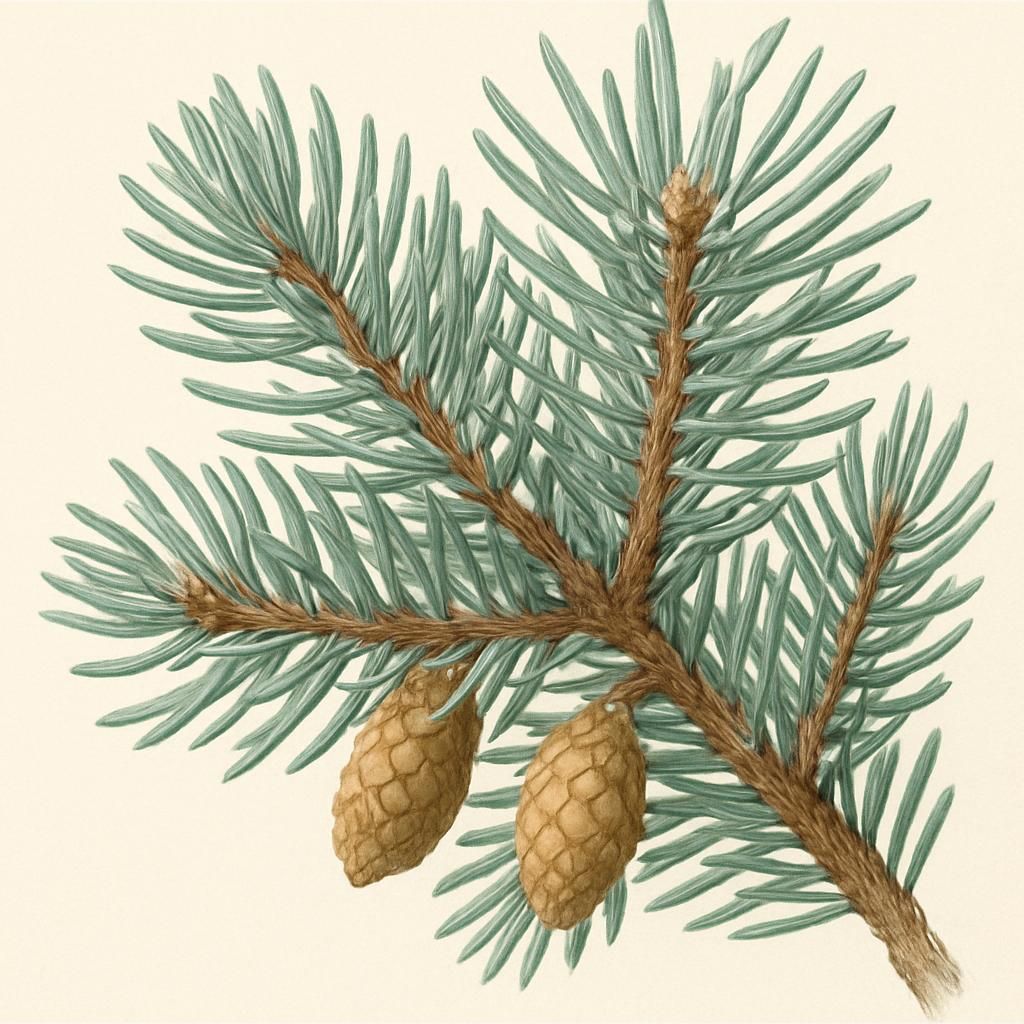
Introduction to Spruce
Spruce (Picea spp.) represents a cornerstone genus in commercial forestry, Christmas tree production, and large-scale reforestation programs. Species such as Norway spruce (Picea abies), Colorado blue spruce (Picea pungens), and white spruce (Picea glauca) dominate plantations across North America, Europe, and Asia. Their straight trunks, dense foliage, and moderate growth rates make them ideal for both lumber and ornamental markets. Modern cultivation emphasizes clonal selection, precision site preparation, and integrated pest management to maximize survival and wood volume.
Botanical Profile of Spruce
Spruce trees are monoecious evergreens belonging to the Pinaceae family. They exhibit a classic pyramidal form with whorled branches and four-sided needles attached to short woody pegs (pulvini). Male cones produce pollen in spring while female cones develop over one to two growing seasons, releasing winged seeds in autumn. Root systems are typically shallow and fibrous, making trees susceptible to windthrow on wet or compacted soils. Growth rates vary from 30–60 cm annually in optimal conditions, with mature heights ranging from 20–60 meters depending on species and site quality.
Soil, pH, and Climate Requirements for Spruce
Spruce demands well-aerated, acidic soils with consistent moisture but excellent drainage. Avoid heavy clays or sites with seasonal waterlogging. The following table summarizes ideal growing conditions:
| Parameter | Ideal Range | Notes |
|---|---|---|
| Soil pH | 5.0–6.5 | Strongly acidic to slightly acidic |
| Soil Texture | Loamy sand to sandy loam | High organic matter improves fertility |
| Drainage | Good to excellent | Raised beds or drainage tiles on heavy soils |
| Annual Precipitation | 600–1200 mm | Supplemental irrigation in first 3 years |
| Temperature Range | -40 °C to 25 °C | Cold hardy; avoid prolonged heat above 30 °C |
| USDA Hardiness Zones | 2–7 | Species-specific tolerance varies |
| Elevation | 0–2500 m | Higher elevations reduce heat stress |
Step-by-Step Planting & Propagation
- Site Assessment: Conduct soil tests and evaluate drainage. Amend with elemental sulfur if pH exceeds 6.5.
- Seedling Selection: Use 2–3 year-old bare-root or container-grown seedlings from certified disease-free nurseries. Match provenance to local climate.
- Spacing: Plant at 2.5 m × 2.5 m for Christmas trees or 3 m × 3 m for timber production.
- Planting Window: Early spring before bud break or late autumn after leaf fall. Dig holes twice the root-ball width.
- Planting Depth: Set root collar at soil level; backfill with native soil mixed with 20 % compost.
- Watering: Apply 10–15 L per tree immediately after planting and maintain consistent moisture for the first two seasons.
- Mulching: Apply 7–10 cm organic mulch in a 1 m diameter ring, keeping material 10 cm from the trunk.
Care & Maintenance regimes for Spruce
Consistent cultural practices during the first decade determine long-term health and timber quality. The table below outlines recommended schedules:
| Year/Season | Watering Schedule | Fertilizer Application | Pruning Schedule |
|---|---|---|---|
| Year 1–2 | 15–20 L weekly during dry periods | 50 g slow-release NPK (10-10-10) in spring | Remove only dead or damaged branches |
| Year 3–5 | 10 L every 10–14 days if rainfall <25 mm | 100 g NPK in early spring; optional micronutrients | Shape leaders for Christmas trees in July |
| Year 6–10 | Irrigation rarely needed | 150–200 g NPK split into spring/autumn | Remove lower whorls for clear timber boles |
| Mature | Natural rainfall sufficient | Maintenance only on poor sites | Sanitation pruning every 3–5 years |
Pests, Diseases & Organic Management
Common threats include spruce budworm, spruce spider mite, and white pine weevil. Fungal issues such as Rhizoctonia root rot and Armillaria can appear on stressed trees. Implement weekly scouting from bud break through September. Organic controls include horticultural oil for mites, Bacillus thuringiensis (Bt) for caterpillars, and improved airflow through selective thinning. Maintain a 2 m weed-free zone around each tree to reduce vole habitat.
Harvesting, Curing & Optimal Storage
Christmas trees are typically harvested at 6–9 years when they reach 1.8–2.5 m. Cut at ground level in early morning during cool temperatures. For timber, rotation length ranges from 25–50 years depending on species and desired log diameter. After felling, delimb immediately and transport logs to a shaded yard within 48 hours. Air-dry lumber to 12–15 % moisture content over 6–12 months. Store finished boards under cover with adequate ventilation to prevent staining and warping.
Companion Planting for Spruce
Spruce benefits from nitrogen-fixing understory species that improve soil fertility without competing heavily for moisture. Compatible companions include clover, hairy vetch, and pigeon pea in the first five years. Avoid shallow-rooted crops that increase competition. In mixed plantations, interplant with Douglas fir or western red cedar at wider spacing to create structural diversity and reduce pest pressure through habitat complexity.
For additional insights on soil health strategies that support long-term conifer plantations, see The Forgotten Art of Fall Soil Revival: 8 Organic Strategies for Small Farm Resilience. More technical details on Picea taxonomy and distribution are available on the Picea Wikipedia page.