Introduction to western red cedar
Western red cedar (Thuja plicata) is a majestic evergreen conifer native to the coastal and inland forests of the Pacific Northwest. Renowned for its straight grain, natural resistance to decay, and pleasant aroma, it has been a cornerstone of Indigenous cultures and modern forestry for centuries. The tree can reach heights of 50–70 meters with trunk diameters exceeding 3 meters in old-growth stands. Its wood is prized for shingles, siding, boat building, and outdoor furniture due to high concentrations of thujaplicins that deter fungi and insects. In landscaping it serves as a fast-growing privacy screen, windbreak, and specimen tree. Commercial growers value its adaptability to a range of temperate climates and its ability to regenerate from seed or cuttings. This guide provides professional-grade, science-based advice for establishing and managing productive stands whether for timber, essential oils, or ornamental purposes.
Botanical Profile of western red cedar
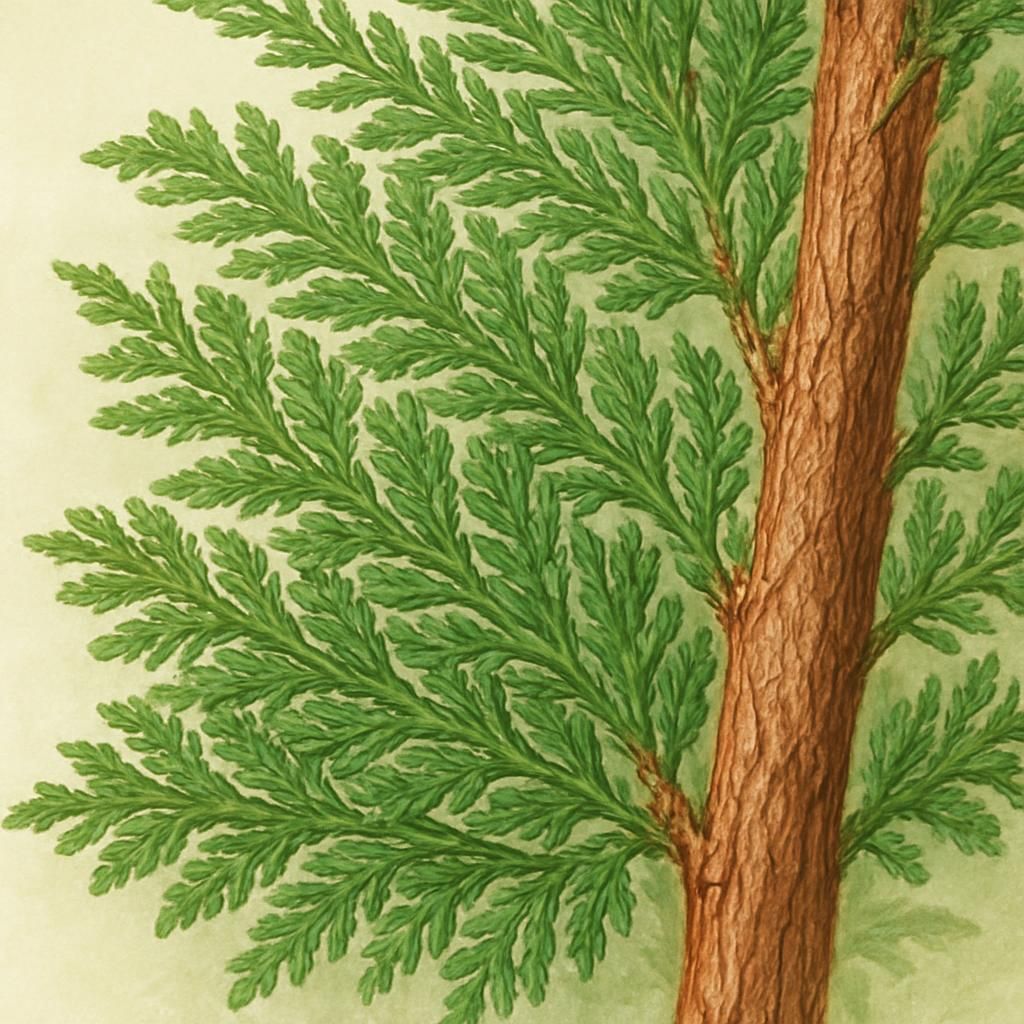
Thuja plicata belongs to the cypress family (Cupressaceae) and is distinguished by its scale-like, glossy green leaves arranged in flattened sprays. The bark is thin, fibrous, and reddish-brown, peeling in long strips. Cones are small (8–12 mm), oblong, and mature in one season, releasing tiny winged seeds. The root system is shallow yet extensive, making the tree susceptible to windthrow on wet soils but highly efficient at nutrient uptake in organic-rich forest floors. Growth is moderate to rapid in youth (60–90 cm annually) before slowing as the tree matures. The species is monoecious, producing both male and female cones on the same individual. Western red cedar exhibits strong apical dominance and responds well to pruning when young, forming dense, pyramidal crowns ideal for hedging. Its longevity often exceeds 500 years in suitable habitats, contributing to carbon sequestration and biodiversity in mixed-conifer forests.
Soil, pH, and Climate Requirements for western red cedar (MUST INCLUDE A MARKDOWN TABLE OF IDEAL CONDITIONS)
Western red cedar thrives in moist, well-drained soils with high organic matter content. It tolerates a range of textures from sandy loams to heavy clays provided drainage prevents waterlogging. The species prefers slightly acidic to neutral conditions and performs best in regions with cool, humid summers and mild winters. Avoid planting on exposed, drought-prone sites or compacted urban soils without amendment. The following table summarizes ideal parameters for commercial and landscape plantings:
| Parameter | Ideal Range | Notes |
|---|---|---|
| Soil pH | 5.5 – 7.0 | Optimal nutrient availability |
| Soil Texture | Loam to clay loam | High organic matter improves performance |
| Drainage | Good to moderate | Avoid prolonged saturation |
| Annual Rainfall | 750 – 2,500 mm | Supplemental irrigation in dry summers |
| Temperature Range | −15 °C to 30 °C | Frost hardy; avoid extreme heat |
| USDA Zones | 5 – 8 | Best growth in maritime climates |
| Sunlight | Full sun to partial shade | Tolerates shade when young |
| Elevation | Sea level to 1,800 m | Lower elevations preferred for timber |
Step-by-Step Planting & Propagation
Propagation of western red cedar can be achieved through seed or semi-hardwood cuttings. Collect ripe cones in late summer, dry them to release seeds, and stratify at 4 °C for 30–60 days before sowing in early spring. Use a well-drained seed mix of peat and perlite; maintain 18–22 °C and consistent moisture until germination (14–28 days). For clonal propagation, take 15–20 cm cuttings from current-season growth in late summer, dip in 0.3 % IBA rooting hormone, and place in a mist propagation bench with bottom heat at 20 °C. Rooting occurs in 6–10 weeks. Field planting of 1- or 2-year-old seedlings or rooted cuttings is best done in early spring or autumn. Space timber trees 2.5–3 m apart in rows 3–4 m wide; closer spacing (1.5 m) is suitable for hedging. Prepare planting holes twice the root-ball width, incorporate compost, and backfill while ensuring the root collar remains at soil level. Water thoroughly after planting and apply a 5–8 cm layer of organic mulch to conserve moisture and suppress weeds. Protect young trees from deer browse with netting or repellents during the first three winters.
Care & Maintenance regimes for western red cedar (MUST INCLUDE A MARKDOWN TABLE OF WATER, FERTILIZER, AND PRUNING SCHEDULES)
Established western red cedar requires minimal intervention once roots are established, but consistent moisture during the first three growing seasons is critical. Fertilization should be conservative; excess nitrogen promotes weak growth susceptible to pests. Pruning is primarily for shape and airflow in hedges or to remove deadwood in timber stands. The table below outlines recommended schedules:
| Season | Watering | Fertilizer | Pruning |
|---|---|---|---|
| Spring | Deep soak every 7–10 days | Apply balanced 10-10-10 at 50 g/m² | Shape young hedges; remove dead branches |
| Summer | Maintain even moisture; mulch | Light side-dress with compost tea if needed | Light tip pruning on hedges only |
| Autumn | Reduce frequency as growth slows | No fertilizer; focus on leaf litter return | Remove crossing branches; improve airflow |
| Winter | Minimal unless in prolonged dry | None | Structural pruning on dormant trees |
Monitor soil moisture at 15 cm depth; irrigate when below 50 % field capacity. In timber plantations, thin at 15–20 years to favor crop trees with straight boles. For landscape specimens, maintain a single central leader and remove lower branches gradually to create clearance.
Pests, Diseases & Organic Management
Western red cedar is relatively resistant to many pests but can be affected by Spider Mites, cypress tip moth, and cedar leaf blight caused by Didymascella thujina. Spider mite infestations appear as stippled, bronzed foliage and fine webbing; control with strong water sprays and predatory mites. Cedar leaf blight produces brown, scorched branch tips in humid conditions; improve air circulation through selective pruning and apply copper-based fungicides in early spring. Root rot from Phytophthora species occurs in poorly drained soils—prevent by planting on raised beds or amending heavy soils with organic matter. Deer and rabbit browsing on young foliage can be mitigated with physical barriers or organic repellents containing capsaicin and garlic. Regular scouting and cultural practices such as proper spacing and mulching reduce the need for chemical interventions and support beneficial insect populations.
Harvesting, Curing & Optimal Storage
Timber harvesting of western red cedar typically occurs at 40–60 years for high-value lumber, though shorter rotations are possible for pulp or biomass. Fell trees in late autumn or winter when sap flow is low to minimize staining. Buck logs to length, remove branches, and transport promptly to prevent fungal staining. Air-dry lumber in covered stacks with stickers for 6–12 months until moisture content reaches 12–15 %. Kiln drying at 60–70 °C for 3–5 days accelerates the process and sterilizes wood against insects. Store finished boards indoors on pallets with good airflow; avoid ground contact. Essential oil extraction from foliage and twigs is performed by steam distillation shortly after harvest for maximum thujaplicin content. Foliage for wreaths or garlands should be cut in early morning, bundled, and kept cool until use within 7–10 days.
Companion Planting for western red cedar
Western red cedar integrates well with understory species that tolerate partial shade and moist soils. Compatible companions include Thyme, Yarrow, and Clover, which improve soil nitrogen and attract beneficial insects. In mixed forestry systems, pairing with Douglas fir and western hemlock creates resilient, multi-layered stands. Avoid planting with shallow-rooted competitors such as turf grasses that compete for surface moisture. In ornamental landscapes, underplant with ferns and shade-tolerant perennials to enhance biodiversity and reduce weed pressure. These pairings support pollinators, improve soil structure, and contribute to overall stand health without the need for synthetic inputs.