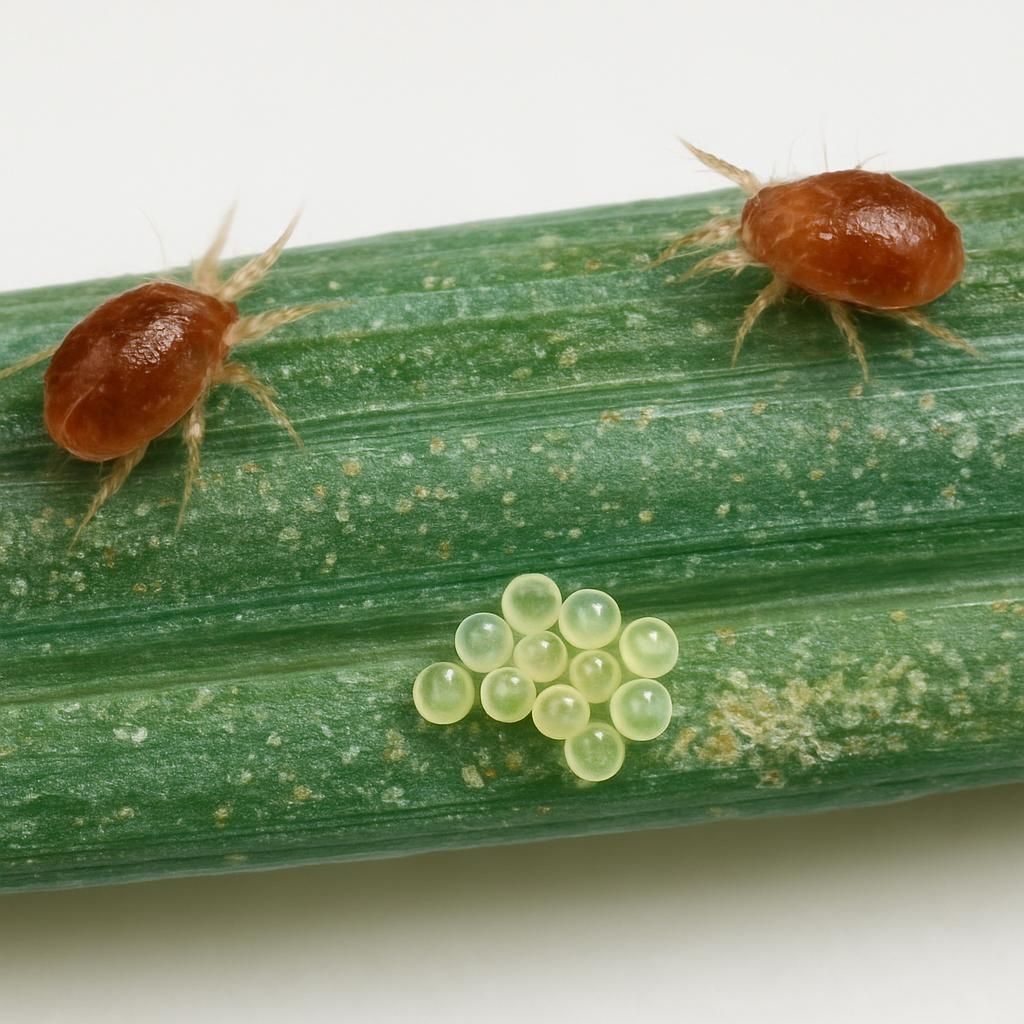
Introduction to spruce spider mite
The spruce spider mite (Oligonychus ununguis) is a cool-season arachnid that ranks among the most damaging pests of spruce, fir, arborvitae, and other conifers in temperate landscapes and commercial nurseries. Unlike warm-season spider mites, this species is most active in spring and fall when temperatures remain between 50–75 °F and relative humidity is low. Heavy infestations can reduce photosynthetic capacity, weaken trees, and create entry points for secondary pathogens such as needle cast diseases.
Adult females are approximately 0.4 mm long, dark green to nearly black, and bear two lateral rows of pale spots. Males are smaller and more slender. All life stages produce fine silk webbing, although it is less conspicuous than that of two-spotted spider mites. Because the pest overwinters as eggs on bark and needle bases, early-season scouting is essential for timely intervention.
Identifying Symptoms & Damage
Initial damage appears as fine, pale stippling on the upper surface of older needles. As feeding continues, stippling coalesces into a bronze or rusty discoloration that may progress from the lower canopy upward. Severely infested trees exhibit premature needle drop, thin crowns, and reduced growth the following season. Close inspection with a 10–15× hand lens reveals clusters of eggs, cast skins, and active mites along the needle undersides and at branch crotches.
Differentiation from other mites is straightforward: spruce spider mites lack the bright yellow-green body and prominent dark spots characteristic of two-spotted spider mites, and they do not produce the dense, tent-like webs seen in heavy spider mites outbreaks on deciduous hosts.
Lifecycle and Progression of spruce spider mite (MUST INCLUDE A MARKDOWN TABLE OF LIFECYCLE STAGES)
The spruce spider mite completes multiple generations per year in cool climates. Overwintering occurs exclusively in the egg stage. Spring hatch coincides with bud break of host conifers, and populations peak before midsummer heat suppresses activity. A second surge often occurs in early autumn.
| Stage | Duration (at 65 °F) | Key Characteristics | Management Window |
|---|---|---|---|
| Egg | 7–14 days | Round, translucent to orange-red, laid on bark and needle axils | Dormant oil in late winter/early spring |
| Larva | 3–5 days | Six-legged, pale green, begins feeding immediately | Contact miticides or predatory mites |
| Protonymph | 3–5 days | Eight-legged, slightly larger than larva | Repeat contact sprays if needed |
| Deutonymph | 3–5 days | Final immature stage, increased feeding | Monitor for predator establishment |
| Adult | 14–21 days | Females lay up to 50 eggs; males smaller | Cultural and biological controls |
Environmental Triggers & Risk Factors
Low relative humidity (<40 %) combined with temperatures between 55–75 °F creates optimal conditions for rapid population growth. Over-fertilization with high-nitrogen formulations produces succulent new growth that favors mite reproduction. Water-stressed trees are more susceptible because reduced turgor impairs natural resistance mechanisms. Dense plantings with poor air circulation and lack of beneficial insect habitat further elevate risk.
Organic Control & Treatment Plans (MUST INCLUDE A MARKDOWN TABLE OF TREATMENT OPTIONS AND FREQUENCIES)
Integrated management begins with regular scouting using a beating tray or hand lens. When 10–15 mites per 10-needle sample are detected, initiate control. Prioritize cultural practices such as supplemental irrigation to raise humidity and selective pruning to improve airflow.
| Treatment Option | Active Ingredient / Organism | Application Frequency | Notes |
|---|---|---|---|
| Dormant horticultural oil | 2 % solution | Once in late winter before bud swell | Smothers overwintering eggs |
| Insecticidal soap | Potassium salts of fatty acids | Every 7–10 days as needed | Contact only; thorough coverage required |
| Neem oil (cold-pressed) | Azadirachtin + oils | Every 7–14 days | Also suppresses some fungal pathogens |
| Predatory mites (Neoseiulus fallacis) | Live mites (release rate 2–5 per m²) | Single release in early spring | Avoid broad-spectrum pesticides beforehand |
| Sulfur-based miticide | Micronized sulfur | Every 7–10 days | Do not mix with oils; temperature sensitive |
Rotate products with different modes of action to delay resistance. Reapply after heavy rain. Always follow label rates and observe pre-harvest intervals on edible crops.
Preventing spruce spider mite in the Future
Maintain tree vigor through balanced fertilization and consistent soil moisture. Plant resistant or tolerant conifer cultivars when renovating landscapes. Encourage biodiversity by installing insectary plantings of yarrow and thyme to support predatory mites and insects. Avoid excessive nitrogen and overhead irrigation that can stress foliage. Annual dormant-oil applications combined with fall sanitation (removal of heavily infested branches) provide the strongest long-term prevention.
Crops Most Affected by spruce spider mite
While primarily a conifer pest, the spruce spider mite occasionally spills over onto nearby broadleaf evergreens and can affect nursery stock of Blueberry, Raspberry, and Strawberry when alternate hosts are scarce. In commercial forestry and Christmas-tree plantations, Colorado blue spruce, Norway spruce, and white spruce suffer the greatest economic losses.
For additional context on mite management across diverse cropping systems, see the practical strategies outlined in Crop Diseases Under the Microscope: 9 Organic Fixes for Small Farm Resilience.