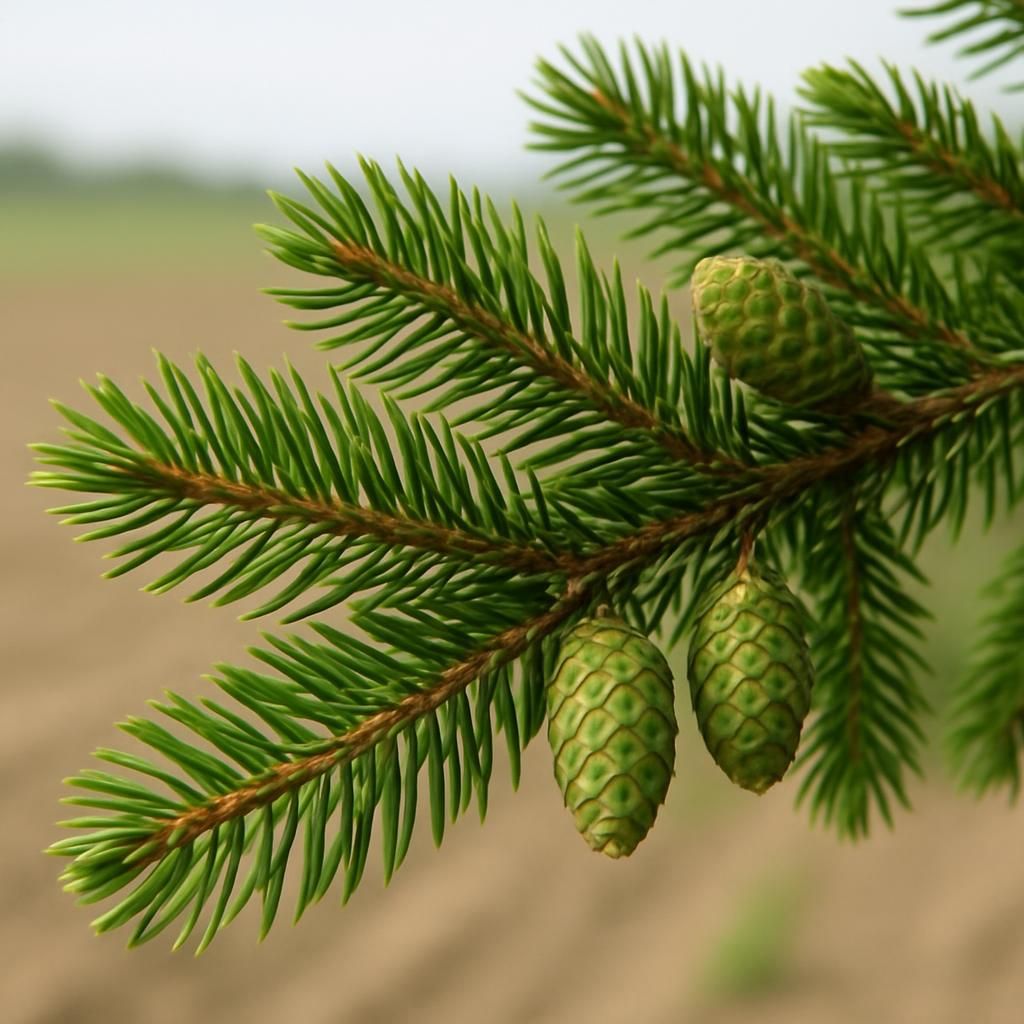
Introduction to Picea
Picea species, collectively referred to as spruces, are evergreen conifers belonging to the Pinaceae family. They form the backbone of many commercial forestry operations and ornamental landscapes across temperate regions. Their symmetrical growth habit, needle retention, and adaptability make them valuable for timber, pulp, windbreaks, and holiday tree markets. Professional cultivation focuses on site selection, soil management, and integrated pest strategies to maximize growth rates and wood quality over 20- to 80-year rotations.
Spruce plantations contribute significantly to carbon sequestration and biodiversity when managed sustainably. Species such as Picea abies (Norway spruce) and Picea pungens (Colorado blue spruce) dominate both European and North American production. Growers select cultivars based on growth speed, needle color, disease resistance, and market demand for specific end uses.
Botanical Profile of Picea
Spruces are monoecious evergreen trees with a single straight trunk and whorled branches forming a conical crown. Needles are four-sided, attached to woody pegs (pulvini), and persist for 4–10 years depending on species and site conditions. Male and female cones develop on the same tree; female cones are pendulous and ripen in one season, releasing winged seeds. Bark is generally thin and scaly on young trees, becoming furrowed with age.
Root systems are shallow and wide-spreading, making trees susceptible to windthrow on poorly drained or compacted soils. Growth rates vary: Norway spruce can add 60–90 cm annually under optimal conditions, while slower species like Picea glauca (white spruce) average 30–50 cm. Genetic improvement programs have produced faster-growing, straighter selections with improved resistance to needle cast diseases.
Soil, pH, and Climate Requirements for Picea (MUST INCLUDE A MARKDOWN TABLE OF IDEAL CONDITIONS)
Spruces perform best on deep, well-aerated, acidic soils with consistent moisture. They tolerate a range of textures provided drainage is excellent; heavy clays or waterlogged sites cause root decline and increased disease pressure. Organic matter content above 3 % supports beneficial mycorrhizal associations essential for nutrient uptake.
Climate suitability centers on cool summers and cold winters. Most commercial species require 800–1,500 chilling hours and are hardy to USDA zone 2–3. High summer temperatures above 30 °C for extended periods reduce photosynthetic efficiency and increase susceptibility to spider mites.
| Parameter | Ideal Range | Notes |
|---|---|---|
| Soil pH | 4.5–6.0 | Strongly to moderately acidic; liming rarely required |
| Soil Texture | Loam to sandy loam | Excellent drainage essential |
| Organic Matter | 3–8 % | Supports mycorrhizae and moisture retention |
| Annual Precipitation | 600–1,200 mm | Supplemental irrigation in drought years |
| Temperature Range | −40 °C to 25 °C | Cool summers preferred |
| USDA Hardiness Zones | 2–6 | Species-specific tolerances |
| Elevation | 0–2,500 m | Higher elevations reduce heat stress |
Step-by-Step Planting & Propagation
Site preparation begins 6–12 months before planting. Clear competing vegetation, conduct soil tests, and incorporate organic amendments if needed. On former agricultural land, deep ripping to 60 cm alleviates compaction. Choose 2- or 3-year-old container or bare-root seedlings from certified disease-free nurseries.
Planting windows are spring (April–May) or early fall (September–October) when soils are workable. Space trees 2.5–3.5 m apart in rows 3–4 m wide for timber or 1.5–2 m for Christmas tree density. Dig holes twice the root-ball diameter, set trees at original soil depth, and backfill without air pockets. Water thoroughly and apply 5–8 cm of organic mulch, keeping material 10 cm from the trunk.
Propagation from seed is standard for forestry. Collect mature cones in autumn, extract and stratify seeds at 2–5 °C for 30–60 days. Sow in well-drained media at 1 cm depth; germination occurs in 3–6 weeks at 18–22 °C. Vegetative propagation via semi-hardwood cuttings or grafting is used for clonal cultivars with superior needle color or form.
Care & Maintenance regimes for Picea (MUST INCLUDE A MARKDOWN TABLE OF WATER, FERTILIZER, AND PRUNING SCHEDULES)
Young spruce stands require weed control for the first 3–5 years. Maintain a 1 m vegetation-free zone around each tree using mulch or approved herbicides. Irrigation is critical during the first two summers; supply 25–40 mm weekly during dry spells. Fertilization begins in year two based on foliar analysis.
Pruning focuses on leader training and removal of lower branches for timber quality. Christmas tree growers perform annual shearing to produce dense, symmetrical crowns. Monitor for nutrient deficiencies—yellowing needles often indicate magnesium or iron shortages on high-pH sites.
| Year/Stage | Water Schedule | Fertilizer Schedule | Pruning Schedule |
|---|---|---|---|
| Establishment (Yr 1–3) | 25–40 mm/week during dry periods | 10-10-10 at 50 g/tree in spring; repeat in fall if needed | Remove double leaders; basal branch pruning |
| Juvenile (Yr 4–10) | Natural rainfall supplemented as needed | Foliar MgSO4 if needles pale; 20-10-10 at 100 g/tree | Leader training; remove lower whorls |
| Christmas Trees | Maintain even moisture | 15-15-15 at 150 g/tree split spring/fall | Annual shearing late June–early July |
| Mature Timber | Supplemental only in extreme drought | Periodic soil tests; lime only if pH <4.0 | High pruning for clear boles at 8–12 m height |
Pests, Diseases & Organic Management
Common insect pests include Aphids, Spider mites, and Spruce budworm (new internal link). Spruce needle cast caused by Rhizosphaera and Stigmina species produces purple-brown needles and premature drop. Root diseases such as Armillaria and Phytophthora thrive in poorly drained soils.
Organic management begins with cultural practices: proper spacing for airflow, removal of infected branches, and avoidance of overhead irrigation. Beneficial insects such as lady beetles and lacewings suppress aphid populations. Horticultural oils and insecticidal soaps provide contact control during crawler stages. Copper-based fungicides applied at bud break reduce needle cast incidence in high-pressure areas.
Regular scouting from May through September allows early intervention. Yellow sticky traps monitor Spider mites and aphids. Maintain biodiversity by preserving hedgerows that harbor natural enemies.
Harvesting, Curing & Optimal Storage
Timber harvest occurs at 25–60 years depending on species and market. Selective thinning at 15–20 years improves diameter growth of remaining stems. Christmas trees are harvested at 6–10 years when they reach 1.8–2.4 m. Cut trees early morning, stand in water immediately, and store at 2–5 °C with high humidity.
For lumber, logs are delimbed on site, bucked to length, and transported to mills within 48 hours to prevent blue stain. Pulpwood is chipped and stored under cover. Seeds for reforestation are extracted from cones dried at 30–35 °C, cleaned, and stored at −18 °C with 6–8 % moisture content for up to 10 years.
Companion Planting for Picea
Understory legumes such as white clover improve nitrogen availability and reduce erosion between rows. Nasturtium and Marigold deter aphids when interplanted at edges. Deep-rooted companions like comfrey mine nutrients from lower soil horizons.
Avoid planting shallow-rooted vegetables or heavy feeders directly beneath spruce canopies where light and moisture are limited. In agroforestry systems, spruce rows provide wind protection for Wheat or Barley while the trees benefit from reduced wind desiccation. Diverse ground covers also suppress weeds and support pollinators essential for nearby fruit crops.