Introduction to sett rot
Sett rot, scientifically known as Sclerotium rolfsii var. settensis, is a destructive soilborne fungal disease that poses significant threats to agricultural productivity, particularly in warm, humid climates. First identified in sett-propagated crops like sugarcane and certain tuberous plants, the disease targets the planting sets (seed pieces or cuttings), leading to pre- and post-emergence rot. This guide provides comprehensive diagnostic criteria, lifecycle insights, and proven organic management strategies to help farmers identify, treat, and prevent sett rot outbreaks.
Unlike general root rot, sett rot specifically attacks the cut surfaces and basal portions of planting material, producing abundant white mycelium and small, tan sclerotia (fungal survival structures). Yield losses can exceed 50% in susceptible crops under favorable conditions, making early detection critical. This SEO-optimized resource draws from botanical, entomological, and agricultural expertise to deliver actionable advice for small-scale and commercial growers alike.
Identifying Symptoms & Damage
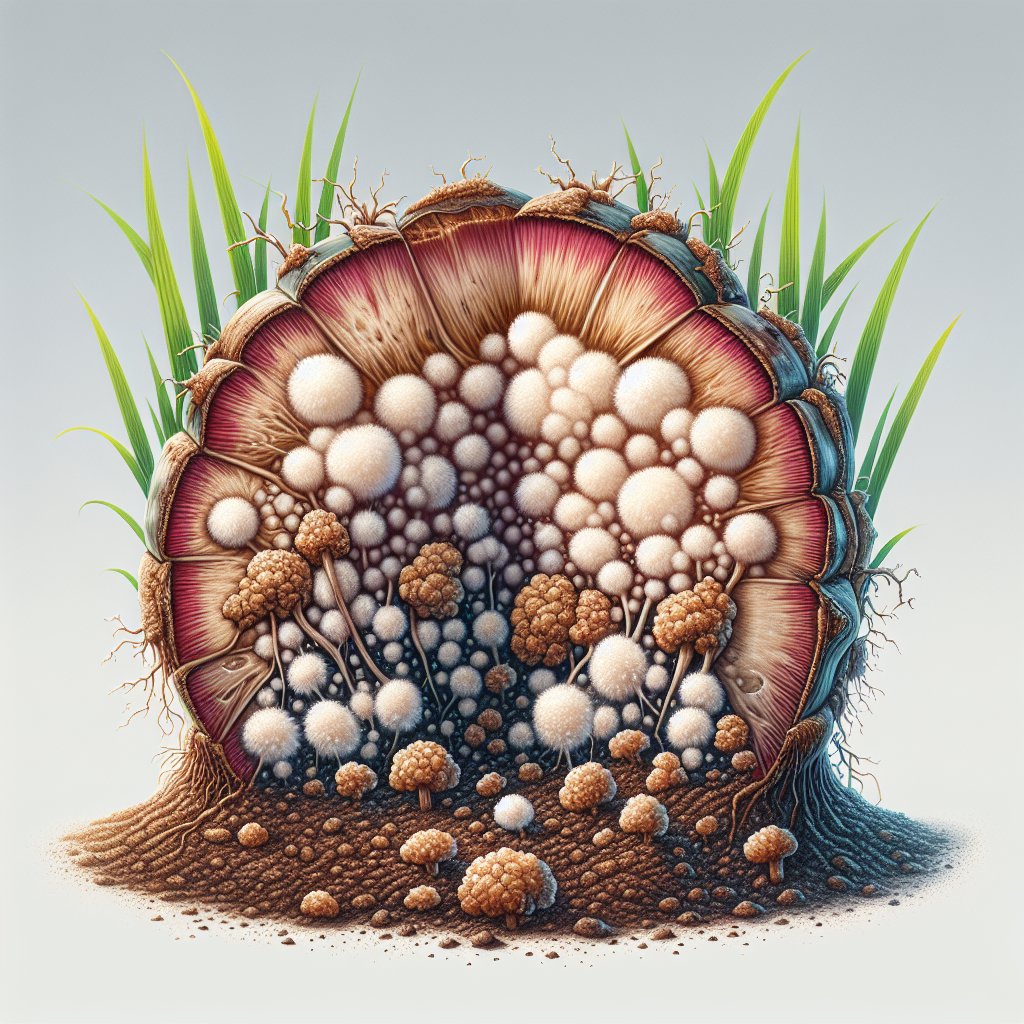
Early symptoms of sett rot appear within 7-14 days after planting, starting as water-soaked lesions on the cut ends of sets. These lesions expand rapidly, turning dark brown to black with a foul odor indicative of secondary bacterial invasion. White, cottony mycelium emerges from infected tissues, often covering the rotting sett surface under moist conditions.
Above-ground signs include stunted emergence, yellowing of lower leaves, and sudden wilting of seedlings or young plants. In advanced stages, plants collapse entirely, with rotted setts exhibiting sclerotia—mustard-seed-sized, tan-to-brown structures clustered on the surface. Cross-sections reveal internal discoloration and soft, mushy decay.
Damage assessment shows 20-80% stand loss in fields, with surviving plants showing reduced vigor and lower yields. Differentiate from Pythium or Phytophthora rots by the presence of sclerotia and aerial mycelium. Lab confirmation involves culturing on potato dextrose agar, where characteristic white mycelium and sclerotia form within 5 days.
Lifecycle and Progression of sett rot
Sclerotium rolfsii var. settensis persists in soil as sclerotia for up to 3 years, germinating under warm (25-35°C), moist conditions to produce mycelium and basidiospores. Infection initiates at wounds on sets, facilitated by soil contact. Hyphae penetrate cortex tissues, colonizing vascular elements and causing tissue necrosis.
The disease progresses in phases: latent (1-3 days), active rot (4-10 days with mycelial growth), sclerotia formation (10-21 days), and dormancy. Optimal spread occurs at soil moisture >60% and temperatures 28-32°C, with peak activity during rainy seasons. Sclerotia disseminate via water splash, tools, or machinery, infecting new sets.
In a typical cycle, one infected sett can produce thousands of sclerotia, contaminating 1-2 meters of surrounding soil. Unlike foliar pathogens, sett rot has no airborne phase, relying on soil persistence. Crop rotation breaks the cycle, as sclerotia viability declines in dry or fallow soils.
Environmental Triggers & Risk Factors
Sett rot thrives in poorly drained, acidic soils (pH <6.0) with high organic matter. Excessive irrigation or flooding creates ideal anaerobic conditions for sclerotia germination. High temperatures (above 25°C) combined with humidity accelerate mycelial growth.
Risk factors include using unsterilized sets, deep planting (>10cm), and monocropping. Compaction from heavy machinery reduces aeration, favoring pathogen activity. Poor sanitation, such as leaving infected debris, introduces inoculum. Crops stressed by nematodes like root-knot nematodes or nutrient deficiencies are more susceptible.
For insights on hyper-local weather impacts, check this blog post on AI forecasts that predict outbreak windows.
Organic Control & Treatment Plans
Organic management emphasizes integrated approaches. Seed Treatment: Soak sets in hot water (52°C for 10 min) followed by biofungicide dips like Trichoderma harzianum (10g/L) or Pseudomonas fluorescens (5g/L) for 30 min. Dry before planting.
Soil Amendment: Apply lime to raise pH to 6.5-7.0, and incorporate neem cake (500kg/ha) or mustard cake (400kg/ha) to suppress sclerotia. Mustard cake releases biofumigants toxic to fungi.
Biological Control: Broadcast Trichoderma viride (5kg/ha) or Gliocladium virens pre-planting. These antagonists parasitize sclerotia, reducing viability by 70%. Companion planting with marigold (Tagetes spp.) deters via nematicidal root exudates.
Cultural Practices: Plant shallow (5-7cm), space widely (45cm), and ensure drainage with raised beds. Remove and burn infected plants promptly. Solarization—covering moist soil with plastic for 4-6 weeks—kills 90% of sclerotia.
Monitoring Plan: Scout weekly post-planting. For affected fields, rogue plants and apply compost teas weekly. Recovery rates exceed 75% with early intervention. Avoid chemical fungicides to maintain organic certification.
Preventing sett rot in the Future
Prevention is paramount. Select disease-free, certified sets from reputable sources. Treat all planting material as outlined. Implement 2-3 year crop rotations with non-hosts like grains or legumes.
Enhance soil health via cover cropping with clover to improve structure and suppress pathogens. Maintain optimal fertility—avoid excess nitrogen, which promotes succulent tissues. Use mulches like straw to moderate soil moisture.
Farm hygiene: Disinfect tools with 10% bleach, clean machinery, and quarantine new stock. Monitor soil pH and moisture regularly. Long-term, build beneficial microbial populations through vermicompost applications.
For more on soil strategies, explore Soil Health Mastery. Resistant varieties, where available, reduce risk by 40%.
Crops Most Affected by sett rot
Sett rot primarily impacts sett-propagated and tuber crops:
- Sugarcane ([/wiki/sugarcane]): Up to 60% sett loss in wet seasons.
- Cassava ([/wiki/cassava]): Stem cuttings rot, causing 30-50% stand failure.
- Sweet Potato ([/wiki/sweet-potato]): Slips and tubers affected.
- Potato ([/wiki/potato]): Seed tubers show high pre-sprout decay.
- Ginger ([/wiki/ginger]) and Turmeric ([/wiki/turmeric]): Rhizomes rot in nurseries.
Secondary hosts include yam, taro, and legumes like peanuts. Tropical regions (India, Southeast Asia, Africa) report highest incidence. Consult local extension for region-specific varietal resistance.