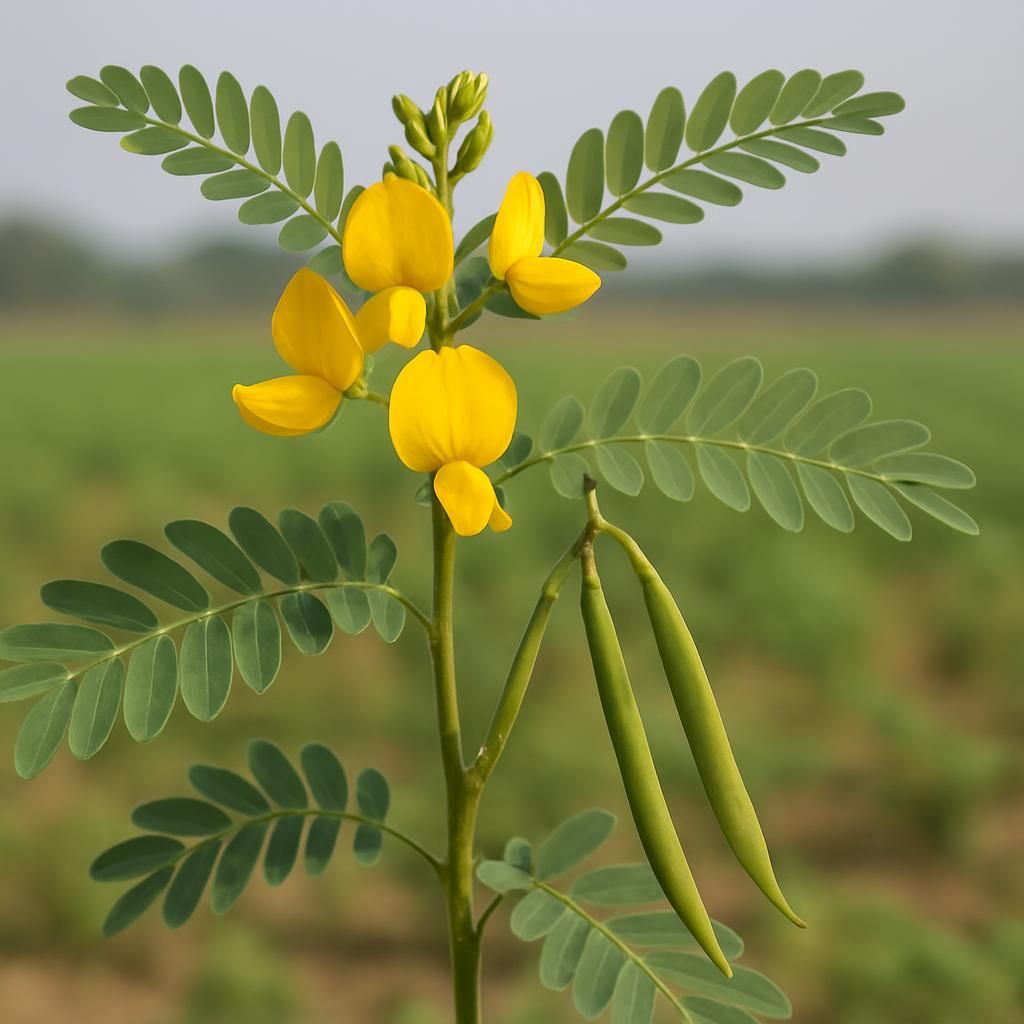
Introduction to Sesbania sesban
Sesbania sesban is a multipurpose leguminous shrub native to tropical Africa and widely cultivated throughout Asia, Africa, and parts of Latin America. It grows rapidly, reaching 3–6 meters in height within the first year, and is valued for its ability to fix atmospheric nitrogen, improve soil fertility, and provide high-protein fodder. Farmers integrate it into agroforestry systems, contour hedgerows, and short-term fallows to restore degraded lands and support sustainable cropping.
Botanical Profile of Sesbania sesban
Sesbania sesban belongs to the Fabaceae family. It features pinnate leaves with 6–27 pairs of leaflets, bright yellow flowers arranged in axillary racemes, and slender pods containing 10–50 seeds. The plant develops a deep taproot system that enhances drought tolerance and soil structure. Several subspecies and varieties exist, differing mainly in growth habit, leaf size, and cold tolerance.
Soil, pH, and Climate Requirements for Sesbania sesban
Sesbania sesban performs best on well-drained loamy to sandy loam soils but tolerates a wide range of textures including heavy clays when drainage is adequate. It grows from sea level to 2000 m elevation and prefers annual rainfall between 500–2000 mm. The species is moderately tolerant of salinity and waterlogging.
| Parameter | Ideal Range | Notes |
|---|---|---|
| Soil Type | Loamy to sandy loam | Tolerates clay if well-drained |
| Soil pH | 5.5–8.5 | Optimal 6.0–7.5 |
| Temperature | 20–35 °C | Frost sensitive below 5 °C |
| Annual Rainfall | 500–2000 mm | Survives short dry spells |
| Elevation | 0–2000 m | Best growth below 1500 m |
| Salinity Tolerance | Moderate | EC up to 6 dS/m |
Step-by-Step Planting & Propagation
Sesbania sesban is commonly established from seed, although stem cuttings can be used for rapid multiplication. Fresh seed should be scarified by soaking in hot water (80 °C) for 5–10 minutes or by mechanical nicking before sowing. Direct seeding at 2–3 cm depth with 50–75 cm between plants and 1–2 m between rows is standard for hedgerow or green-manure plantings. Germination occurs in 5–10 days under moist conditions. For nursery-raised seedlings, transplant 4–6-week-old plants at the onset of rains.
Care & Maintenance regimes for Sesbania sesban
During the first three months, weed control and supplemental irrigation are critical for rapid establishment. Once established, the shrub requires minimal inputs. Regular pruning at 1–1.5 m height encourages branching and maintains a productive canopy.
| Activity | Frequency | Details |
|---|---|---|
| Irrigation | Weekly for first 8 weeks | Reduce to rainfall-dependent after establishment |
| Fertilizer | At planting & year 2 | 20–30 kg P/ha at establishment; no N needed |
| Pruning | Every 8–12 weeks | Cut back to 1–1.5 m to promote regrowth |
| Mulching | At planting & annually | 5–10 cm organic mulch conserves moisture |
Pests, Diseases & Organic Management
Sesbania sesban is relatively pest-resistant but may be attacked by Aphids, leafhoppers, and occasional pod borers. Fungal leaf spots and root rot can occur in poorly drained soils. Integrated management includes regular pruning to improve airflow, removal of infested plant parts, and application of neem-based sprays. Crop rotation with cereals and intercropping with aromatic herbs such as Thai Basil further reduces pest pressure.
Harvesting, Curing & Optimal Storage
Fodder is harvested 4–6 months after planting by cutting stems 30–50 cm above ground; regrowth allows 3–4 cuts per year. For green manure, whole plants are incorporated at flowering stage. Seeds are collected when pods turn brown and dried to 10–12 % moisture before storage in airtight containers. Fuelwood is harvested from mature stems after 18–24 months.
Companion Planting for Sesbania sesban
Sesbania sesban excels as a nurse crop and living fence. It improves growth of Maize, Sorghum, and vegetables when planted in alley-cropping systems. Its shade and nitrogen contribution benefit Coffee and Cacao understories. Compatible understory species include Pigeon pea and Sesame. Avoid planting near shallow-rooted crops that compete for surface moisture during early growth.