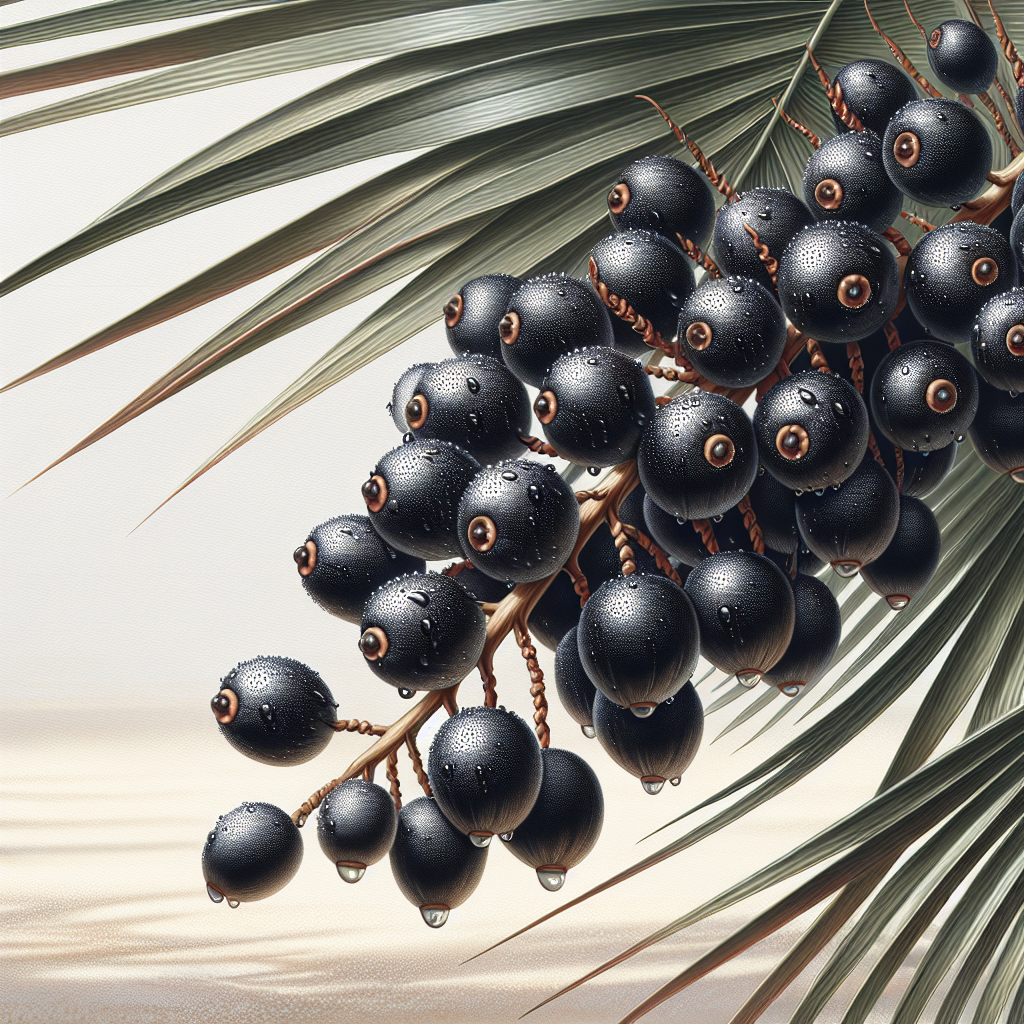
Introduction to Saw Palmetto Berry
Saw palmetto berry (Serenoa repens) stands out as a hardy, native crop with significant commercial potential in the herbal supplement industry. Prized for its dark purple-black fruits packed with bioactive compounds like fatty acids and phytosterols, these berries support prostate health, urinary function, and hormone balance in traditional and modern medicine. Native to the coastal plains from South Carolina to Florida and west to Texas, saw palmetto has been harvested wild for decades, but cultivated production is rising due to sustainability demands and consistent quality needs.
This deep-dive guide equips professional growers with proven techniques for propagating, cultivating, and harvesting saw palmetto berries at scale. Whether establishing a dedicated plantation or integrating into mixed agroforestry, you'll discover optimal soil prep, pest strategies, and yield-boosting practices. With berries fetching $20-50 per pound dried, savvy farmers can achieve profitable returns on marginal lands unsuitable for row crops. Expect first commercial harvests in 3-5 years from seedlings, with mature plants yielding 5-10 pounds of fresh berries per plant annually under ideal conditions.
Botanical Profile of Saw Palmetto Berry
Serenoa repens, a fan palm in the Arecaceae family, features creeping, underground rhizomes forming dense colonies up to 20 feet wide. Plants grow 2-10 feet tall with fan-shaped leaves up to 2 feet across, armed with sharp, saw-like teeth on petioles—hence the name. Dioecious (separate male and female plants), it produces small, white flowers in spring, followed by 0.5-1 inch oval berries ripening black from September to December.
Berries contain 80-90% moisture fresh, drying to wrinkled, oil-rich drupes with 25-30% lipids, including lauric acid and beta-sitosterol. Roots extend 5-10 feet deep, enabling drought and fire tolerance. USDA zones 8-11 suit this perennial, with natural stands dominating pine flatwoods and scrub. For cultivation, select 'DWARF' cultivars for higher density planting or wild-type for authenticity. Pollinators like bees service flowers, while birds disperse seeds—mimic this in orchards for natural propagation.
Soil, pH, and Climate Requirements for Saw Palmetto Berry
Saw palmetto thrives in poor, sandy soils with excellent drainage, scorning heavy clay or waterlogged sites. Ideal profile: 80-100% sand content, low fertility (avoid high-nitrogen amendments), and organic matter under 2%. Test for pH 5.5-7.5; amend acidic sands with dolomitic lime to 6.0-6.5 for optimal nutrient uptake. Phosphorus fixation in sands demands 20-40 lbs P2O5/acre at planting.
Climate-wise, seek USDA 8b-11 with 40-60 inches annual rain, tolerating down to 10°F once established. Full sun to light shade; south-facing slopes boost berry set. Drought tolerance peaks after year 2, but irrigate seedlings at 1 inch/week. Salt spray resistance suits coastal farms, but inland humidity over 80% risks fungal issues. For northern edges, mulch heavily and use microclimates. Read more on Soil Health Mastery: 5 Proven Strategies for Small Farms to Build Fertile Ground Without Breaking the Bank for broader soil tips.
Step-by-Step Planting & Propagation
Seed Propagation (Cost-Effective for Scale): Collect ripe berries, depulp in water, sow cleaned seeds 1/2 inch deep in sand-peat mix at 75-85°F. Germination: 4-12 weeks, 50-70% rate. Scarify with H2SO4 (10 min) or mechanical nicking boosts to 90%. Transplant 6-month seedlings at 3x3 feet spacing (1,450 plants/acre) in fall or spring.
Vegetative Propagation (Uniformity): Divide rhizomes from mature females in dormant season (Feb-Mar), replanting sections with 3-5 shoots. Rooting hormone (IBA 1000 ppm) accelerates establishment. Success: 95%.
Site Prep: Clear invasives, disk sands, incorporate pine bark fines (2 tons/acre) for mycorrhizae. Plant on 10-foot centers for agroforestry or 6x6 feet monoculture. Mulch 4 inches pine straw/straw. Irrigate first year; wean by year 2. Expect 80% survival with proper drainage. For more on seed starting, check Winter Sowing Mastery: Use AI to Start Seeds Indoors and Thrive in Cold Climates Without a Greenhouse.
Care & Maintenance regimes for Saw Palmetto Berry
Minimalist regime suits this tough palm: no routine fertilization post-establishment; annual spring foliar spray of micronutrients (Mg, Mn, Zn at 2 lbs/acre) prevents deficiencies. Mow between plants years 1-3 to reduce competition; allow natural thickets mature. Prune dead fronds annually to deter rodents/pests.
Irrigation: Drip systems deliver 500-1000 gal/acre/week in dry spells, focusing roots. Weed control: Pre-emergent imazapic (0.1 lb ai/acre) year 1, then mulch suppresses. Fire management: Controlled burns every 3-5 years mimic native habitat, boosting berry production 20-30%. Monitor female:male ratio (1:4 ideal); thin males if skewed. Yield peaks at 8-12 years, declining post-20 without rejuvenation via rhizome division. Integrate with Ginger (crop) for shade and soil benefits in polycultures.
Pests, Diseases & Organic Management
Pests: Low pressure overall. Saw palmetto weevils (Rhynchophorus cruentatus) bore crowns—scout spring, inject neem oil or remove infested. Aphids (pest) on new growth: insecticidal soap or ladybugs. Rodents gnaw berries: repellents like capsaicin sprays. Birds/deer: netting or flash tape.
Diseases: Root rot Phytophthora (disease) in wet soils—ensure drainage, solarize pre-plant. Leaf spot Alternaria (disease): copper fungicide organic-approved. Few viral issues due to wild genetics.
Organic IPM: Beneficial nematodes for weevils, Bt for caterpillars, kaolin clay barriers. Companion herbs like Thyme (crop) deter insects. Detail your strategy with Why 90% of Small Farms Fail at Pest Management - And 8 Organic Fixes That Actually Work.
Harvesting, Curing & Optimal Storage
Harvest ripe berries (full black, soft) by hand or mechanical shakers Sept-Dec, yielding 2-5 tons fresh/acre mature stands. Wear gloves—oily, staining. Dry immediately: forced-air dehydrators at 100-120°F for 48-72 hours to 10% moisture, turning daily. Avoid sun-drying to preserve oils.
Cured berries store in breathable bags at 50-60°F, 50-60% RH up to 2 years; vacuum-seal for export. Quality metrics: >25% fatty acids via extraction test. Process fresh into juice or powder within 24 hours for max potency. Yields drop 50% if delayed >1 week post-ripe.
Companion Planting for Saw Palmetto Berry
Leverage saw palmetto's understory tolerance for layered systems. Pair with Blueberry (crop) for acid soil synergy, acidifying mulch shared. Grapes (crop) vines climb trunks, shading berries. Nitrogen-fixers like Clover (crop) between rows build soil without competition.
Repel pests with Marigold (crop) borders, attract pollinators via Yarrow (crop). Avoid aggressive grasses; integrate Pineapple (crop) in gaps for groundcover. Boosts biodiversity, yields 15-25%. Learn more in Why Companion Planting Feels Like Guesswork for Small Farms - And How AI Makes It Foolproof.