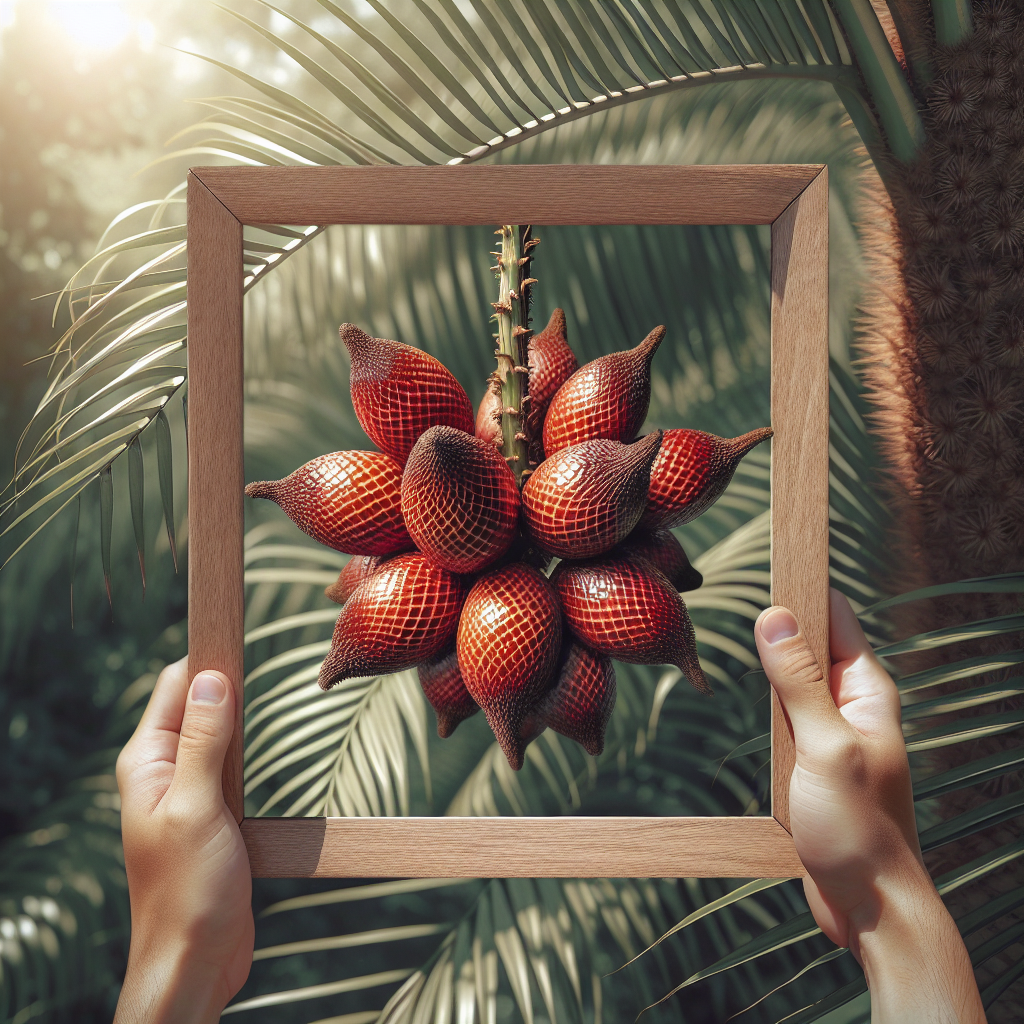
Introduction to Salak Pondoh (Snake Fruit)
Salak Pondoh (Snake Fruit), scientifically Salacca zalacca var. ponderosa, stands out as Indonesia's premier salak cultivar, originating from the slopes of Mount Merapi in Yogyakarta. Unlike common salak varieties, Pondoh fruits are smaller (3-5 cm), seedless or with minimal seeds, and boast an exceptional sweet-tart flavor profile with apple-like crunchiness and aromas of pineapple and jackfruit. This dioecious palm, growing 1.5-3 meters tall with spiny fronds, produces clustered fruits on female plants that command premium market prices—often 2-3 times higher than standard salak.
Farmers prize Salak Pondoh for its high productivity (up to 50-100 kg per mature plant annually) and short harvest cycle (fruits mature in 4-6 months after flowering). Native to tropical Southeast Asia, it's increasingly cultivated in India, Australia, and Florida for export. Successful cultivation demands precise climate matching, soil preparation, and male-female ratio management (1 male per 10-20 females). With proper care, orchards yield for 20-30 years, offering reliable income for smallholder farmers. This comprehensive guide draws from decades of Indonesian agricultural research and field trials to deliver professional-grade protocols for propagation, maintenance, and yield optimization.
Botanical Profile of Salak Pondoh (Snake Fruit)
Salak Pondoh belongs to the Arecaceae family, a clustering, short-stemmed palm with pinnate leaves reaching 3-6 meters long, armed with sharp, recurved spines along the petioles—earning its 'snake fruit' moniker from the fruit's reddish-brown, snake-skin scales. Stems are subterranean or semi-erect, forming dense clumps from suckers. Male and female flowers occur on separate plants: males produce long, pendulous inflorescences up to 1 meter, while females bear shorter spikes developing into infructescences weighing 2-5 kg each, covered in 100-200 fruits.
Fruits are ovoid, pointed at the apex, with thin, leathery skin enclosing creamy-white, edible flesh surrounding a single soft seed (often aborted in superior Pondoh strains). Nutritionally, Salak Pondoh excels with 10-15% sugars, high potassium (300 mg/100g), beta-carotene, and antioxidants, plus low calories (70 kcal/100g). Flowering occurs year-round in optimal conditions but peaks in rainy seasons. Pollination is anemophilous (wind-borne), necessitating precise planting densities. Root systems are shallow, fibrous, and mycorrhizal-dependent, extending 1-2 meters laterally for efficient nutrient uptake in low-fertility volcanic soils.
Soil, pH, and Climate Requirements for Salak Pondoh (Snake Fruit)
Salak Pondoh demands well-drained, fertile loamy soils rich in organic matter, mimicking its native volcanic Andisols (pH 5.5-6.5 optimal; tolerates 5.0-7.5). Heavy clays cause root rot, while sands require amendments. Conduct soil tests targeting 2-3% organic matter, 0.2-0.5% N, 100-200 ppm P, and 150-250 ppm K. Incorporate 20-30 tons/ha compost or green manure pre-planting. Avoid waterlogging; raised beds (30-50 cm) suit flood-prone areas.
Climatically, thrive in lowland tropics (0-600 masl) with 25-32°C averages, 70-90% humidity, and 1500-3000 mm annual rainfall evenly distributed—no prolonged dry spells exceeding 2 months. USDA zones 10b-12; frost-intolerant below 5°C. Full sun (6-8 hours) essential, but young plants benefit from 30-50% shade cloth. Windbreaks of Gliricidia or bamboo mitigate spine damage and pollen drift. For subtropical trials, employ micro-sprinklers to simulate humidity and mulching for heat moderation. Read more on heat management in Why Summer Heatwaves Are Silently Killing Small Farm Yields - And 7 Organic Strategies to Fight Back.
Step-by-Step Planting & Propagation
Propagation: Primarily via suckers (offsets) for true-to-type Pondoh; select 2-3 year-old, disease-free suckers with 3-5 leaves and intact roots (success rate 90-95%). Seeds viable but produce variable offspring and take 5-8 years to fruit. Tissue culture emerging for elite clones.
- Site Preparation: Clear land, plow 50 cm deep, incorporate 20 kg/m² compost + 500g superphosphate + 300g KCl. Form beds 1m wide, 50cm high, 2m alleys.
- Planting Density: 400-600 plants/ha (3x3m to 2.5x2.5m); 1 male:15 females. Dig 50x50x50 cm holes, backfill with topsoil mix.
- Planting: Mid-rainy season; trim damaged roots/leaves, plant at soil mark, firm soil, mulch 10cm organic layer. Stake if windy.
- Irrigation: 20-30 L/plant weekly first year, drip systems ideal (800-1200 mm/year).
- Fertilization: Month 1: 50g NPK 15-15-15/plant; ramp to 1-2 kg/year by maturity.
Expect first flowers in 2-3 years, full production by 5.
Care & Maintenance regimes for Salak Pondoh (Snake Fruit)
Irrigation: Maintain 60-80% field capacity; deficit triggers alternate bearing. Drip irrigation conserves 40% water vs. flood.
Fertilization Schedule: Split applications: N-P-K 400:200:400 g/plant/year mature (e.g., urea, TSP, MOP). Foliar micronutrients (Zn, B, Mg) bi-monthly during flowering/fruiting. Organic options: chicken manure 10-20 kg/plant annually.
Pruning: Remove old senesced fronds post-harvest; thin suckers to 3-5 per clump. Desucker annually to prevent overcrowding.
Weeding/Mulching: Glyphosate spot-treat or mulch with rice hulls/coconut coir (10cm layer) suppresses weeds, retains moisture.
Pollination Boost: Plant windbreaks; hand-pollinate isolates if needed.
Monitor growth: 20-30 new leaves/year healthy plants.
Pests, Diseases & Organic Management
Key Pests: Mealybugs cluster on spikes (Neococcus spp.); dislodge with water jets, neem oil (2-3 ml/L) weekly. Scale insects on leaves—introduce Cryptolaemus montrouzieri ladybugs. Rodents gnaw fruits; traps/baits. Rhinoceros beetles bore trunks—entomopathogenic fungi.
Diseases: Phytophthora root rot in wet soils—improve drainage, Trichoderma biofungicide. Anthracnose (Colletotrichum) browns fruits—copper oxychloride pre-monsoon. Leaf spots (Alternaria)—remove debris, potassium phosphite sprays.
Integrated Management: Companion plant marigold for nematodes; beneficial insects via flowering borders. Scout weekly; thresholds: 10% infested spikes act. Organic protocols align with Why 90% of Small Farms Fail at Pest Management - And 8 Organic Fixes That Actually Work. Avoid broad-spectrum chemicals to preserve pollinators.
Harvesting, Curing & Optimal Storage
Harvest when 70-80% scales turn reddish-brown, 4-6 months post-anthesis (firm pull from spike). Cut clusters with secateurs, yield 3-5 per plant/cycle. Handle gently to avoid spine punctures.
Curing: Shade-dry 2-3 days at 25-30°C, 80% RH to reduce moisture (from 80% to 60%), enhancing flavor/shelf-life.
Storage: Fresh: 10-13°C, 85-90% RH (2-4 weeks); modified atmosphere bags extend to 6 weeks. For export, pack in ventilated cartons (2kg), pre-cool to 10°C. Processed: Dried chips or pickles retain quality 6-12 months.
Post-harvest losses <5% with proper handling; markets favor uniform, blemish-free fruits.
Companion Planting for Salak Pondoh (Snake Fruit)
Leverage polycultures for soil health, pest deterrence, and microclimate moderation. Borders: Ginger or Turmeric repel soil nematodes, suppress weeds. Understory: legumes like pigeon pea fix N, shade young palms. Repellents: Thai Basil, lemongrass deter mealybugs. Avoid competitive deep-rooted trees like mango. Alley crops: short-cycle peanuts or mung beans first 2 years.
Benefits: 20-30% yield boost via biodiversity; improved pollination. Trial combinations on 10% acreage first. Detailed strategies in Why Companion Planting Feels Like Guesswork for Small Farms - And How AI Makes It Foolproof.