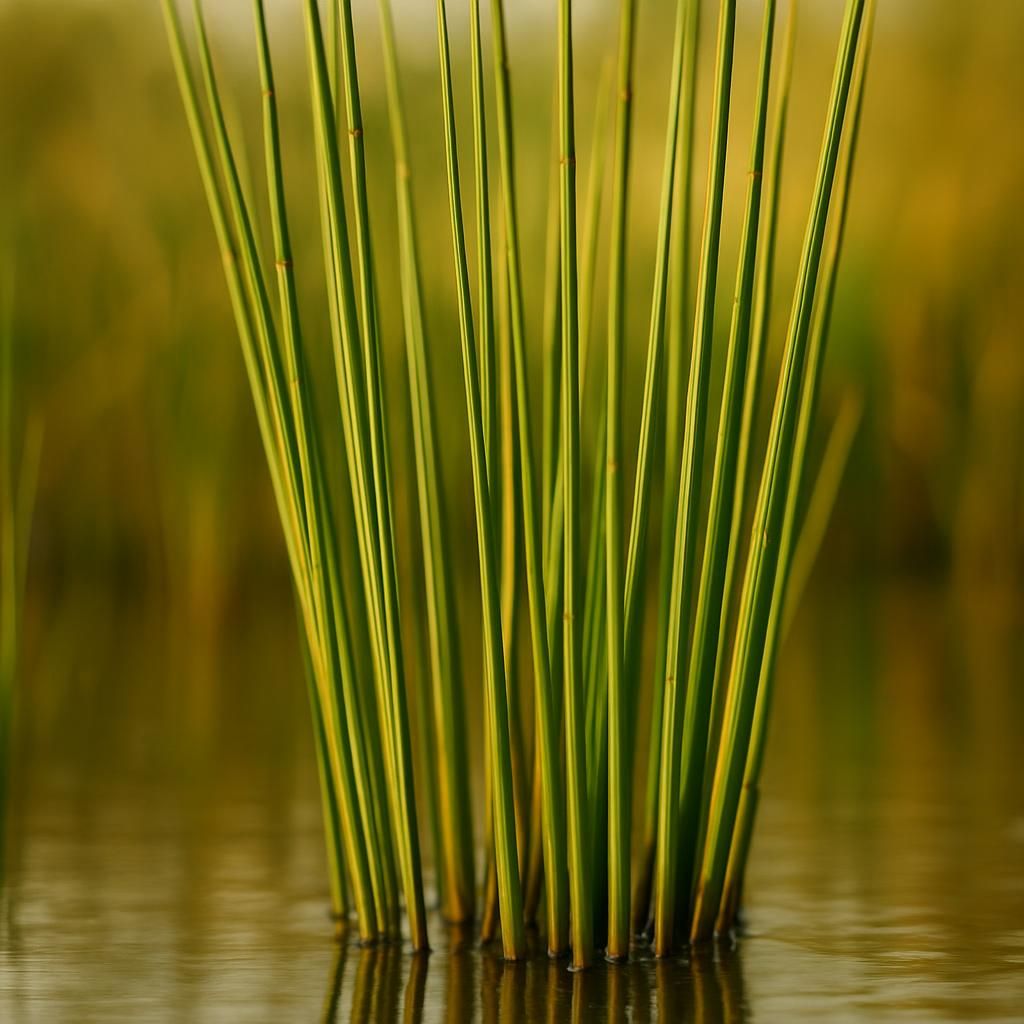
Introduction to rushes
Rushes (Juncus spp.) are perennial, grass-like plants belonging to the Juncaceae family that thrive in saturated soils where many conventional crops fail. They play a critical role in wetland restoration, phytoremediation, and as a low-input biomass or fiber crop. Farmers and land managers value rushes for their ability to stabilize banks, improve water quality, and provide habitat for beneficial wildlife.
Commercial interest in rushes centers on their use in eco-friendly thatching, basketry, paper production, and as a component in constructed wetlands for wastewater treatment. Because they tolerate periodic flooding and poor drainage, rushes offer an excellent option for reclaiming marginal farmland or integrating into agroecological systems.
Botanical Profile of rushes
Rushes are characterized by cylindrical, leafless stems (culms) that are typically hollow or pith-filled, with reduced scale-like leaves clustered at the base. Flowers are small, inconspicuous, and wind-pollinated, arranged in terminal clusters or panicles. Most species are rhizomatous, allowing rapid vegetative spread and colony formation in moist environments.
Common agricultural species include soft rush (Juncus effusus), hard rush (Juncus inflexus), and common rush (Juncus conglomeratus). These species vary in height (30–150 cm), stem diameter, and tolerance to salinity or drought once established. Their fibrous root systems excel at binding soil particles and filtering nutrients from runoff.
Soil, pH, and Climate Requirements for rushes
Rushes perform best in poorly drained, organic-rich soils with high moisture retention. They tolerate a wide pH range but show optimal growth in slightly acidic to neutral conditions. While most species prefer full sun, several tolerate partial shade in cooler climates.
| Parameter | Ideal Range | Notes |
|---|---|---|
| Soil Type | Loamy, silty, or peaty | Avoid compacted heavy clays without amendment |
| Soil pH | 5.5–7.0 | Tolerates 4.5–8.0 once established |
| Moisture | Saturated to 5 cm standing water | Critical during establishment |
| Temperature Range | 10–30 °C daytime | Frost hardy to –15 °C depending on species |
| Sunlight | Full sun to partial shade | Full sun maximizes biomass |
| Salinity Tolerance | Low to moderate (EC < 4 dS/m) | Some coastal species tolerate higher |
Step-by-Step Planting & Propagation
- Site Preparation: Clear existing vegetation and lightly till or rake the top 10 cm of soil. Incorporate 5–10 cm of well-rotted organic matter if organic content is below 3 %.
- Propagation Material: Use division of mature clumps or purchase plugs from certified wetland nurseries. Seed can be sown but requires cold stratification (4–6 weeks at 4 °C) and light exposure.
- Planting Timing: Early spring (March–April) or early autumn (September–October) when soil temperatures exceed 8 °C.
- Spacing: 30–45 cm between plants in rows 60–90 cm apart for fiber production; closer spacing (20 cm) for erosion control.
- Planting Depth: Place plugs or divisions so the crown sits at or just below soil level; firm soil around roots and water immediately.
- Initial Irrigation: Maintain consistent moisture for the first 6–8 weeks; avoid letting the surface dry out.
Care & Maintenance regimes for rushes
Rushes are low-maintenance once established but benefit from seasonal interventions to maximize biomass and prevent lodging.
| Task | Frequency | Details |
|---|---|---|
| Water | Weekly during first season | Maintain 2–5 cm standing water or saturated soil; reduce to natural rainfall after year 2 |
| Fertilizer | Annual (early spring) | Apply 40–60 kg N/ha as composted manure or balanced organic fertilizer; avoid high-phosphorus inputs in sensitive watersheds |
| Pruning / Harvest | Late autumn or early winter | Cut stems to 5–10 cm above soil; remove debris to reduce disease carry-over |
| Weed Control | First two seasons | Hand-pull or shallow cultivation; mature stands outcompete most weeds |
| Division | Every 4–5 years | Split overcrowded clumps in early spring to rejuvenate growth |
Pests, Diseases & Organic Management
Rushes are generally pest-resistant, but occasional issues arise in dense monocultures.
- Aphids may colonize tender spring growth; control with strong water sprays or insecticidal soap.
- Slugs and snails damage young shoots in cool, wet springs; use iron-phosphate baits and encourage predatory beetles.
- Rust fungi can appear as orange pustules on stems under prolonged humidity; improve airflow by thinning stands and removing infected material.
- Root rot caused by Pythium or Phytophthora occurs in stagnant, poorly oxygenated water; install shallow drainage channels and avoid over-fertilization.
Scout weekly during establishment. Beneficial nematodes and predatory mites provide additional biological control when populations exceed thresholds.
Harvesting, Curing & Optimal Storage
Harvest rushes when stems reach maximum height but before flowering (typically late summer to early autumn). Cut at 5–10 cm above the soil line with a sickle or mechanical mower. Bundle stems immediately to prevent tangling.
Curing: Lay bundles in a well-ventilated, shaded area for 7–14 days until moisture content drops below 15 %. Turn bundles every 2–3 days to ensure even drying. For thatching or basketry, store cured rushes indoors at 10–15 °C and 40–50 % relative humidity. Protect from rodents and direct sunlight to maintain color and flexibility. Properly cured material retains quality for 2–3 years.
Companion Planting for rushes
Rushes integrate well with other wetland species to enhance biodiversity and system resilience. Pair with Rice in paddy-style systems to improve water filtration and reduce nutrient runoff. Interplant with Cattail (new_internal_link) or Reeds (new_internal_link) for layered biomass production and habitat complexity.
Avoid planting with deep-rooted upland crops that compete for moisture. In constructed wetlands, combine rushes with Thyme and Yarrow along the drier margins to attract beneficial insects and pollinators. These pairings support integrated pest management while maintaining the hydrological conditions rushes require.