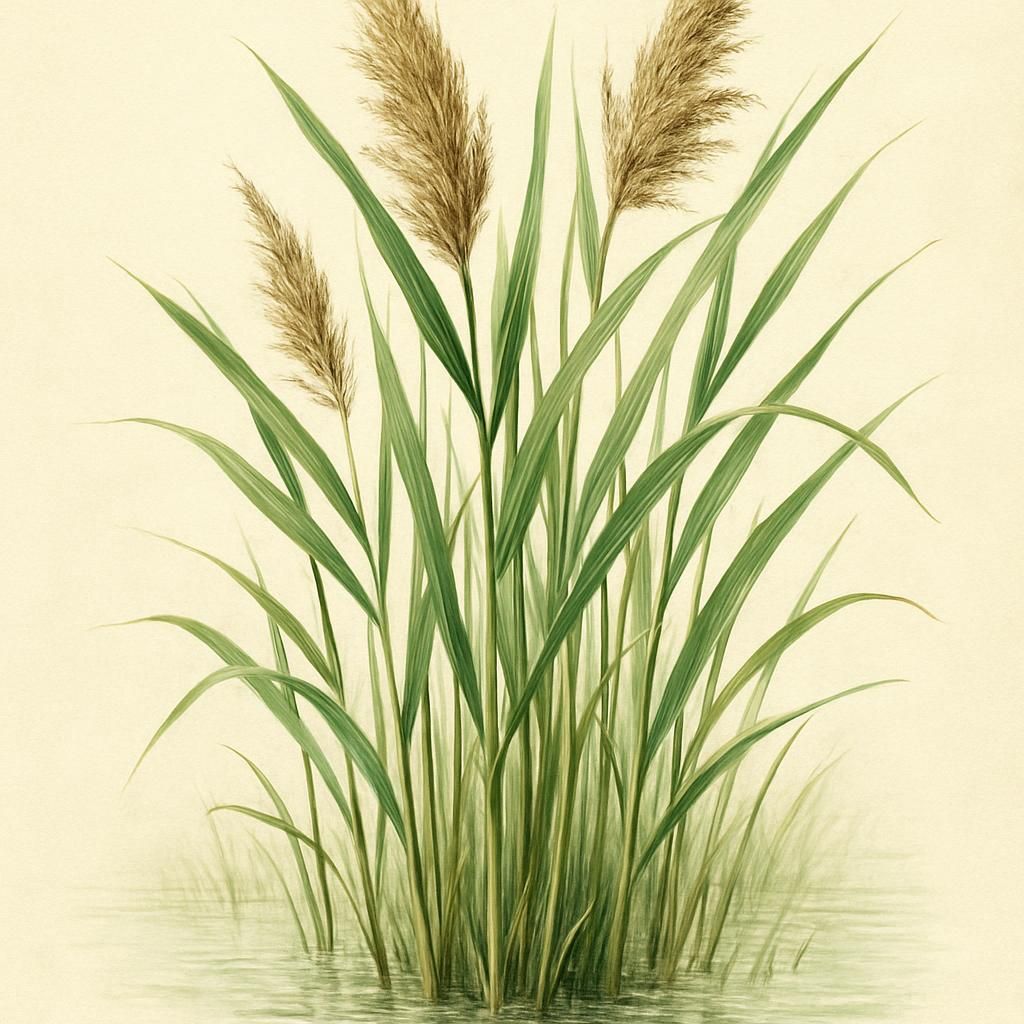
Introduction to Reeds
Reeds, primarily represented by the species Phragmites australis, are robust perennial grasses that dominate wetland margins across temperate and subtropical regions. Their tall, hollow culms and extensive rhizome networks make them indispensable for stabilizing shorelines, filtering agricultural runoff, and supplying renewable biomass for thatching, paper, and bioenergy. Commercial and small-scale growers value reeds for their rapid growth, low input requirements once established, and multiple revenue streams ranging from construction materials to phytoremediation services.
Modern reed cultivation emphasizes sustainable water management and soil conservation. Because reeds tolerate brackish conditions and periodic flooding, they are increasingly planted in buffer strips around Rice paddies and wastewater treatment wetlands. Their dense stands also provide habitat for beneficial insects and amphibians, supporting integrated pest management programs on diversified farms.
Botanical Profile of Reeds
Phragmites australis belongs to the Poaceae family and produces annual culms that reach 2–6 meters in height. Each culm bears alternate, lanceolate leaves 20–60 cm long with ligules 1–2 mm wide. The inflorescence is a dense, feathery panicle 20–40 cm long that produces thousands of wind-dispersed seeds. Underground, the plant forms an aggressive rhizome system that can extend laterally more than 10 meters per season, enabling rapid colony expansion.
Reeds exhibit C3 photosynthesis but maintain high water-use efficiency in flooded environments. The aerenchyma tissue within stems and roots facilitates oxygen transport to anaerobic soils, allowing reeds to outcompete many other wetland species. Genetic diversity is high; clonal populations can persist for centuries while sexual reproduction generates locally adapted ecotypes suited to salinity, nutrient, or temperature gradients.
Soil, pH, and Climate Requirements for Reeds
Reeds perform best in heavy, poorly drained soils with high organic matter. They tolerate pH ranges from mildly acidic to moderately alkaline and can withstand short-term salinity up to 15–20 ppt. Temperature and moisture regimes are critical during establishment; young rhizomes are sensitive to prolonged drought or frost heaving.
| Parameter | Ideal Range | Notes |
|---|---|---|
| Soil Texture | Clay loam to silty clay | High water-holding capacity preferred |
| Soil pH | 5.5–8.0 | Tolerates up to 8.5 with reduced vigor |
| Organic Matter | 4–12 % | Supports microbial activity and nutrient retention |
| Salinity (EC) | < 8 dS/m | Higher levels tolerated by mature stands |
| Temperature (Growing) | 15–30 °C daytime | Minimum 5 °C soil temperature for sprouting |
| Frost Tolerance | Established stands to –20 °C | Young shoots killed by late spring frost |
| Annual Precipitation | 600–2000 mm or equivalent irrigation | Consistent saturation required during first season |
Step-by-Step Planting & Propagation
- Site Selection: Choose low-lying areas with seasonal or permanent water tables within 30 cm of the surface. Avoid compacted or heavily trafficked zones.
- Soil Preparation: Remove competing vegetation and incorporate 5–10 cm of well-rotted organic matter. Level the bed to prevent water ponding that could drown new transplants.
- Propagation Material: Use 20–30 cm rhizome segments with at least two nodes harvested from healthy donor stands in late winter or early spring. Alternatively, purchase certified nursery stock to reduce disease introduction.
- Planting Depth and Spacing: Insert rhizomes horizontally 5–10 cm deep at 30–50 cm centers in a staggered grid. In constructed wetlands, double rows spaced 1 m apart accelerate coverage.
- Initial Water Management: Maintain 2–5 cm of standing water for the first 4–6 weeks to suppress weeds and encourage root initiation. Gradually increase depth to 15–30 cm as shoots elongate.
- Mulching: Apply 5 cm of clean straw or wood chips between rows to conserve moisture and moderate soil temperature during the first growing season.
Care & Maintenance regimes for Reeds
Mature reed stands require minimal intervention, but strategic inputs during establishment and periodic renovation maximize biomass and longevity.
| Season | Water Management | Fertilizer Application | Pruning / Harvest Schedule |
|---|---|---|---|
| Spring | Maintain 5–15 cm standing water | 40–60 kg N/ha as ammonium sulfate | Remove winter-killed culms before new growth |
| Summer | Keep water table within 10 cm of surface | Side-dress 30 kg N/ha after first cut | Optional mid-season cut for thatch quality |
| Autumn | Reduce water to 0–5 cm to harden rhizomes | None; allow natural senescence | Main harvest when panicles turn brown |
| Winter | Allow natural drawdown or drain to 20 cm | None | Clear debris to reduce overwintering pests |
Pests, Diseases & Organic Management
Reeds are generally resilient, yet several organisms can reduce stand density or biomass quality. The most common pests include Aphids, stem-boring Caterpillars, and Grasshoppers. Fungal threats such as Rust-like diseases and Leaf spot diseases appear under prolonged high humidity.
Organic management begins with cultural practices: maintain diverse buffer vegetation to support natural enemies, avoid excessive nitrogen that promotes succulent growth attractive to aphids, and remove infected culms promptly. When populations exceed thresholds, approved botanical sprays such as neem or insecticidal soaps provide targeted control without disrupting beneficial wetland fauna.
Harvesting, Curing & Optimal Storage
Harvest timing depends on end use. Thatching reeds are cut in late autumn after full lignification, while biomass for combustion or pulp is harvested in early winter when moisture content drops below 20 %. Cut stems 10–15 cm above the water line with a sickle bar or mechanical reed harvester.
Immediately after cutting, bundle culms and stand them upright in well-ventilated drying sheds for 4–6 weeks. Target final moisture of 12–15 % to prevent mold. Store bundles horizontally on pallets under cover, ensuring airflow between layers. For long-term storage, treat with approved organic fungicides if humidity exceeds 70 %.
Companion Planting for Reeds
Reeds integrate well with other wetland species. Pairing with Cattail improves nutrient uptake diversity, while interplanting Jute along drier margins supplies additional fiber income. Leguminous ground covers such as Clover between rows fix nitrogen and reduce erosion during establishment. Avoid aggressive competitors like Purple Loosestrife that can outcompete young reed stands.
When reeds border food crops, they serve as windbreaks and pollinator corridors. In mixed Rice systems, reed buffer strips reduce herbicide drift and provide refugia for predatory insects that suppress rice pests. Strategic companion layouts therefore enhance both ecological services and farm profitability.