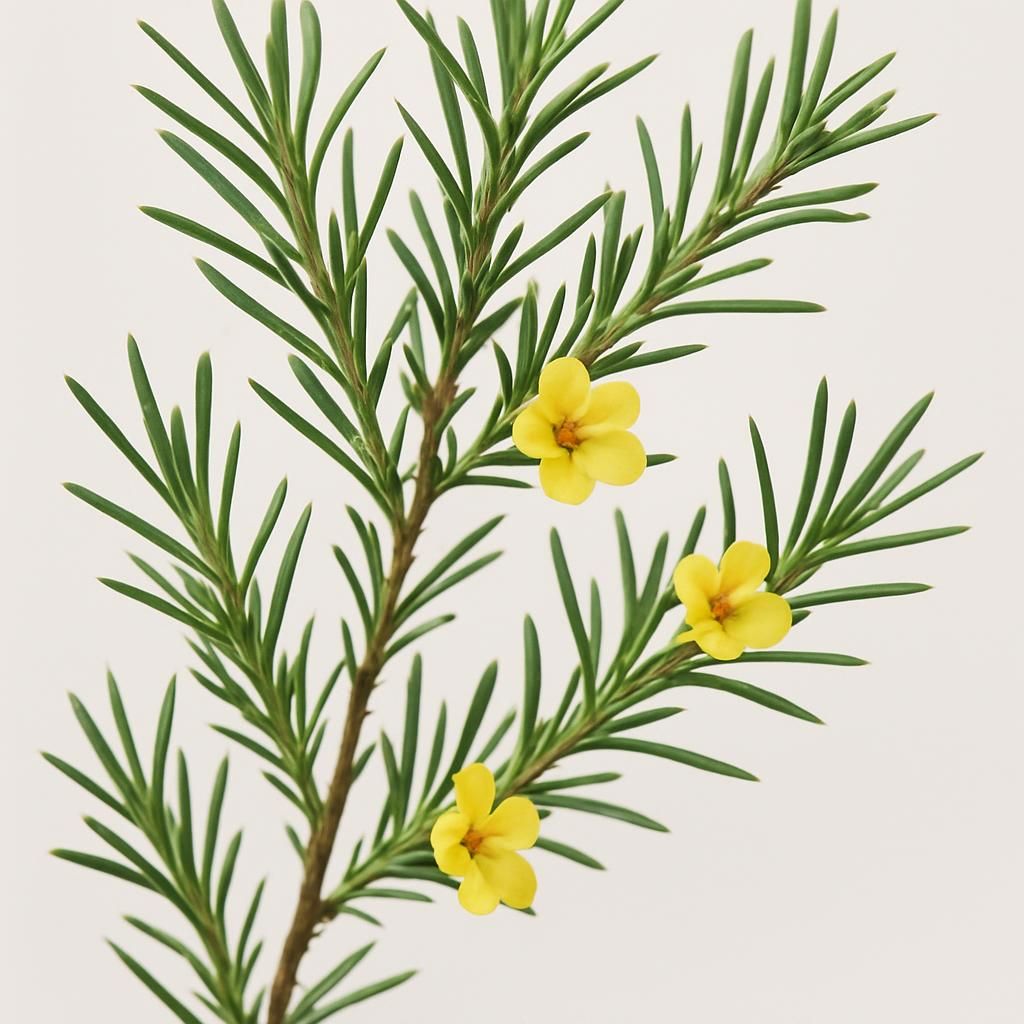
Introduction to Rooibos
Rooibos (Aspalathus linearis) is a woody shrub belonging to the Fabaceae family and is the only commercial tea crop grown exclusively in the Cederberg region of South Africa. The plant produces slender, needle-like leaves that are harvested, bruised, and oxidized to develop the characteristic red-brown color and sweet, earthy flavor prized worldwide. Because rooibos contains no caffeine and is naturally low in tannins, it has become a popular alternative to Tea for health-conscious consumers. Global demand continues to rise, with exports now exceeding 15,000 tonnes annually, making professional cultivation knowledge essential for new growers.
Botanical Profile of Rooibos
Aspalathus linearis is a perennial, nitrogen-fixing shrub that reaches 1–1.5 m in height with a deep taproot system adapted to nutrient-poor, sandy soils. The plant bears small, bright yellow pea-like flowers from late spring through early summer, followed by small, flat pods containing hard-coated seeds. Leaves are linear, 15–50 mm long, and arranged alternately along thin, reddish-brown stems. The species exhibits two distinct growth forms: the upright “Nortier” type favored for commercial plantations and the more spreading wild type. As a legume, rooibos forms symbiotic relationships with rhizobia bacteria that fix atmospheric nitrogen, reducing fertilizer needs and improving soil fertility for subsequent crops.
Soil, pH, and Climate Requirements for Rooibos
Rooibos is highly adapted to the unique conditions of the fynbos biome and will not thrive outside its narrow ecological niche. Successful commercial production is limited to altitudes of 500–1200 m with winter rainfall of 300–500 mm concentrated between May and August. The plant prefers deep, well-drained, acidic sandy soils derived from Table Mountain sandstone. Heavy clay or waterlogged soils cause rapid root decline. The following table summarizes ideal growing parameters:
| Parameter | Ideal Range | Notes |
|---|---|---|
| Soil Type | Coarse sand to sandy loam | Must be free-draining; avoid compaction |
| Soil pH | 4.5–5.5 | Strongly acidic; liming reduces yield |
| Annual Rainfall | 300–500 mm | Winter rainfall pattern critical |
| Temperature Range | 15–28 °C day / 5–12 °C night | Frost sensitive below –3 °C |
| Altitude | 500–1200 m | Higher elevations improve leaf quality |
| Sun Exposure | Full sun | Minimum 6–8 hours direct sunlight |
Step-by-Step Planting & Propagation
Rooibos is almost exclusively propagated from seed because cuttings root poorly. Fresh seed must be scarified by soaking in near-boiling water for 30 seconds followed by 24-hour room-temperature soaking to break dormancy. Sow scarified seed in late autumn (April–May) into prepared seedbeds or nursery trays at 1–2 cm depth. Maintain soil temperature around 18 °C and keep media moist but never waterlogged. Germination occurs in 10–21 days. Seedlings are transplanted to the field at 4–6 months when they reach 15–20 cm. Field spacing is 1.5 m between rows and 0.8–1.0 m within rows, giving approximately 6,000–8,000 plants per hectare. Plant into pre-irrigated holes and firm soil around roots to eliminate air pockets. Mulch immediately with 5–7 cm of clean straw or wood chips to suppress weeds and conserve moisture.
Care & Maintenance regimes for Rooibos
Young plants require careful irrigation during the first two summers until the taproot is established. Once mature, rooibos is highly drought tolerant and should receive supplemental water only during prolonged dry spells exceeding four weeks. Fertilization is minimal; a single light application of phosphorus-rich organic fertilizer at planting is usually sufficient because of nitrogen fixation. Pruning is performed after the second harvest to maintain bush shape and stimulate new growth. The following table outlines the annual schedule:
| Operation | Timing | Details | Rate / Method |
|---|---|---|---|
| Irrigation | Year 1: weekly; Mature: as needed | Deep soak to 30 cm; avoid overhead wetting | 15–20 L/plant during establishment |
| Fertilizer | At planting only | Low-P organic blend or rock phosphate | 200 g/plant |
| Pruning | After second flush | Cut back 30–40 % of top growth | Hand shears or mechanical trimmer |
| Weed Control | Year-round | Mulch plus shallow hoeing | Organic mulch 5–7 cm deep |
| Pest Scouting | Every 2 weeks | Check leaf undersides and stem bases | Visual inspection |
Pests, Diseases & Organic Management
Rooibos is relatively pest-resistant but can be affected by Aphids, Spider mites, and occasional infestations of Thrips. Root diseases such as Phytophthora and Pythium are the primary threats in poorly drained soils. Cultural prevention is the cornerstone of management: maintain strict drainage, avoid over-irrigation, and remove infected plants immediately. Beneficial insects including lady beetles and lacewings provide natural aphid control. For mite outbreaks, release predatory mites or apply horticultural oil during cool evening hours. Regular monitoring and early intervention keep chemical use to zero on certified organic plantations.
Harvesting, Curing & Optimal Storage
Commercial harvesting begins in the third year after planting and continues annually for 5–7 seasons before replanting. The optimal window is February to April when leaves reach peak polyphenol content. Stems are cut 20–30 cm above ground with sickles or mechanical harvesters. Immediately after cutting, leaves are bruised by rolling or tumbling to initiate enzymatic oxidation, then spread in thin layers to “ferment” for 12–18 hours under controlled humidity. Sun-drying follows for 2–3 days until moisture drops below 10 %. Finished rooibos is graded by particle size, screened for stems, and stored in airtight, light-proof containers at 15–20 °C and <60 % relative humidity. Properly cured and stored product retains flavor and antioxidant activity for up to two years.
Companion Planting for Rooibos
Because rooibos fixes nitrogen, it pairs well with shallow-rooted herbs and vegetables that benefit from residual fertility. Thyme and Rosemary are traditional companions that share similar soil pH and water needs while repelling certain insects. Marigold planted at field edges attracts beneficial predatory insects and reduces thrips pressure. Avoid planting heavy feeders such as Tomato or Corn nearby, as they compete for the same limited soil moisture. Interplanting with Clover as a living mulch further suppresses weeds and adds organic matter when mowed. These combinations improve biodiversity and reduce the need for external inputs on rooibos farms.