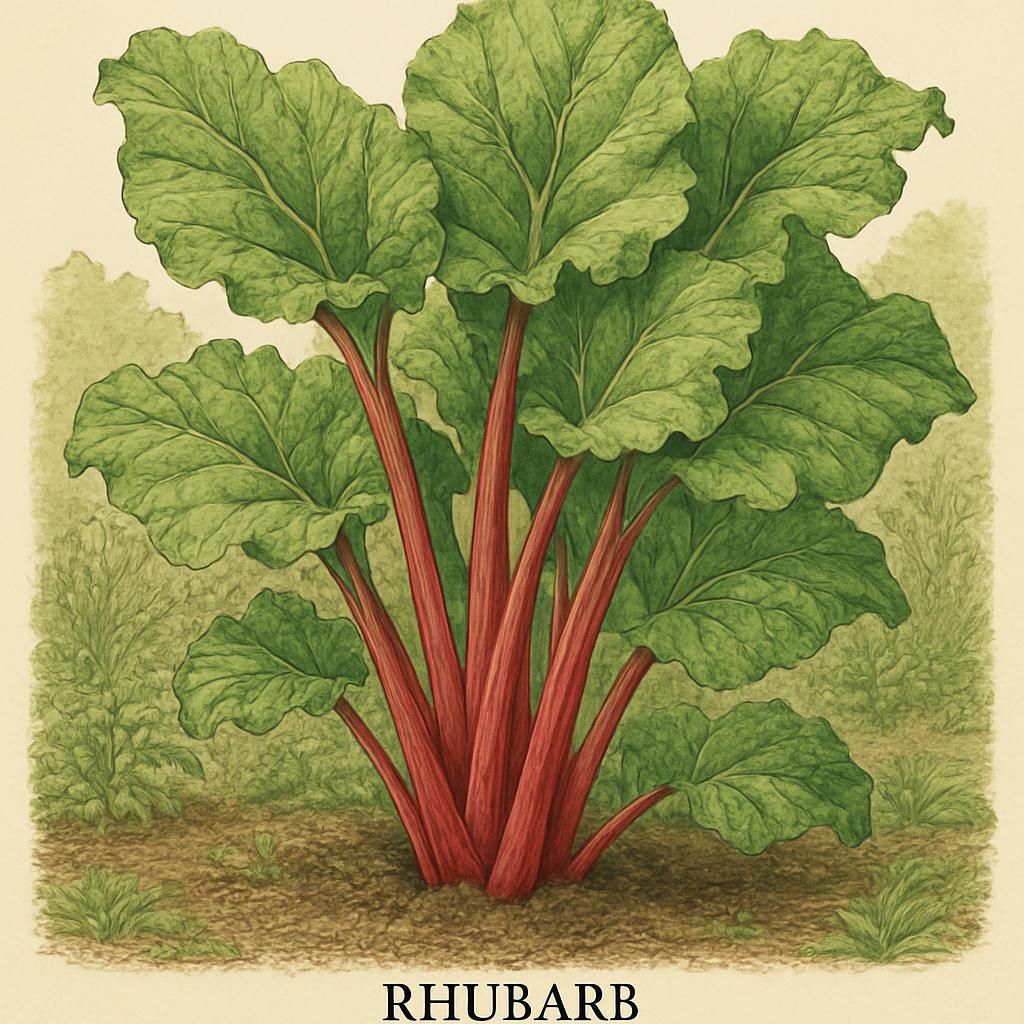
Introduction to Rhubarb (Glaskin’s Perpetual)
Rhubarb (Glaskin’s Perpetual) is a perennial vegetable that's highly prized for its edible, fleshy leaf stalks, known for their tart flavor. Originating from Asia, rhubarb is cultivated worldwide for culinary uses, especially in making pies, jams, and preserves. Glaskin’s Perpetual stands out as it allows for harvesting more than once during the growing season.
Botanical Profile of Rhubarb (Glaskin’s Perpetual)
Scientific Name: Rheum rhabarbarum
Family: Polygonaceae
Growth Habit: Herbaceous perennial
Stalk Color: Reddish-green
Leaf: Large, heart-shaped, and not edible due to oxalic acid content
Soil, pH, and Climate Requirements for Rhubarb (Glaskin’s Perpetual)
Rhubarb thrives in environments with cooler temperatures and benefits from a winter chill. It's suitable for USDA zones 3 through 8.
| Condition | Ideal Parameter |
|---|---|
| Soil Type | Loamy, well-drained |
| pH Level | 6.0 to 7.0 |
| Sun Exposure | Full sun to partial shade |
| Temperature | 40°F to 75°F |
| Rainfall | Moderate, well-distributed throughout the year |
Step-by-Step Planting & Propagation
- Site Selection: Choose a sunny location, as rhubarb favors full sun. Ensure the soil drains well since rhubarb does not tolerate waterlogged conditions.
- Soil Preparation: Amend the soil with compost or well-rotted manure before planting to boost fertility.
- Planting Time: Plant dormant crowns or divisions in early spring.
- Spacing: Space the plants about 3 feet apart to allow for their large leaves and extensive root systems.
- Propagation: Use root divisions. Dig up the crown in early spring and divide it into sections, each with a bud and substantial root. Replant these sections immediately.
Care & Maintenance Regimes for Rhubarb (Glaskin’s Perpetual)
Maintain your Rhubarb (Glaskin’s Perpetual) for a bountiful harvest.
| Task | Frequency |
|---|---|
| Watering | Weekly, deep watering during dry spells |
| Fertilizing | Annually in early spring with a balanced fertilizer |
| Pruning | Annually, remove flowering stalks to focus energy on the edible stalks |
Pests, Diseases & Organic Management
Rhubarb is generally resilient but can suffer from a few pests and diseases:
- Pests: Aphids, slugs, and spider mites.
- Diseases: Fungal diseases such as crown rot and rusts can be problematic.
- Management: Use organic soaps to manage pests and ensure good air circulation and proper watering techniques to prevent fungal infections. Crop rotation and soil sanitation are effective for keeping diseases at bay.
See also: Crop Diseases Under the Microscope: 9 Organic Fixes for Small Farm Resilience
Harvesting, Curing & Optimal Storage
Harvesting: Only harvest stalks that are at least 10 inches long by pulling them from the base. Avoid harvesting more than one-third of the plant at a time, especially in the first growing year.
Curing: Allow the stalks to dry out slightly before storing to improve longevity.
Storage: Store fresh rhubarb stalks in a plastic bag in the refrigerator for up to two weeks.
Companion Planting for Rhubarb (Glaskin’s Perpetual)
Rhubarb benefits from being planted with certain crops:
- Good Companions: Onion, Garlic, and lychee
- Avoid Planting Near: Beans and Cabbage as they compete for nutrients and space.
Learn more about effective companion planting practices in the blog Summer Companion Planting: 10 Organic Pairings to Boost Small Farm Resilience.