Introduction to Rambutan (R167)
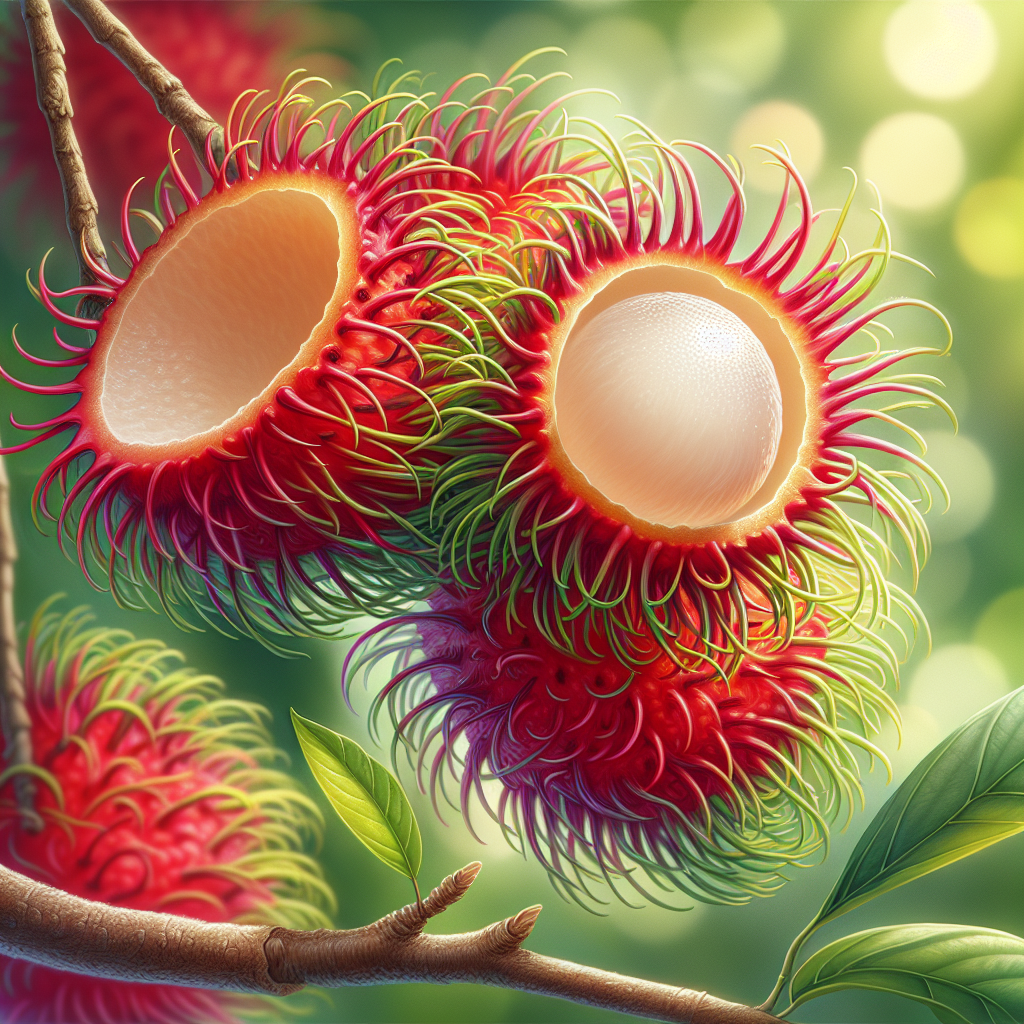
Rambutan (R167), known scientifically as Nephelium lappaceum, is an exotic tropical fruit celebrated for its striking appearance and delectable flavor. Native to Southeast Asia, this Sapindaceae family member produces clusters of golf-ball-sized fruits with translucent white flesh surrounding a single seed, wrapped in a hairy, leathery pericarp that turns vivid red or yellow when ripe. The name 'rambutan' derives from the Malay word for hair, referencing the fruit's distinctive spines.
Commercially, Rambutan (R167) commands premium prices in international markets, especially in the U.S., Europe, and Asia, due to its short shelf life and high demand in fresh, processed, and value-added products like juices, jams, and desserts. Yields can reach 10-15 tons per hectare under optimal conditions, with trees bearing fruit 3-5 years after planting. For small farms, integrating Rambutan (R167) diversifies income streams, offering resilience against market volatility compared to staples like mango. Success hinges on mimicking its humid, equatorial origins—think consistent warmth, ample moisture, and fertile, well-drained soils. This deep-dive guide equips growers with professional-grade protocols for propagation, care, pest control, and harvest to maximize profitability and sustainability.
Botanical Profile of Rambutan (R167)
Rambutan (R167) is an evergreen tree growing 15-25 meters tall in natural settings, though cultivated specimens are pruned to 5-8 meters for easier harvesting. Leaves are pinnate, 20-45 cm long, with 6-11 pairs of glossy, leathery leaflets measuring 5-15 cm. New growth flushes reddish before maturing to deep green. Flowers are small, greenish-white, and functionally dioecious—most cultivars are hermaphroditic, but male and female trees exist, necessitating pollinator planning.
Fruit develops in panicles up to 40 cm long, holding 50-150 berries. Each fruit is 3-6 cm in diameter, with soft, curved spines (1-2 cm) that soften upon ripening. The edible aril is juicy, acidic-sweet (Brix 18-25), low in fiber, and rich in vitamin C (up to 70 mg/100g), polyphenols, and antioxidants. Seed is mahogany-brown, 2-3 cm, mildly toxic if raw but roastable for oil extraction. Popular cultivars include 'Rongrien' (large, sweet red fruits), 'R167' (disease-resistant hybrid with uniform sizing), 'Sivathong' (yellow-skinned, premium export), and 'Chompuu' (early-bearing).
Trees exhibit cauliflory—flowers and fruits emerge directly from trunks and branches—facilitating hand-harvest. Root systems are shallow and spreading (up to 10m radius), sensitive to waterlogging, demanding mulching and basin irrigation. Phenology: vegetative flush post-dry spell, flowering in cool/dry periods (10-25°C nights), fruit set 4-6 weeks later, maturity 12-15 weeks after. For deeper insights on similar tropicals, see our dragon fruit wiki.
Soil, pH, and Climate Requirements for Rambutan (R167)
Rambutan (R167) demands deep, fertile loams with 20-30% organic matter, excellent drainage, and minimal compaction. Ideal texture: sandy clay loam (60% sand, 20% silt, 20% clay). Avoid heavy clays or pure sands prone to nutrient leaching. Incorporate 10-20 kg compost/m² pre-planting, plus dolomite if magnesium-deficient. pH optimum: 4.5-6.0 (acidic); above 7.0 induces iron chlorosis, below 4.0 risks aluminum toxicity. Test soil annually; amend with sulfur or lime as needed.
Climate is non-negotiable: equatorial tropics, 24-30°C average (min 18°C, max 35°C). Frost kills outright; prolonged >35°C stresses pollen viability. Rainfall: 2000-3000 mm/year, evenly distributed—no month <100 mm. Dry spells >2 months trigger flowering but risk fruit drop if >60 days. Humidity 70-90%; wind >15 km/h snaps brittle branches. Elevations 0-600m suit best; higher altitudes delay maturity. In marginal zones (e.g., subtropicals), use high tunnels or micro-sprinklers. Read our blog on summer heatwave strategies for heat mitigation tips applicable to Rambutan (R167).
Step-by-Step Planting & Propagation
Propagation: Seedlings viable but variable; use for rootstocks. Preferred: air-layering (marcotting) or grafting (veneer/cleft) on disease-resistant rootstocks like 'Rongrien'. Air-layer branches 2-3 cm diameter, 30-50 cm from tip; girdle 3 cm wide, apply rooting hormone (IBA 5000 ppm), wrap sphagnum moss + polythene. Roots in 6-8 weeks; sever and pot. Grafting success 80-90% in humid chambers.
Site Prep: Clear weeds; deep plow 60 cm. Dig pits 60x60x60 cm, 8-10m spacing (100-150 trees/ha). Fill with topsoil + 20 kg FYM + 500g superphosphate + 200g MOP. Plant during rainy onset; stake immediately.
Planting: 1-2 year marcots (40-60 cm tall). Place graft union 10 cm above soil. Water deeply; mulch 10 cm thick (coconut husk/paddy straw). Initial spacing hedge-rows for high-density (5x5m, 400/ha).
Early Care: Shade 50% first 6 months; irrigate 40-60 L/tree/week. Prune to single leader; tip new flushes.
Care & Maintenance regimes for Rambutan (R167)
Irrigation: Drip or basin; 800-1200 mm/year supplemental. Deficit for flower induction (4-6 weeks dry), then resume. Avoid overhead to prevent fungal splash.
Fertilization: Annual: NPK 200:150:300 g/tree, split 4x. Micronutrients: Zn, B, Fe via foliar. Organic: 20-30 kg FYM + biofertilizers (Azospirillum, PSB).
Pruning: Post-harvest, remove deadwood, watersprouts; open canopy for light penetration. Train to 4-6 scaffolds.
Weed Control: Mulch + cover crops like clover. Mow interrows.
Monitoring: Track growth flushes; synchronize via KNO3 sprays.
Pests, Diseases & Organic Management
Pests: Aphids, mealybugs, fruit borers. Neem oil (2%), predatory beetles. Bt for caterpillars.
Diseases: Phytophthora root rot, anthracnose. Copper oxychloride, improve drainage. Avoid wounding.
IPM: Beneficials (ladybugs, lacewings), pheromone traps. See Why 90% of Small Farms Fail at Pest Management.
Harvesting, Curing & Optimal Storage
Harvest when 80% red, spines pliable (130-150 days post-anthesis). Clip clusters; yield 20-50 kg/tree mature. Cool to 10-15°C immediately; store 2-3 weeks at 90-95% RH. Ethylene-sensitive; separate from climacterics like banana.
Companion Planting for Rambutan (R167)
Pair with pineapple (ground cover, suppress weeds), ginger (shade-tolerant, pest repellent), legumes for N-fixation. Avoid deep-rooted competitors. Fall companion guide offers synergies.