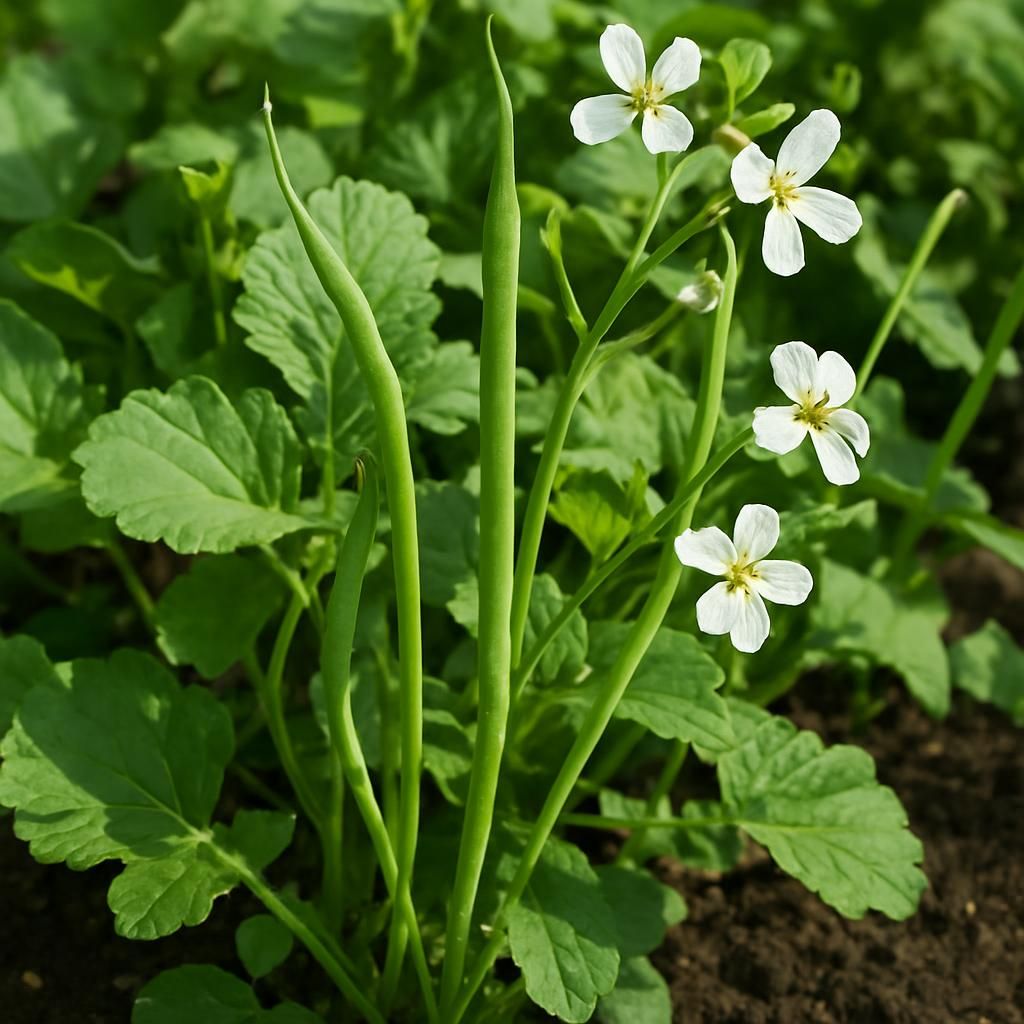
Introduction to Radish (Rat-Tailed)
Rat-tailed radish (Raphanus sativus var. caudatus) is a distinctive member of the Brassicaceae family cultivated across tropical and subtropical regions for its elongated, fleshy seed pods. Unlike common root radishes, this variety is prized for its continuous production of crisp, mildly pungent pods that resemble rat tails, hence the common name. These pods are harvested young and tender, offering a spicy-sweet crunch that works well raw in salads, stir-fries, or pickled preparations. The plant grows rapidly, often reaching 1–1.5 meters in height, and thrives in warm conditions where traditional radish varieties bolt quickly.
This crop originated in Southeast Asia and has become popular in home gardens and market farms for its dual purpose: edible pods and attractive flowers that support pollinators. Its ability to produce over extended periods without becoming woody makes it a reliable performer in succession plantings. Farmers appreciate its low input requirements and resistance to many common brassica pests when grown with proper cultural practices.
Botanical Profile of Radish (Rat-Tailed)
Rat-tailed radish is an annual herbaceous plant characterized by deeply lobed, pinnate leaves and slender stems that support clusters of white to pale purple flowers. After pollination, long, slender seed pods develop that can reach 20–60 cm in length. The pods are typically harvested at 10–20 cm when they remain crisp and free of fiber. The plant produces a modest taproot that is generally not consumed, as the focus remains on pod production.
The species exhibits strong heat tolerance compared to European radish types and can continue flowering and podding for 4–8 weeks under optimal conditions. Flowers are attractive to bees and beneficial insects, supporting garden biodiversity. Seeds are small, round, and brown, remaining viable for 3–5 years when stored properly.
Soil, pH, and Climate Requirements for Radish (Rat-Tailed)
Rat-tailed radish performs best in well-drained, fertile loamy soils with consistent moisture. It tolerates a wide range of soil textures but yields decline in heavy clay or waterlogged conditions. The plant prefers full sun but can tolerate partial shade in extremely hot climates.
Ideal Growing Conditions
| Parameter | Optimal Range | Notes |
|---|---|---|
| Soil Type | Loam to sandy loam | Good drainage essential |
| Soil pH | 6.0–7.0 | Slightly acidic to neutral |
| Temperature | 18–30°C (day) | Heat tolerant; avoid frost |
| Sunlight | Full sun (6–8 hours) | Partial shade in extreme heat |
| Spacing | 30–45 cm between plants | Rows 45–60 cm apart |
| Soil Moisture | Evenly moist | Avoid water stress during pod formation |
Step-by-Step Planting & Propagation
- Site Selection: Choose a location with full sun and well-drained soil. Amend heavy soils with compost or aged manure to improve structure.
- Soil Preparation: Test soil pH and adjust to 6.0–7.0. Incorporate 2–3 cm of organic matter and rake the bed smooth.
- Sowing Time: Direct sow seeds in spring after last frost or in late summer for fall harvests in temperate zones. In tropical regions, sow year-round except during heavy monsoon periods.
- Sowing Method: Sow seeds 1 cm deep and 5 cm apart in rows. Thin seedlings to 30–45 cm once they develop true leaves.
- Succession Planting: Sow new rows every 2–3 weeks to maintain continuous pod production.
- Transplanting: Although direct sowing is preferred, young seedlings can be transplanted carefully at the 2–3 leaf stage with minimal root disturbance.
Care & Maintenance regimes for Radish (Rat-Tailed)
Consistent moisture and moderate fertility support vigorous pod production. Over-fertilization with nitrogen can lead to excessive foliage at the expense of flowers and pods. Mulching helps retain soil moisture and suppress weeds.
Water, Fertilizer, and Pruning Schedule
| Growth Stage | Watering Frequency | Fertilizer Application | Pruning/Maintenance |
|---|---|---|---|
| Seedling (0–3 weeks) | Keep soil evenly moist | Light compost tea every 10–14 days | Remove weeds; thin seedlings |
| Vegetative (3–6 weeks) | 2–3 times weekly | Balanced NPK (10-10-10) at 4 weeks | Mulch around base; monitor pests |
| Flowering & Podding | Deep watering 2x weekly | Side-dress with compost or low-N fertilizer | Remove spent flowers to extend harvest |
| Mature Pod Stage | Reduce slightly | No additional fertilizer | Harvest pods regularly |
Pests, Diseases & Organic Management
Rat-tailed radish is relatively resistant to many brassica pests but can be affected by Aphids, flea beetles, and caterpillars. Monitor plants weekly and use floating row covers during early growth stages. Organic controls include neem oil, insecticidal soap, and hand-picking larvae.
Common diseases include Alternaria leaf spot and downy mildew. Ensure good air circulation, avoid overhead watering, and remove infected leaves promptly. Crop rotation with non-brassica crops every 2–3 seasons reduces disease pressure.
Harvesting, Curing & Optimal Storage
Harvest pods when they are 10–20 cm long, firm, and before seeds inside become prominent. Regular picking encourages continuous production. Use clean shears to cut pods at the base to avoid damaging the plant.
Fresh pods store for 5–7 days in the refrigerator in a perforated bag. For longer storage, blanch and freeze pods or pickle them in vinegar brine. Seeds can be saved by allowing some pods to mature fully and dry on the plant.
Companion Planting for Radish (Rat-Tailed)
Rat-tailed radish pairs well with Lettuce, Cucumber, and Nasturtium to maximize space and deter pests. Avoid planting near other brassicas to reduce shared pest and disease issues. The flowers attract beneficial insects that help control aphids on neighboring crops.
For additional organic strategies, see Summer Companion Planting: 10 Organic Pairings to Boost Small Farm Resilience.