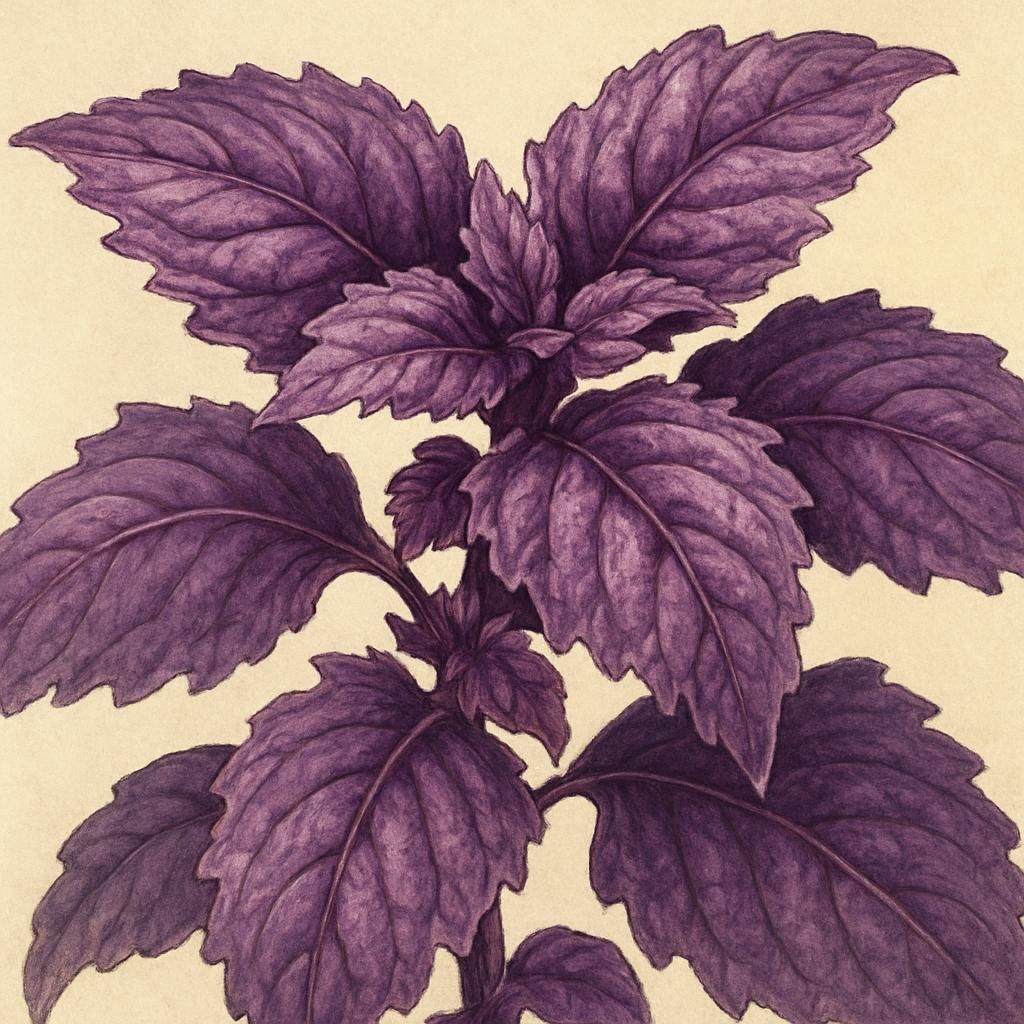
Introduction to Purple Ruffles Basil
Purple Ruffles Basil is a stunning variety of basil distinguished by its dark purple leaves and ruffled edges. It is both a culinary favorite and an eye-catching ornamental plant in gardens. Aside from its visual appeal, Purple Ruffles Basil offers a mild, sweet basil flavor with a hint of spice, making it a versatile herb in diverse culinary applications.
Botanical Profile of Purple Ruffles Basil
Purple Ruffles Basil, scientifically known as Ocimum basilicum 'Purple Ruffles', belongs to the Lamiaceae family. This variety is an annual herb, commonly grown for its distinctive leaves that not only add decorative value to gardens but are also used to infuse dishes with rich flavors.
Soil, pH, and Climate Requirements for Purple Ruffles Basil
Growing Purple Ruffles Basil requires specific soil, pH, and climate conditions to realize optimal health and productivity. Below is a table summarizing the ideal growing conditions:
| Requirement | Ideal Conditions |
|---|---|
| Soil Type | Well-drained loamy soil |
| Soil pH | 6.0 to 7.5 |
| Temperature | 70-85°F (21-29°C) |
| Sunlight | Full sun |
| Hardiness Zone | 9-11 |
Step-by-Step Planting & Propagation
- Seed Selection: Choose organic, high-quality seeds for best results.
- Soil Preparation: Amend the soil with compost to improve fertility and drainage.
- Sowing: Plant seeds 1/4 inch deep in pots or directly in the garden bed.
- Germination: Maintain a warm environment (70-85°F) with consistent moisture. Seeds typically germinate in 5-10 days.
- Thinning: Once seedlings have developed their first set of true leaves, thin them to 6-12 inches apart to improve air circulation and growth.
Care & Maintenance regimes for Purple Ruffles Basil
To ensure lush growth and productivity, adhere to the following care and maintenance schedule:
| Regime | Schedule |
|---|---|
| Watering | Water deeply once a week, allowing soil to dry out slightly between waterings |
| Fertilizing | Apply a balanced liquid fertilizer every 4-6 weeks |
| Pruning | Regularly prune to promote bushy growth; trim any flowers to prevent bolting |
Pests, Diseases & Organic Management
Purple Ruffles Basil is susceptible to various pests and diseases, including Spider Mites, Aphids, and Powdery mildew. Managing these organically can be achieved by using neem oil, introducing beneficial insects like ladybugs, and ensuring proper plant spacing to promote air circulation.
Harvesting, Curing & Optimal Storage
Harvest leaves regularly by pinching them at the stem to encourage more growth. Best done in the early morning when the oils are most concentrated. To store, air dry or use dehydrators and store in an airtight container in a cool, dark place.
Companion Planting for Purple Ruffles Basil
Purple Ruffles Basil pairs well with crops like Tomatoes, Peppers, and Beets. These companions can improve pest control and boost yields through mutual benefit.
For more on companion planting strategies, read our guide on Summer Companion Planting: 10 Organic Pairings to Boost Small Farm Resilience.
Further Reading
For a deeper insight into the economic potential of basil varieties, check out The Economics of Basil: A Brutal Breakdown.
To explore more about its relative varieties, you might find Thai Basil fascinating with its own distinctive characteristics.