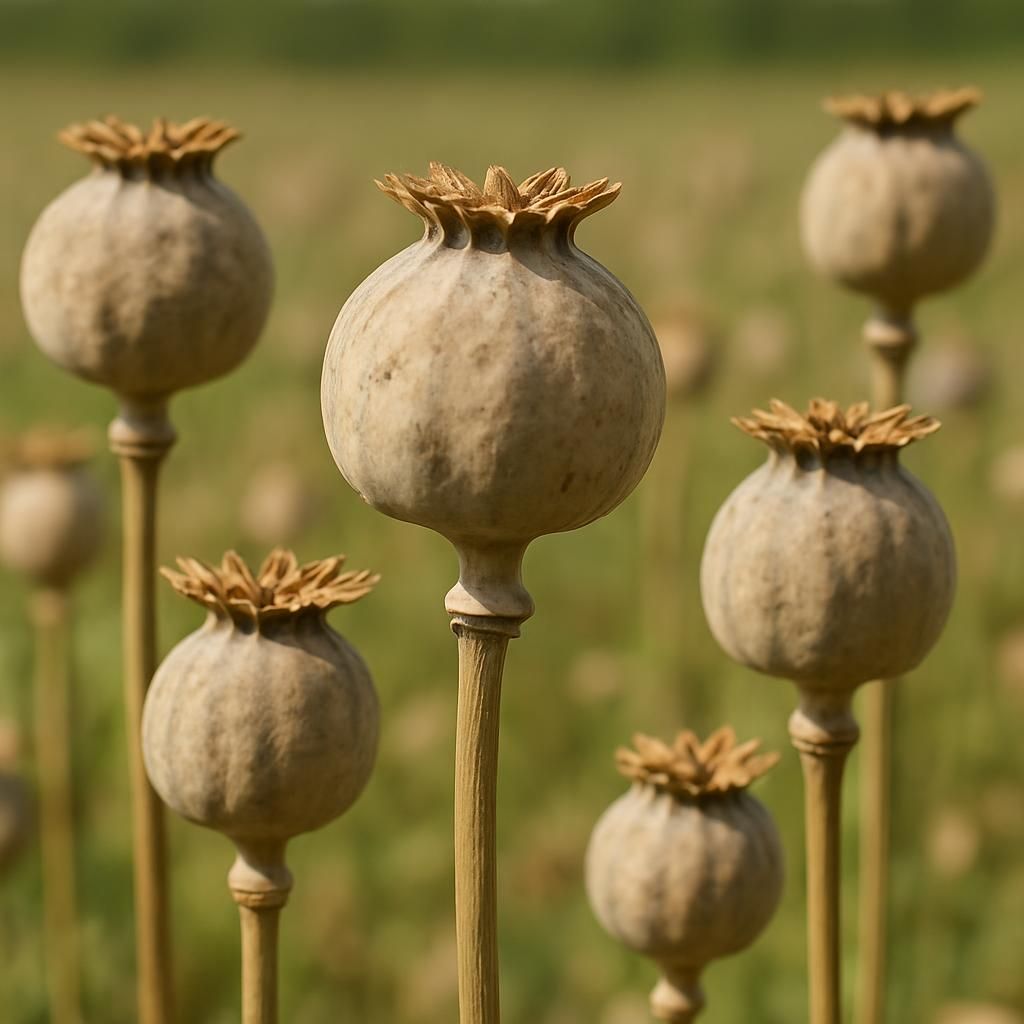
Introduction to Poppy Seed (Breadseed)
Breadseed poppy (Papaver somniferum) is an ancient cool-season annual cultivated for thousands of years for its nutrient-dense seeds and culinary oil. The plants produce striking flowers followed by distinctive seed capsules that contain thousands of tiny, flavorful seeds prized in European and Middle Eastern baking. Professional growers value breadseed varieties for their high seed yield, disease resistance, and adaptability to temperate climates. This comprehensive guide delivers practical, research-backed methods for successful commercial and home-scale production.
Botanical Profile of Poppy Seed (Breadseed)
Papaver somniferum belongs to the Papaveraceae family and grows as an erect annual reaching 60–150 cm in height. The plant develops a taproot system with fibrous lateral roots and produces glaucous, deeply lobed leaves. Solitary flowers appear in late spring with four broad petals in white, pink, purple, or red. Each flower matures into a globose capsule 3–8 cm in diameter containing up to 50,000 tiny kidney-shaped seeds. Breadseed cultivars have been selected for large capsules, high oil content (45–50%), and minimal alkaloid levels compared to pharmaceutical varieties.
Soil, pH, and Climate Requirements for Poppy Seed (Breadseed)
Breadseed poppy performs best in well-drained, fertile loamy soils with good structure. The crop tolerates a wide pH range but achieves optimal growth and seed quality under slightly alkaline conditions.
| Parameter | Ideal Range | Notes |
|---|---|---|
| Soil Type | Loam to sandy loam | Avoid heavy clay; ensure drainage |
| Soil pH | 6.5–7.5 | Slightly alkaline preferred |
| Temperature (Day) | 15–22 °C | Cool-season crop; avoid heat stress |
| Temperature (Night) | 5–12 °C | Frost tolerant to −5 °C once established |
| Annual Rainfall | 400–750 mm | Supplemental irrigation if below 400 mm |
| Growing Season | 90–120 days | Cool spring through early summer |
Step-by-Step Planting & Propagation
Direct sowing is the standard method for breadseed poppy. Begin soil preparation in early spring once soil temperatures reach 5–7 °C. Create a fine, firm seedbed free of large clods. Sow seeds 3–5 mm deep at a rate of 1–2 kg/ha in rows spaced 30–45 cm apart. Maintain consistent moisture until germination, which occurs in 7–14 days. Thin seedlings to 10–15 cm spacing once they reach 5 cm height. For larger plantings, consider precision seed drills calibrated for small seeds.
Care & Maintenance regimes for Poppy Seed (Breadseed)
Consistent moisture during flowering and seed fill is critical. Apply nitrogen early in the season and reduce inputs once flowering begins. Minimal pruning is required; remove weeds mechanically or with shallow cultivation.
| Growth Stage | Watering Schedule | Fertilizer Application | Pruning/Maintenance |
|---|---|---|---|
| Germination–Vegetative | Keep top 5 cm moist; 15–20 mm/week | 40–60 kg N/ha at 4–6 leaf stage | Weed control; thin to final spacing |
| Flowering | 20–25 mm/week; avoid water stress | 20–30 kg N/ha if deficiency appears | Monitor for lodging; stake if needed |
| Seed Fill–Maturity | Reduce to 10–15 mm/week | No additional fertilizer | Cease cultivation; allow capsules to dry |
Pests, Diseases & Organic Management
Common pests include Aphids, Thrips, and Cutworms. Fungal issues such as Downy mildew and Botrytis may occur under humid conditions. Implement crop rotation, remove crop residues, and use floating row covers during early growth. Beneficial insects such as lady beetles and lacewings provide natural aphid control. For severe infestations, apply insecticidal soaps or neem oil according to label rates.
Harvesting, Curing & Optimal Storage
Harvest when capsules turn brown and rattle when shaken, typically 90–110 days after sowing. Cut stems 15–20 cm below the capsule and bundle for drying in a well-ventilated area out of direct sunlight. Once fully dry (moisture content below 10%), thresh by hand or mechanical thresher. Clean seeds using screens and air separation. Store in airtight containers at 5–10 °C and 40–50% relative humidity for up to two years with minimal loss of viability or flavor.
Companion Planting for Poppy Seed (Breadseed)
Breadseed poppy pairs well with cool-season companions such as Lettuce, Carrot, and Onion. These combinations improve space utilization and may reduce pest pressure. Avoid planting near Brassicas if flea beetle pressure is high. Interplanting with Marigold can deter nematodes and improve biodiversity. Clover cover crops preceding poppy enhance soil nitrogen and structure.