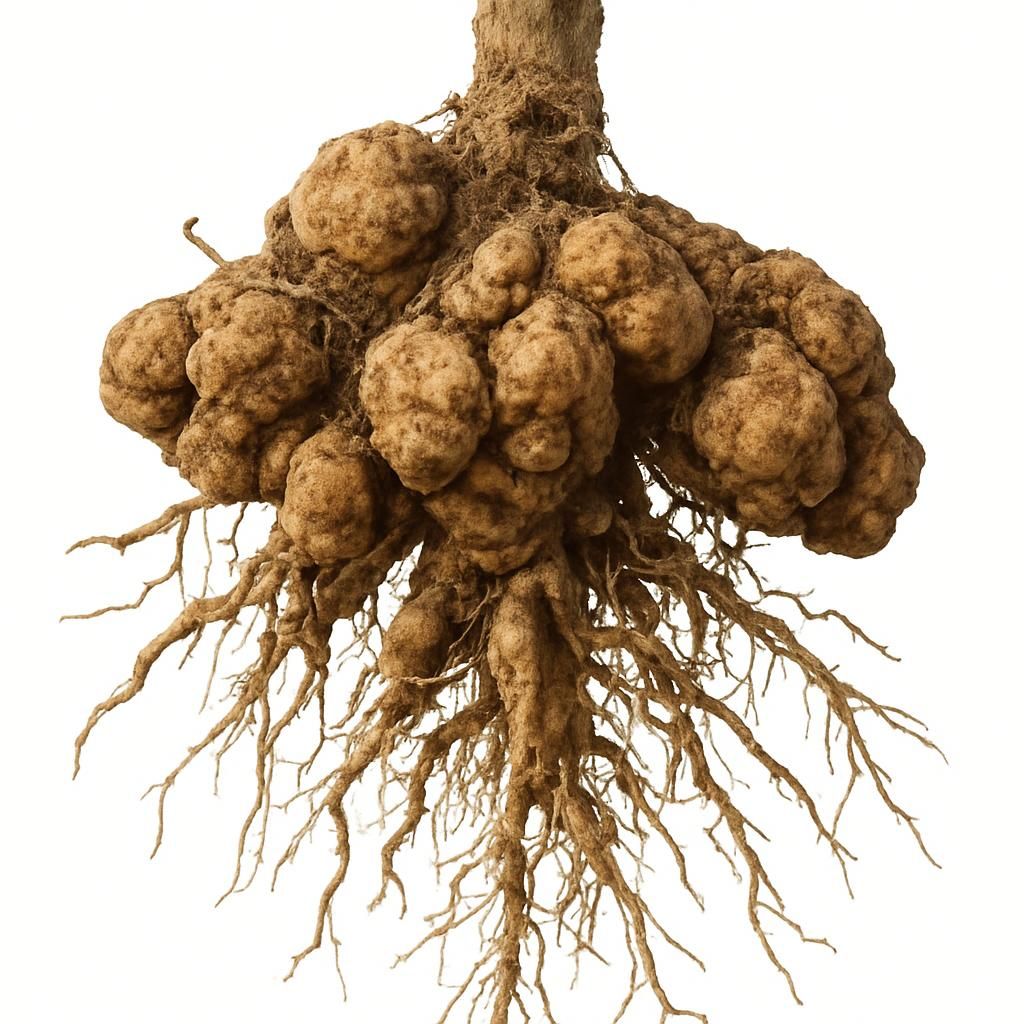
Introduction to Plasmodiophora brassicae
Plasmodiophora brassicae is an obligate soil-borne protist that causes clubroot, one of the most persistent and economically damaging diseases of the Brassicaceae family. The pathogen persists in soil as thick-walled resting spores that remain viable for 10–20 years, making eradication extremely difficult once fields are infested. Clubroot reduces root function, leading to stunted plants, wilting, and yield losses of 30–100% in severely affected fields.
The disease is favored by acidic soils and cool, moist conditions. Resting spores germinate in the presence of root exudates, releasing zoospores that penetrate root hairs and cortical cells. Inside the host, the pathogen induces uncontrolled cell division and enlargement, forming characteristic galls. Infected plants often show above-ground symptoms only after significant root damage has occurred.
Identifying Symptoms & Damage
Early above-ground symptoms include wilting during midday heat followed by recovery overnight, yellowing of lower leaves, and gradual stunting. Severely affected plants may fail to head or produce small, misshapen heads. Below ground, roots exhibit spindle-shaped or club-like galls that disrupt vascular tissue and limit water uptake.
Secondary infections by opportunistic bacteria and fungi often cause root decay and foul odors. In heavy infestations, entire root systems may be replaced by galls, leading to plant collapse. Symptom expression is most pronounced when soil temperatures remain between 18–24 °C and pH is below 6.5.
Lifecycle and Progression of Plasmodiophora brassicae (MUST INCLUDE A MARKDOWN TABLE OF LIFECYCLE STAGES)
The lifecycle of Plasmodiophora brassicae consists of a primary phase in root hairs and a secondary phase in the root cortex, culminating in the production of long-lived resting spores.
| Stage | Description | Duration | Key Conditions |
|---|---|---|---|
| Resting spore | Thick-walled survival structure in soil | Up to 20 years | Dormant until stimulated by host root exudates |
| Zoospore release | Motile zoospores swim to root hairs | Hours to days | Soil moisture >60% field capacity, 10–25 °C |
| Primary infection | Zoospores penetrate root hairs forming primary plasmodia | 3–7 days | Cool, moist soil |
| Secondary plasmodia | Migration into cortical cells triggering gall formation | 2–4 weeks | Optimal 18–24 °C |
| Spore maturation | Formation of new resting spores inside galls | 4–8 weeks | Host senescence or harvest |
| Spore dispersal | Release into soil via decaying roots or cultivation | Ongoing | Mechanical movement, water, wind-blown soil |
Environmental Triggers & Risk Factors
| Factor | Optimal Range for Disease | Management Implication |
|---|---|---|
| Soil pH | 5.0–6.5 | Raise pH to 7.0–7.5 with lime to suppress spore germination |
| Soil temperature | 18–24 °C | Avoid planting during cool spring periods in infested fields |
| Soil moisture | >60% field capacity | Improve drainage and avoid over-irrigation |
| Soil texture | Heavy clay or compacted soils | Incorporate organic matter to enhance aeration |
| Previous brassica crops | Within 5 years | Extend rotation interval to 7+ years with non-hosts |
Organic Control & Treatment Plans (MUST INCLUDE A MARKDOWN TABLE OF TREATMENT OPTIONS AND FREQUENCIES)
Organic management focuses on reducing soil inoculum, raising pH, and improving soil biology rather than curative chemical treatments.
| Treatment Option | Application Rate | Frequency | Notes |
|---|---|---|---|
| Agricultural lime | 2–5 t/ha to reach pH 7.2 | Once per season, incorporated 15–20 cm deep | Apply 4–6 weeks before planting |
| Compost tea drench | 1:10 dilution, 10 L/m² | Every 14 days during early growth | Boosts microbial competition |
| Biofumigation with mustard cover crop | 4–6 kg seed/ha | Once per rotation cycle | Chop and incorporate at flowering |
| Wood ash amendment | 1–2 t/ha | Every 2–3 years | Raises pH and supplies potassium |
| Solarization (clear plastic) | 4–6 weeks in summer | Once per infested bed | Effective in warm climates |
| Crop rotation with non-hosts | Minimum 7-year break | Continuous rotation planning | Include Cabbage and Broccoli only after interval |
Preventing Plasmodiophora brassicae in the Future
Long-term prevention relies on strict sanitation, resistant cultivars where available, and vigilant monitoring. Equipment should be cleaned between fields to prevent soil movement. Use certified disease-free transplants and avoid introducing infested soil via manure or compost. Regular soil testing for pH and spore load guides lime applications and rotation decisions.
Adopt the principles outlined in The Overlooked Art of Crop Rotation for Small Farm Resilience to maintain low inoculum levels. Maintain soil organic matter above 3% to support suppressive microbial communities that naturally reduce resting spore viability.
Crops Most Affected by Plasmodiophora brassicae
The pathogen primarily attacks members of the Brassicaceae family. Highly susceptible crops include Cabbage, Cauliflower, Broccoli, Kale, Turnip, Radish, Brussels sprouts, and oilseed Rapeseed. Related species such as Mustard and some wild brassicas also serve as hosts and can perpetuate inoculum between commercial crops.