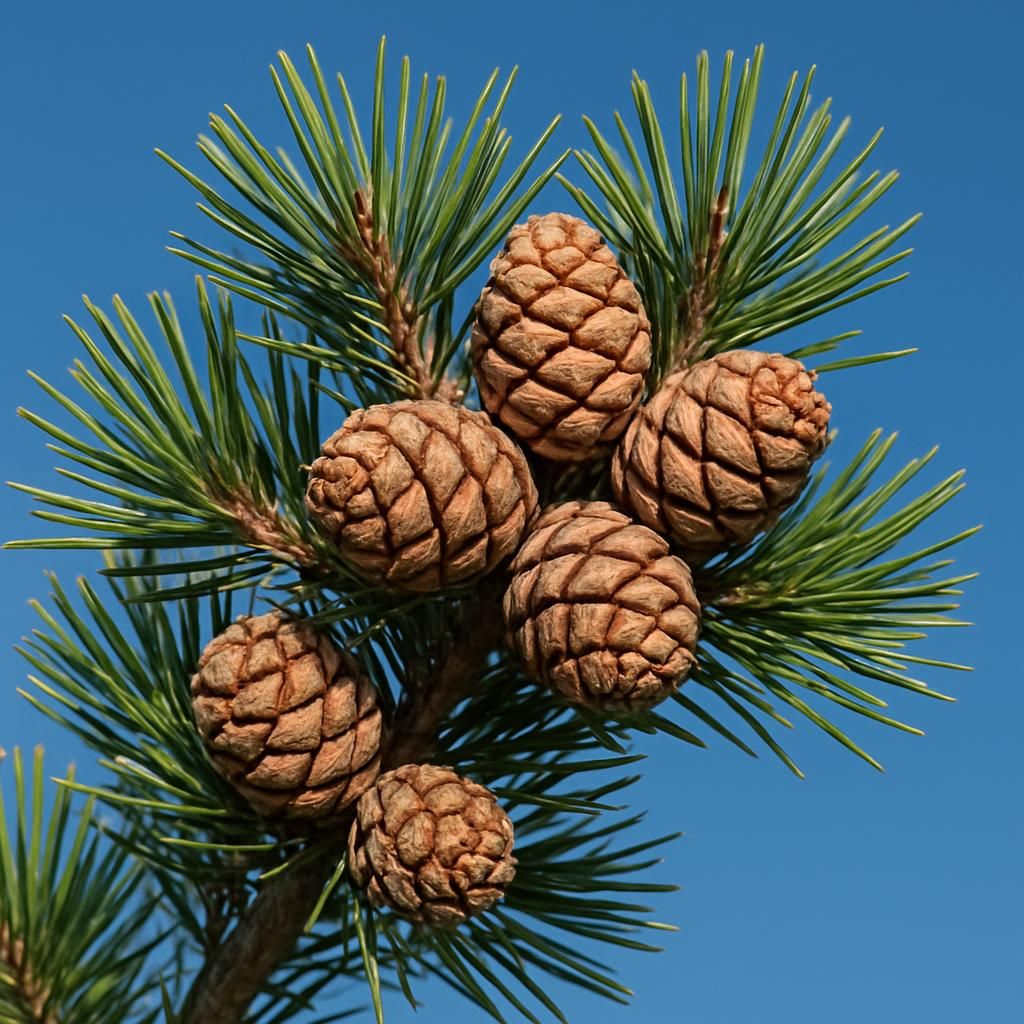
Introduction to Pine Nut (Pinus edulis - Colorado)
Pinus edulis, the two-needle pinyon pine, is the primary commercial source of pine nuts in North America and a cornerstone species of high-desert ecosystems in Colorado, New Mexico, Arizona, and Utah. These slow-growing, long-lived trees produce nutrient-dense seeds that command premium prices in both domestic and export markets. Successful cultivation requires patience, as trees typically begin meaningful production between 25 and 40 years of age, but well-managed orchards can remain productive for centuries. This definitive guide delivers professional-grade agronomic, entomological, and post-harvest information for growers seeking to establish or expand pinyon pine operations.
Botanical Profile of Pine Nut (Pinus edulis - Colorado)
Pinus edulis is an evergreen conifer in the Pinaceae family that typically reaches 10–20 meters in height with a rounded to irregular crown. The species is characterized by two stiff, dark-green needles per fascicle that persist for 3–9 years. Female cones are ovoid, 4–6 cm long, and mature over two growing seasons, releasing large, wingless seeds 10–15 mm in length. Male cones are small, yellow, and produced in dense clusters in spring. The tree exhibits a deep taproot system supplemented by extensive lateral roots, conferring excellent drought tolerance once established. Seed production is strongly influenced by summer rainfall two years prior to cone maturity, creating pronounced masting cycles every 3–7 years.
Soil, pH, and Climate Requirements for Pine Nut (Pinus edulis - Colorado) (MUST INCLUDE A MARKDOWN TABLE OF IDEAL CONDITIONS)
Pinus edulis thrives on well-drained, coarse-textured soils derived from sandstone, limestone, or granite parent material. The species is highly intolerant of waterlogging and compacted soils. Optimal pH ranges from slightly acidic to mildly alkaline. Elevation and temperature extremes define suitable growing regions.
| Parameter | Ideal Range | Notes |
|---|---|---|
| Soil Texture | Sandy loam to gravelly loam | Excellent drainage essential |
| Soil pH | 6.5 – 8.0 | Tolerates up to 8.5 |
| Organic Matter | 1–3 % | Low fertility preferred |
| Elevation | 1,500 – 2,400 m | Colorado Front Range foothills to mesas |
| USDA Hardiness Zones | 4b – 7b | Cold hardy to −34 °C |
| Annual Precipitation | 250 – 450 mm | Supplemental irrigation for young trees |
| Growing Season | 120 – 160 frost-free days | Requires warm, dry summers |
| Temperature Optimum | 15 – 27 °C daytime | Avoid prolonged >35 °C heat stress |
Step-by-Step Planting & Propagation
- Site Selection: Choose south- or southwest-facing slopes with full sun exposure and protection from prevailing winter winds.
- Soil Preparation: Rip or deep-rip compacted subsoil to 60 cm depth; incorporate 2–3 cm of coarse gravel if drainage is marginal.
- Propagation Method: Direct seed or transplant 2–3-year-old container-grown seedlings. Fresh, stratified seeds (90 days at 4 °C) achieve 60–75 % germination when sown 2 cm deep in late fall.
- Spacing: 6 m × 6 m for commercial orchards (278 trees/ha) or 4 m × 4 m for high-density plantings with eventual thinning.
- Planting Window: Early spring (March–April) or late fall (October–November) when soil temperatures are above 5 °C.
- Mulching: Apply 8–10 cm of wood-chip mulch in a 1 m diameter circle around each tree, keeping mulch 10 cm from the trunk.
- Irrigation at Establishment: Provide 20–30 L per tree weekly during the first two growing seasons; reduce frequency after year three.
Care & Maintenance regimes for Pine Nut (Pinus edulis - Colorado) (MUST INCLUDE A MARKDOWN TABLE OF WATER, FERTILIZER, AND PRUNING SCHEDULES)
Mature pinyon pines require minimal inputs once established, but strategic interventions during the first 15 years dramatically improve long-term productivity and cone set.
| Year / Stage | Water Schedule | Fertilizer (N-P-K) | Pruning Schedule |
|---|---|---|---|
| Years 1–3 | 20–30 L weekly Apr–Oct | 50 g 10-10-10 at planting; 100 g each spring | Remove lower branches to 30 cm; shape leader |
| Years 4–7 | 40 L every 10–14 days | 200 g 10-5-10 in early spring | Thin competing leaders; remove dead wood |
| Years 8–15 | Deep soak every 3–4 weeks if <25 mm rain | 300 g 8-4-8 alternate years | Crown lift to 1.5 m; remove crossing limbs |
| Mature (>15 years) | Natural precipitation only | None unless deficiency symptoms appear | Sanitation prune every 5–7 years |
Pests, Diseases & Organic Management
Pinus edulis faces relatively few serious pests in its native range, but several organisms can reduce cone production or tree vigor when populations surge.
Major pests include nut weevils, pine tip moth (not in wiki list but documented), and scale insects. Cone damage by nut weevils can be reduced by timely harvest and solarization of fallen cones. Scale insects are best managed with dormant oil sprays in late winter. Diseases of concern are white pine blister rust (rare on pinyon) and root rot caused by Armillaria species in poorly drained sites. Cultural practices—proper spacing, avoidance of over-irrigation, and removal of infected material—form the foundation of organic management. Beneficial insects such as lady beetles and lacewings provide natural suppression of soft scales and aphids.
Harvesting, Curing & Optimal Storage
Cones are harvested when scales begin to separate and seeds rattle inside, typically late August through September in Colorado. Hand harvesting with long-handled poles or mechanical tree shakers are the two primary methods. Immediately after collection, cones are dried in thin layers at 25–30 °C with good airflow for 7–14 days until moisture content reaches 8–10 %. Seeds are then extracted by tumbling or manual threshing and further dried to 5–6 % moisture. Store cleaned nuts in airtight containers at 0–4 °C for up to two years or at −18 °C for five-plus years. Vacuum packaging extends shelf life and preserves flavor.
Companion Planting for Pine Nut (Pinus edulis - Colorado)
Pinyon pine orchards benefit from carefully chosen understory species that improve soil biology, reduce erosion, and attract beneficial insects. Compatible companions include Clover, Thyme, and Yarrow for nitrogen fixation and pollinator support. Avoid planting heavy feeders such as Corn or Tomato within the root zone. Strategic interplanting with Saffron Crocus in open rows has shown promise for additional revenue during the long juvenile period of the pines. Maintain a 1.5 m weed-free strip around each trunk for the first decade to minimize competition.