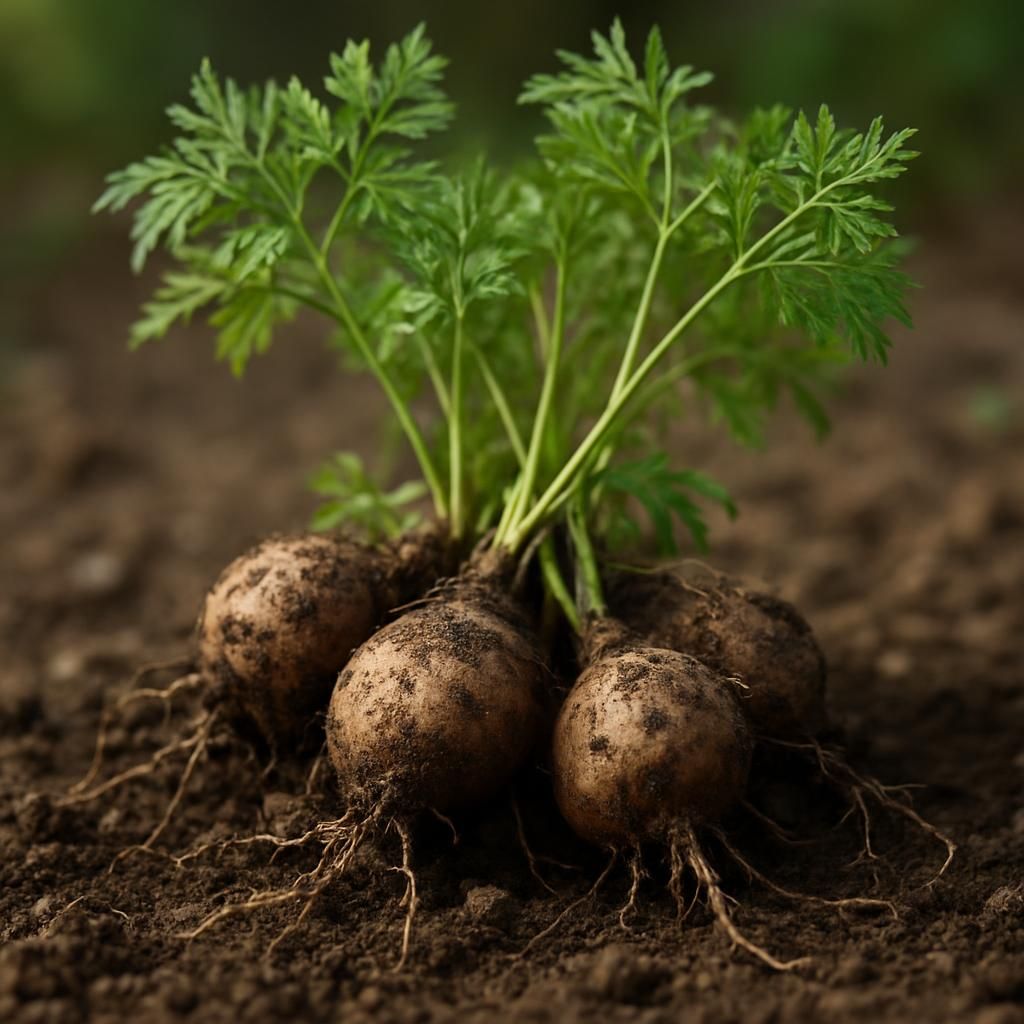
Introduction to Pignut (Conopodium majus)
Pignut (Conopodium majus) is a lesser-known perennial root crop prized by foragers and specialist growers for its small, chestnut-flavored tubers. Native to temperate woodlands across Europe, this member of the carrot family produces delicate, fern-like foliage and reaches 30–60 cm in height. While rarely found in commercial agriculture, pignut offers unique culinary value and ecological benefits when cultivated thoughtfully in home gardens or small-scale agroforestry systems.
The plant’s edible tubers develop 10–20 cm below the surface and are harvested in late summer or autumn once foliage begins to yellow. Pignut is slow-growing and shade-tolerant, making it an excellent choice for forest gardens or understory plantings where other root crops may struggle.
Botanical Profile of Pignut (Conopodium majus)
Conopodium majus is a herbaceous perennial with finely divided, tripinnate leaves resembling those of parsley or carrot. In late spring to early summer it produces small white umbels of flowers that attract beneficial pollinators. The tubers are typically 2–4 cm long, oval to irregular in shape, with a thin brown skin and creamy white flesh that develops a sweet, nutty flavor when cooked.
The species spreads slowly via seed and occasionally via small offsets from the tuber. Its deep taproot system helps improve soil structure in woodland margins, while its early-season growth provides ground cover before tree canopy closure.
Soil, pH, and Climate Requirements for Pignut (Conopodium majus)
Pignut prefers light, well-drained loamy soils rich in organic matter. It performs best under partial shade but can tolerate full sun in cooler climates if soil moisture is maintained.
| Parameter | Ideal Range | Notes |
|---|---|---|
| Soil Type | Sandy loam to loam | Avoid heavy clay; improve drainage with organic matter |
| Soil pH | 5.5–6.8 | Slightly acidic conditions favor tuber development |
| Temperature Range | 10–22 °C daytime | Cool-season growth; protect from late frosts |
| Annual Rainfall | 600–1200 mm | Consistent moisture essential during tuber bulking |
| Light Requirements | Partial shade (30–60 %) | Tolerates dappled woodland light; full sun only in cool summers |
| USDA Hardiness Zones | 5–8 | Perennial in temperate climates |
Step-by-Step Planting & Propagation
Pignut is most reliably propagated from fresh seed sown in autumn or stratified seed in spring. Direct sow 5–8 mm deep in prepared beds, spacing seeds 15 cm apart in rows 30 cm wide. Germination can be erratic and may take 4–8 weeks.
Alternatively, small tuber offsets can be planted in early spring at the same depth and spacing. Choose offsets with visible buds and firm texture. Mulch lightly after planting to retain moisture and suppress weeds.
Care & Maintenance regimes for Pignut (Conopodium majus)
Established plants require minimal intervention beyond weed control and moisture management. Avoid over-fertilization, which can lead to excessive foliage at the expense of tuber quality.
| Task | Frequency | Details |
|---|---|---|
| Watering | Weekly during active growth | Maintain even moisture; 25–30 mm per week |
| Fertilizer | Early spring only | Apply well-rotted compost or balanced organic fertilizer (NPK 5-5-5) at 50 g/m² |
| Pruning | Late autumn | Cut back yellowing foliage to 5 cm above soil |
Pests, Diseases & Organic Management
Pignut is relatively resistant to major pests but can suffer from Aphids and Slugs during wet seasons. Organic controls include encouraging natural predators, using beer traps for slugs, and applying neem oil or insecticidal soap for aphids.
Root rots may occur in poorly drained soils; ensure good drainage and rotate plantings every 4–5 years. Fungal leaf spots are rare but can be managed by removing affected foliage and improving air circulation.
Harvesting, Curing & Optimal Storage
Harvest tubers from late August through October once foliage yellows. Gently lift plants with a garden fork, taking care not to damage the delicate tubers. Shake off excess soil and allow surface drying for 1–2 hours.
Store in damp sand or peat moss at 4–7 °C for up to 4 months. Avoid washing tubers until ready to use. Smaller tubers can be left in the ground and harvested as needed through winter in mild climates.
Companion Planting for Pignut (Conopodium majus)
Pignut benefits from the shade and leaf litter provided by deciduous trees such as Hazel and Oak. Compatible understory companions include Thyme, Yarrow, and Nasturtium, which help deter pests and improve biodiversity.
Avoid planting near aggressive spreaders like mint. Its slow growth makes it suitable alongside Garlic or Onion in mixed perennial beds, where these alliums may help reduce soil-borne pests.