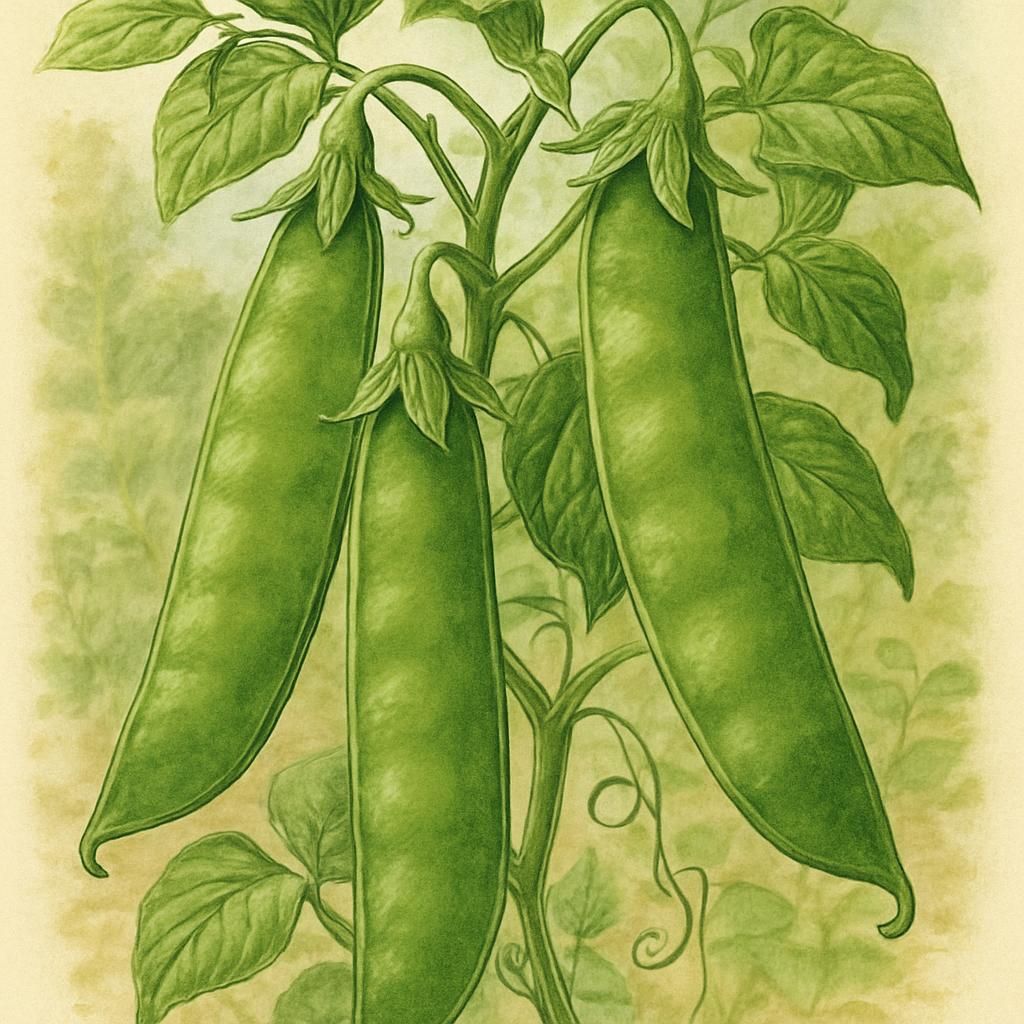
Introduction to Pea (Snow Pea - Oregon Giant)
The 'Oregon Giant' snow pea is a top-tier selection for gardeners and farmers seeking large, sweet pods that can be eaten whole. This variety is renowned for its crisp texture and sweet flavor, making it ideal for stir-fries, salads, or as a fresh snack. Originally bred for adaptability and yield, 'Oregon Giant' has become a staple in both home gardens and commercial farms.
Botanical Profile of Pea (Snow Pea - Oregon Giant)
The 'Oregon Giant' belongs to the species Pisum sativum, a plant species known for its edible seeds and tender pods. It is an annual legume and part of the Fabaceae family, which includes a variety of peas and beans. The plant itself is a climbing habit variety, often reaching up to 3-4 feet when supported properly. Its flowers are typically white, leading to the development of flat, long pods measuring 4-5 inches, each housing multiple sweet peas.
Soil, pH, and Climate Requirements for Pea (Snow Pea - Oregon Giant)
The 'Oregon Giant' thrives best in well-drained, loamy soil, enriched with organic matter. Peas prefer a cool climate, and they do well when planted in early spring to take advantage of the cooler temperatures. To achieve optimal growth, maintaining the right soil pH and temperature is crucial.
| Parameter | Ideal Condition |
|---|---|
| Soil Type | Loamy, well-drained |
| Soil pH | 6.0-7.5 |
| Climate | Cool, mild |
| Temperature Range | 60°F - 75°F (15°C - 24°C) |
Step-by-Step Planting & Propagation
- Site Selection: Choose a site with full sun exposure for the best yield. Peas prefer a location with rich well-draining soil.
- Soil Preparation: Enrich the soil with aged compost to improve texture and fertility. Ensure that the soil has a slightly acidic to neutral pH.
- Sowing: Directly sow seeds 1 inch deep and 2 inches apart in rows that are 2-3 feet apart. Early spring is ideal for planting to utilize cool weather.
- Support: Install trellises or stakes shortly after germination to support climbing vines for better air circulation and sunlight penetration.
- Watering: Maintain consistent moisture without waterlogging. Water deeply once a week to encourage deep root growth.
Care & Maintenance Regimes for Pea (Snow Pea - Oregon Giant)
To ensure optimal growth and productivity, adhere to specific care schedules, including watering, fertilization, and pruning.
| Task | Schedule |
|---|---|
| Watering | Once a week deep watering when there is no rainfall |
| Fertilizing | Use a balanced fertilizer at planting; repeat halfway through the growing season |
| Pruning | Remove dead or diseased foliage as needed |
Pests, Diseases & Organic Management
'Oregon Giant' snow peas are susceptible to pests like Aphids and Spider Mites. Common diseases include powdery mildew and root rot.
Organic Management Strategies:
- Use neem oil or insecticidal soaps to manage soft-bodied pests organically.
- Encourage beneficial insects like ladybugs and predatory beetles.
- Apply copper-based fungicides to prevent powdery mildew.
- Ensure proper spacing and air circulation to prevent fungal diseases.
Harvesting, Curing & Optimal Storage
Harvest snow peas when the pods are large and flat, before seeds completely fill out. Pick regularly to encourage continued production.
- Harvesting: Gently pull from the vine without damaging plant stems.
- Curing: Not necessary for snow peas; consume fresh for best flavor.
- Storage: Store peas in a plastic bag in the refrigerator for up to a week. For longer storage, blanch and freeze them.
Companion Planting for Pea (Snow Pea - Oregon Giant)
Companion planting can enhance growth and pest control. Suitable companions include Radish, Carrot, and Lettuce. Avoid planting near alliums like Garlic and Onion as they may inhibit pea growth.
Explore more about the variety and its agricultural impact on the Peas Wiki Page and discover organic strategies for pest control in this Blog Post.