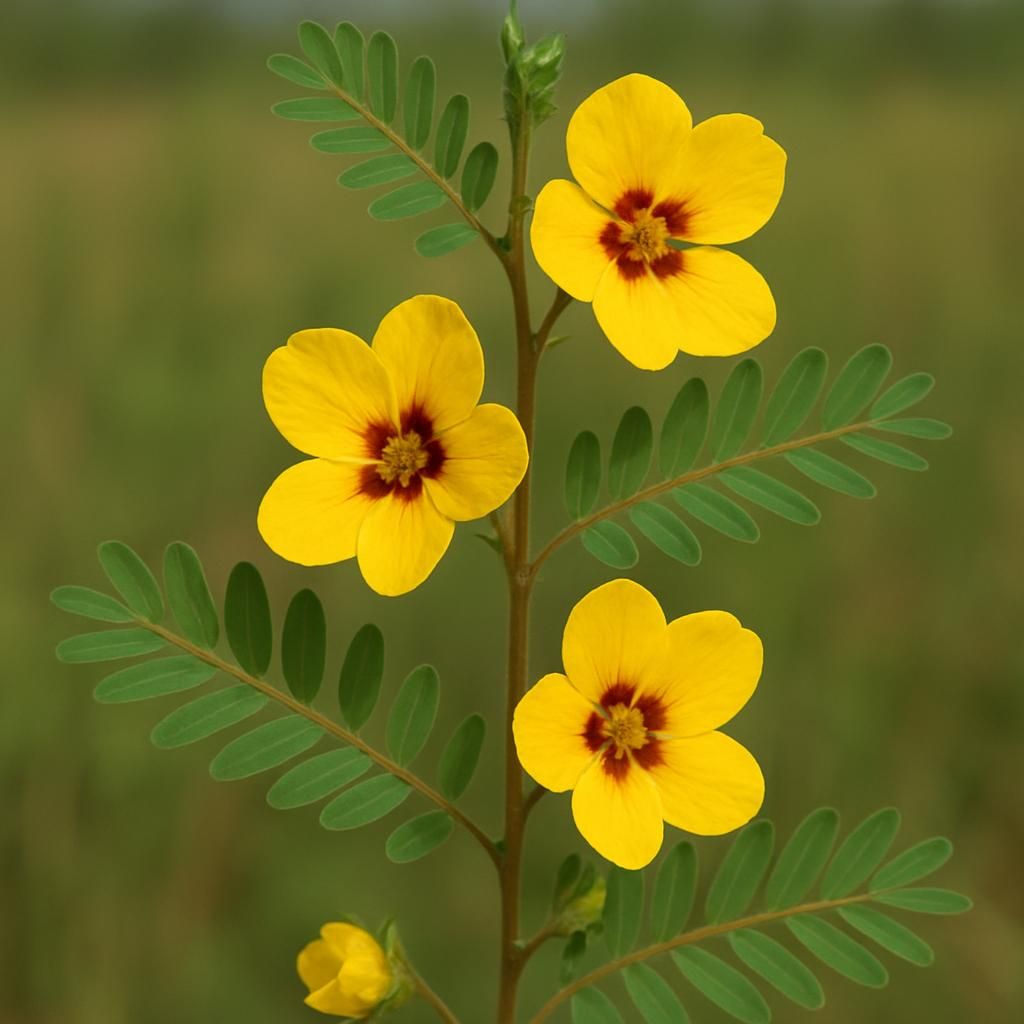
Introduction to partridge pea
Partridge pea (Chamaecrista fasciculata) is a warm-season annual legume native to much of eastern and central North America. It is widely valued in sustainable agriculture and native plant restoration for its ability to fix atmospheric nitrogen, improve soil structure, and provide high-quality forage and seed for wildlife. The plant produces bright yellow, five-petaled flowers with reddish-purple centers that bloom from mid-summer into early fall, attracting a wide range of native bees, butterflies, and other pollinators. Its common name derives from the preference of partridges and quail for its nutritious seeds.
Beyond its ecological benefits, partridge pea serves as an excellent green manure and cover crop in rotation systems. Because it is relatively short-lived and self-seeds readily, it can be managed to re-establish each year with minimal replanting. The plant reaches 1–3 feet in height with pinnately compound leaves that fold at night or when touched, a trait shared with many members of the pea family. Its deep taproot helps break up compacted soils and improves water infiltration.
Botanical Profile of partridge pea
Partridge pea belongs to the Fabaceae family. It features alternate, even-pinnate leaves with 8–15 pairs of narrow leaflets. The stems are slender, reddish-green, and can be slightly hairy. Flowers are borne in clusters in the leaf axils; each flower measures about 1 inch across and features prominent stamens that give the bloom a fuzzy appearance. After pollination, flat, oblong pods 1.5–2.5 inches long develop, each containing 10–20 hard, dark seeds.
The plant is highly adaptable and occurs naturally in prairies, open woodlands, roadsides, and disturbed sites. It is a larval host for several sulfur butterflies and provides critical late-season nectar. Because it is an annual, it completes its life cycle in a single growing season but readily reseeds if seed pods are allowed to mature.
Soil, pH, and Climate Requirements for partridge pea
Partridge pea thrives in a wide range of soil types but performs best in well-drained sandy or loamy soils with moderate fertility. It tolerates low-nutrient and slightly acidic conditions but avoids heavy, waterlogged clays. The plant is adapted to USDA hardiness zones 3–9 and prefers full sun (at least 6–8 hours daily).
| Parameter | Ideal Range | Notes |
|---|---|---|
| Soil Type | Sandy loam to loam | Tolerates poor soils; avoid heavy clay |
| Soil pH | 5.5 – 7.5 | Slightly acidic to neutral preferred |
| Temperature | 70–90 °F daytime | Frost sensitive; plant after last frost |
| Annual Rainfall | 20–50 inches | Drought tolerant once established |
| Sunlight | Full sun | Minimum 6 hours direct sun |
| Elevation | Sea level to 3,000 ft | Performs well across diverse topographies |
Step-by-Step Planting & Propagation
- Site Selection: Choose a location receiving full sun with good drainage. Remove existing vegetation and lightly till or rake the soil surface.
- Soil Testing: Conduct a soil test; amend only if pH falls below 5.5 with agricultural lime. No additional nitrogen is required.
- Seed Preparation: Scarify hard-coated seeds by lightly rubbing with sandpaper or soaking in warm water for 12–24 hours to improve germination.
- Sowing Time: Plant in late spring after soil temperatures reach 60 °F. In southern regions, early summer plantings are also successful.
- Seeding Rate & Depth: Broadcast 10–15 lb per acre or sow ¼–½ inch deep in rows 12–18 inches apart. Lightly cover and firm the seedbed.
- Inoculation: Use a cowpea-type rhizobium inoculant to ensure effective nitrogen fixation, especially on sites without prior legume history.
- Irrigation: Provide light, consistent moisture until seedlings emerge (7–14 days). Reduce watering once plants are established.
Care & Maintenance regimes for partridge pea
Partridge pea requires minimal intervention once established. It is drought tolerant and rarely needs supplemental fertility. Occasional mowing or grazing can be used to manage height and encourage branching. Weed pressure is usually low due to rapid growth and canopy closure.
| Task | Frequency | Details |
|---|---|---|
| Watering | As needed first 4 weeks | 0.5–1 inch per week until established; then rely on rainfall |
| Fertilizer | None after establishment | Avoid nitrogen; phosphorus only if soil test indicates deficiency |
| Pruning/Mowing | Once at 12–18 inches | Mow to 6–8 inches to promote bushiness and delay seed set if desired |
| Mulching | Optional at planting | Light organic mulch helps retain moisture and suppress early weeds |
Pests, Diseases & Organic Management
Partridge pea is relatively pest-resistant but can occasionally host Aphids, grasshoppers, and leaf-feeding caterpillars. Fungal issues such as powdery mildew may appear in humid conditions with poor airflow. Organic controls include strong water sprays for aphids, hand removal of larger insects, and neem oil or sulfur-based fungicides for mildew. Crop rotation and maintaining good plant spacing reduce disease incidence. Beneficial insects attracted by the flowers often provide natural pest suppression.
Harvesting, Curing & Optimal Storage
Harvest seed when pods turn dark brown and begin to split, typically 90–110 days after planting. Cut entire plants or hand-pick pods on dry days. Thresh by flailing or running through a stationary combine. Air-dry seeds to 10–12% moisture, then clean with screens or air. Store in cool, dry conditions in sealed containers or cloth bags; viability remains high for 3–5 years when kept below 50 °F and 50% relative humidity.
Companion Planting for partridge pea
Partridge pea pairs well with warm-season grasses and other legumes. It provides nitrogen to neighboring plants and attracts pollinators that benefit fruiting crops. Recommended companions include Corn, Sorghum, and native prairie species. Avoid planting near heavy feeders that may compete for light. Its ability to fix nitrogen makes it an excellent living mulch beneath Tomato or Pepper plantings. For more pairing strategies, see the blog post on Summer Companion Planting: 10 Organic Pairings to Boost Small Farm Resilience.