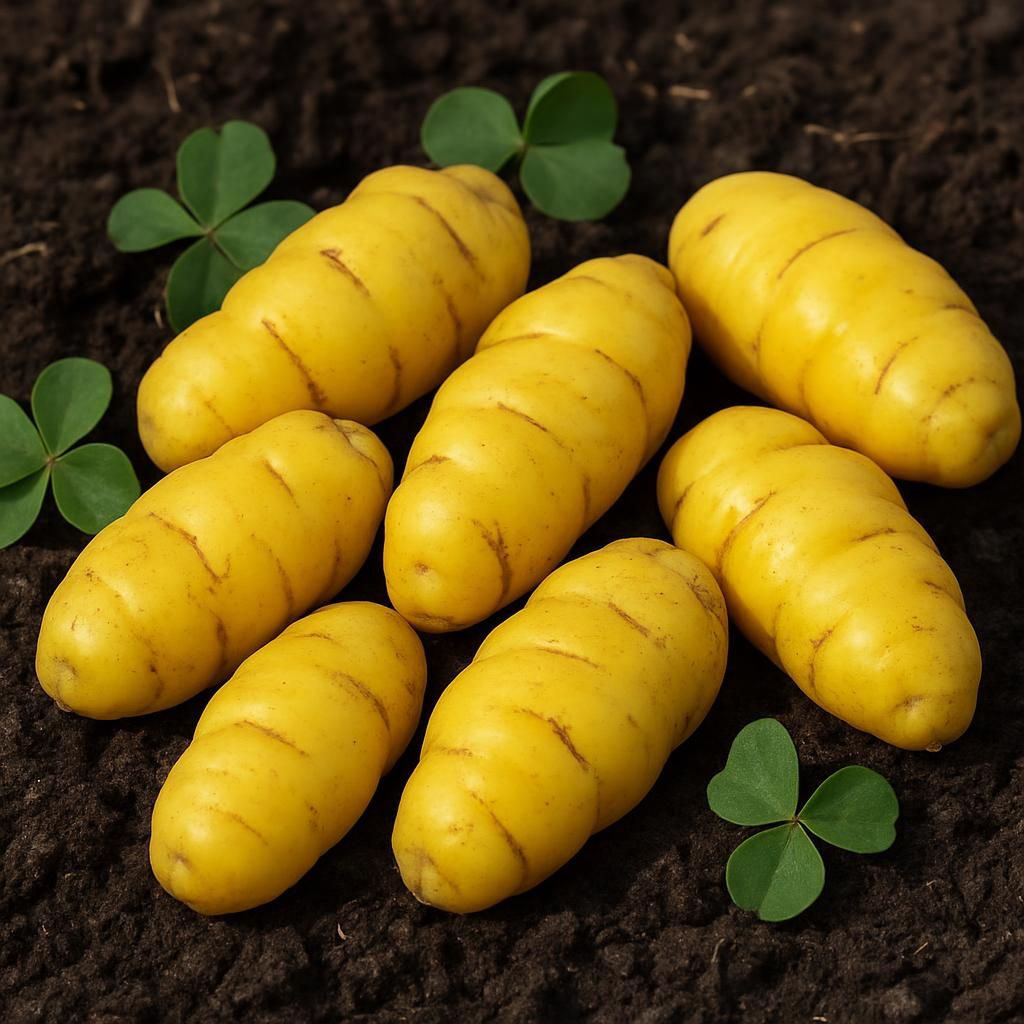
Introduction to Oca (Oxalis tuberosa - Yellow)
Oca (Oxalis tuberosa - Yellow) is a traditional Andean root vegetable gaining attention among small-scale growers seeking climate-resilient crops. Native to the high Andes of Peru, Bolivia, and Ecuador, this compact perennial produces small, knobby tubers that range from bright yellow to deep orange-red. The tubers are rich in carbohydrates, vitamin C, and antioxidants while delivering a pleasant tangy flavor that becomes sweeter after exposure to sunlight.
Unlike potatoes, oca stores well without refrigeration and tolerates cooler temperatures and marginal soils. Its foliage forms attractive clover-like mounds, making it suitable for both kitchen gardens and larger market plots. Because oca is day-length sensitive, many northern growers now extend seasons using row covers and protected culture.
This comprehensive guide delivers professional-grade advice on every stage of production, from site selection and planting through harvest, curing, and long-term storage. Whether you are expanding a diversified vegetable operation or trialing new Andean staples, oca offers reliable yields with relatively low pest pressure.
Botanical Profile of Oca (Oxalis tuberosa - Yellow)
Oxalis tuberosa belongs to the Oxalidaceae family and is a herbaceous perennial that grows 30–50 cm tall. The plant produces palmately compound leaves with three heart-shaped leaflets that fold at night. Small, five-petaled yellow flowers appear in late summer but rarely set viable seed in cultivation.
The edible portion consists of underground stem tubers formed at the tips of stolons. Tubers are typically 3–8 cm long, cylindrical to spindle-shaped, and covered in shallow eyes. The yellow cultivar group is especially valued for its mild flavor and attractive color after sun-sweetening. Plants reach maturity in 180–240 days depending on latitude and temperature.
Oca is closely related to other Oxalis species but is distinct from the common wood sorrel. It shares some cultural requirements with Potato and Sweet Potato yet tolerates higher soil acidity and cooler nights.
Soil, pH, and Climate Requirements for Oca (Oxalis tuberosa - Yellow)
Oca performs best in well-drained, moderately fertile loams but adapts to poorer soils where other root crops fail. It tolerates a wide pH range and excels in cool, moist conditions typical of highland climates.
| Parameter | Ideal Range | Notes |
|---|---|---|
| Soil Type | Sandy loam to loam | Avoid heavy clay; raised beds improve drainage |
| Soil pH | 5.5–6.8 | Tolerates acidity better than most tubers |
| Organic Matter | 3–6 % | Incorporate well-rotted compost pre-plant |
| Temperature (day) | 15–22 °C | Growth slows above 25 °C |
| Temperature (night) | 5–12 °C | Frost tolerant to –5 °C once established |
| Annual Rainfall | 600–1200 mm | Even moisture critical during tuber swell |
| Altitude | 1500–3500 m | Lowland growers use shade cloth and irrigation |
Site selection should prioritize full sun in cool regions and afternoon shade in warmer zones. Raised beds or ridges improve drainage and ease harvest. Pre-plant soil tests guide lime and nutrient amendments; maintain calcium levels above 1000 ppm to reduce tuber cracking.
Step-by-Step Planting & Propagation
Oca is propagated vegetatively from whole tubers or cut setts. Choose firm, disease-free seed tubers weighing 20–40 g. In cool climates, chit tubers indoors 4–6 weeks before last frost by placing them in a bright, 10–15 °C location until 2–3 cm sprouts appear.
- Prepare beds by incorporating 5 cm of compost and raking to a fine tilth.
- Plant tubers 8–10 cm deep and 30 cm apart in rows 60–75 cm apart.
- In frost-prone areas, delay outdoor planting until soil reaches 8 °C; use row covers for protection.
- Mulch immediately with 5 cm of straw or leaf mold to suppress weeds and maintain moisture.
- For succession planting, sow a second crop 60–75 days before first autumn frost in mild-winter regions.
Water thoroughly after planting and maintain consistent moisture until shoots emerge in 10–21 days. Avoid overwatering during early growth to prevent rot.
Care & Maintenance regimes for Oca (Oxalis tuberosa - Yellow)
Oca requires minimal inputs once established but responds well to timely irrigation and light feeding.
| Growth Stage | Watering Frequency | Fertilizer (NPK) | Pruning / Other Care |
|---|---|---|---|
| Establishment (0–4 wks) | 2–3× weekly until sprouts emerge | 5-10-10 at 200 kg/ha at planting | Remove weeds; hill lightly at 15 cm |
| Vegetative (4–12 wks) | 25 mm/week; deep soak | Side-dress 10-5-10 at 6 wks | Thin to one stem per plant; mulch refresh |
| Tuber Bulking (12–20 wks) | Maintain even moisture; reduce frequency | Optional 5-5-10 foliar K boost | No pruning; monitor for lodging |
| Pre-harvest (20+ wks) | Withhold water 10–14 days before lift | None | Cut foliage at soil level 7 days pre-harvest |
Weed control is critical during the first 8 weeks. Hand-pull or shallow cultivate to avoid damaging shallow stolons. In organic systems, apply 10–15 cm of mulch to suppress weeds and moderate soil temperature.
Pests, Diseases & Organic Management
Oca suffers fewer pest and disease issues than potatoes but can encounter slugs, Aphids, and fungal leaf spots in humid conditions.
- Slugs and snails: Use iron-phosphate baits and beer traps; maintain clean mulch.
- Aphids: Release lady beetles or spray insecticidal soap at first sign of colonies.
- Spider Mites: Increase humidity and apply neem oil; avoid water stress.
- Fungal leaf spots: Improve airflow, rotate crops, and apply copper hydroxide only if infection exceeds 10 % leaf area.
- Root-knot nematodes: Solarize soil or plant resistant Marigold borders.
Practice 3–4 year rotations away from other tuber crops. Remove and destroy infected foliage at season end to reduce overwintering inoculum.
Harvesting, Curing & Optimal Storage
Harvest begins 180–240 days after planting when foliage yellows. Lift tubers carefully with a fork, shaking off soil. Expose freshly harvested tubers to indirect sunlight for 5–10 days to convert oxalates into sugars and intensify color.
Cured tubers store 4–6 months at 5–10 °C and 85–90 % relative humidity. Avoid temperatures below 2 °C to prevent chilling injury. Sort out damaged tubers and pack in ventilated crates or mesh bags. Check monthly and remove any showing soft rot.
Companion Planting for Oca (Oxalis tuberosa - Yellow)
Oca benefits from strategic companions that improve soil, deter pests, or provide light shade.
- Nasturtium repels aphids and acts as a trap crop.
- Marigold suppresses nematodes and adds beneficial insect habitat.
- Clover fixes nitrogen and serves as living mulch between rows.
- Avoid planting near Faba Bean because shared root diseases may increase.
- Interplant with Lettuce for quick ground cover and efficient space use.
These pairings enhance biodiversity while maintaining the low-input philosophy that makes oca attractive to small farms.