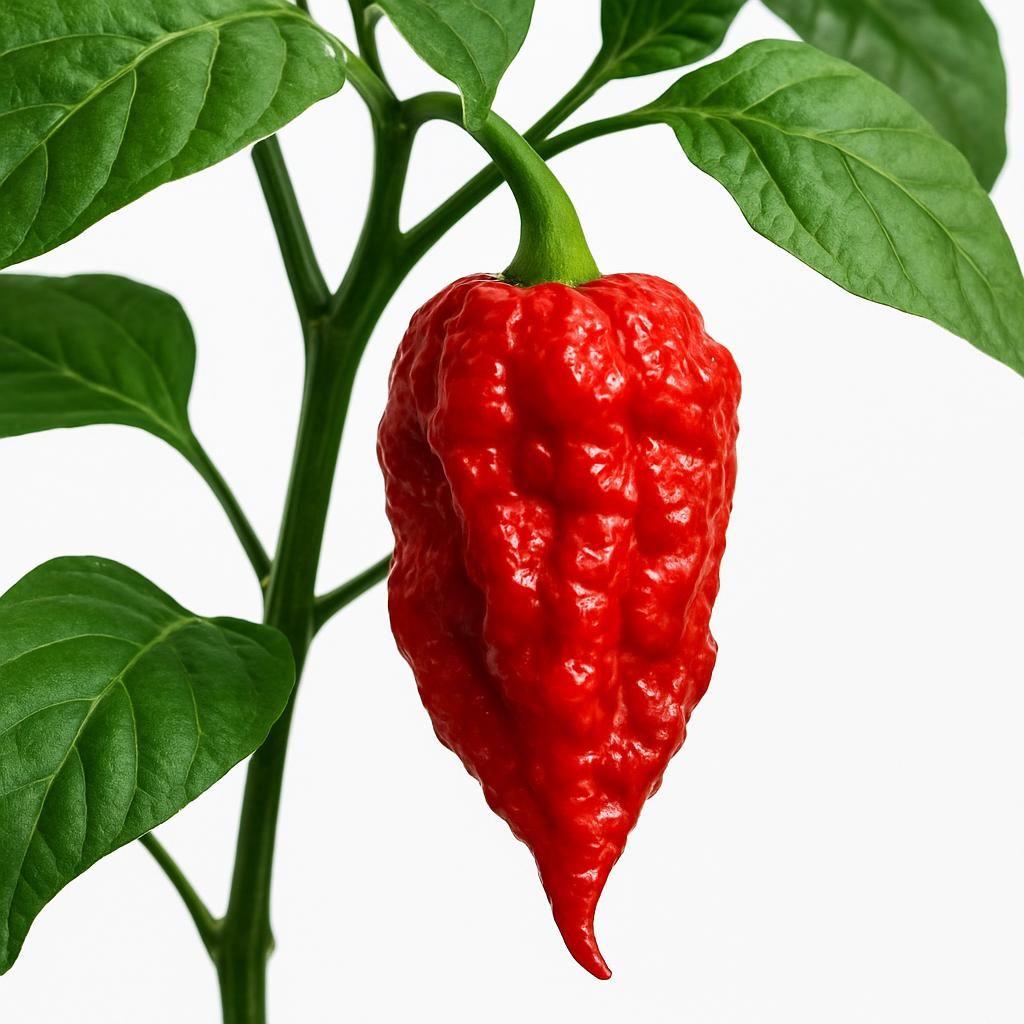
Introduction to Naga Viper
The Naga Viper is one of the world's hottest chili peppers, developed through selective breeding of Ghost Pepper and other Capsicum chinense varieties. This hybrid pepper combines extreme heat levels often exceeding 1 million Scoville Heat Units with a distinctive fruity aroma and flavor. Growing Naga Viper requires attention to detail due to its specific climate needs and longer maturation period compared to milder peppers.
Botanical Profile of Naga Viper
Naga Viper plants exhibit vigorous growth reaching 60-90 cm in height with a bushy, spreading habit. The leaves are dark green, ovate to lanceolate, and the stems become woody with maturity. Flowers are small, white, and self-pollinating, typically appearing in clusters. Fruits are elongated, wrinkled pods measuring 5-8 cm long, starting green and ripening to a vibrant red. The intense capsaicin concentration is concentrated in the placenta and seeds.
Soil, pH, and Climate Requirements for Naga Viper
Naga Viper demands well-draining, fertile soil rich in organic matter. The plant performs best in slightly acidic conditions with consistent warmth.
| Parameter | Ideal Range | Notes |
|---|---|---|
| Soil Type | Loamy, well-draining | Avoid heavy clay; amend with compost |
| Soil pH | 6.0 - 6.8 | Test soil before planting |
| Temperature Range | 21-32°C (70-90°F) day | Night temps above 15°C (59°F) essential |
| Sunlight | Full sun (6-8+ hours) | South-facing exposure preferred |
| Spacing | 45-60 cm between plants | 60-75 cm between rows |
| Frost Tolerance | None | Protect or move indoors below 10°C |
Step-by-Step Planting & Propagation
Start seeds indoors 8-10 weeks before the last expected frost. Soak seeds in warm water for 24 hours to improve germination rates. Use seed-starting mix in small pots or trays, planting seeds 0.5 cm deep. Maintain soil temperature at 27-30°C using a heat mat. Germination typically occurs in 14-21 days. Transplant seedlings outdoors once nighttime temperatures consistently exceed 15°C and all frost risk has passed. Harden off plants for 7-10 days before final placement. Space plants according to the table above and water thoroughly after transplanting.
Care & Maintenance regimes for Naga Viper
Consistent care is critical for maximizing yield and heat levels. Monitor soil moisture carefully and provide balanced nutrition throughout the growing season.
| Task | Schedule | Details |
|---|---|---|
| Watering | 2-3 times weekly (soil dependent) | Deep watering; keep soil moist but not soggy |
| Fertilizer | Every 2 weeks during growth | High-phosphorus formula at flowering; balanced NPK earlier |
| Pruning | Once at 30 cm height | Pinch growing tips to encourage bushiness; remove lower leaves if needed |
Mulch around plants to retain moisture and suppress weeds. Provide support stakes for heavy fruiting branches.
Pests, Diseases & Organic Management
Common threats include Aphids, Spider Mites, and Thrips. Monitor plants weekly and use insecticidal soap or neem oil at the first sign of infestation. Fungal issues such as Powdery Mildew and Root Rot can be prevented through proper spacing, airflow, and avoiding overwatering. Companion planting with Marigold helps deter pests naturally.
Harvesting, Curing & Optimal Storage
Harvest pods when fully red and firm for maximum heat and flavor. Use gloves and clip stems rather than pulling. For fresh use, store in the refrigerator up to two weeks. For longer storage, dry pods in a dehydrator at 50°C until brittle, then store in airtight containers away from light. Frozen whole peppers retain quality for up to six months.
Companion Planting for Naga Viper
Naga Viper benefits from strategic companions that improve pollination, deter pests, or enhance soil health. Plant alongside Tomato, Basil, and Nasturtium to attract beneficial insects and repel aphids. Avoid planting near Fennel which may inhibit growth.