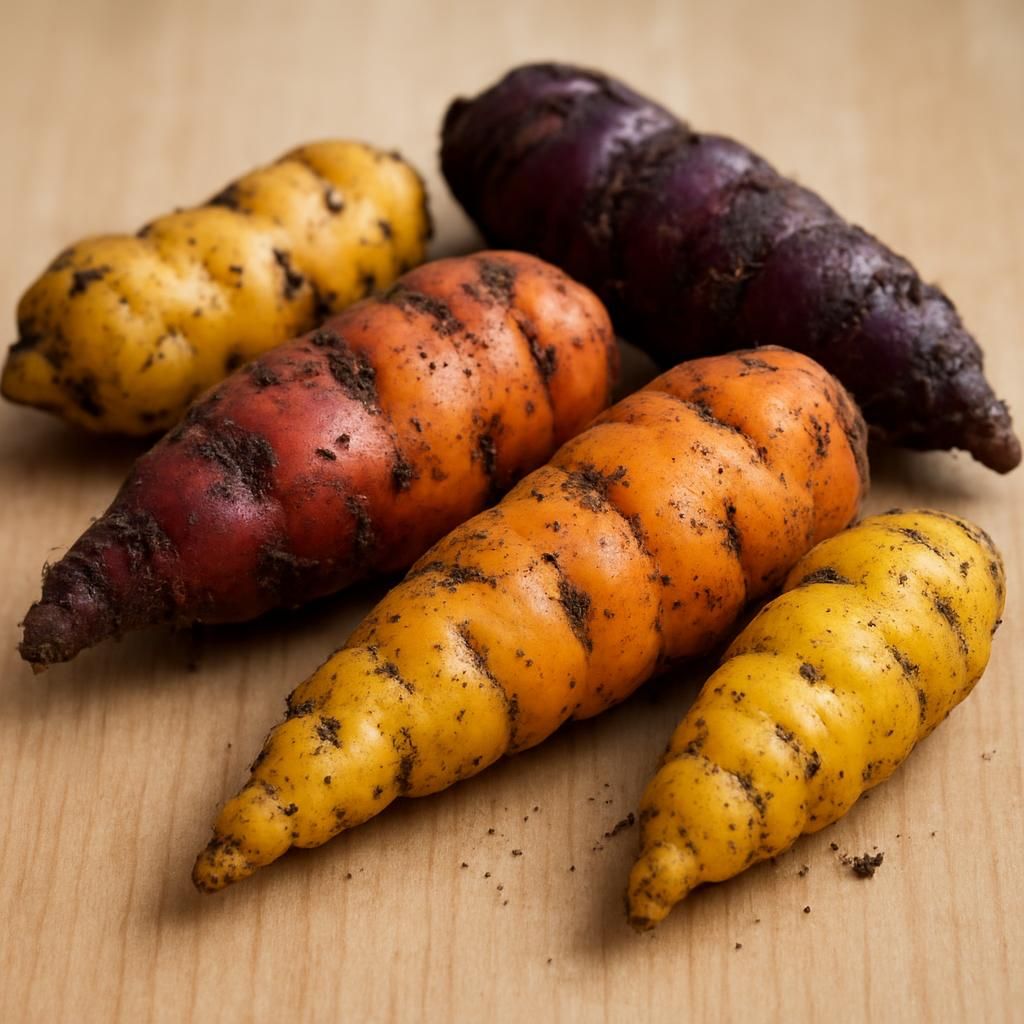
Introduction to Mashua (Tropaeolum tuberosum)
Mashua (Tropaeolum tuberosum) is an ancient Andean tuber crop that has sustained highland communities for centuries. The plant produces vibrant, trumpet-shaped flowers and underground tubers ranging in color from yellow to deep purple. Its slightly spicy, peppery flavor makes it a versatile ingredient in both traditional and modern cuisine.
Beyond its culinary uses, mashua is valued for its natural pest-repellent qualities and high vitamin C content. Farmers appreciate its resilience in marginal soils and cool temperatures where many other crops struggle. This guide provides professional-grade advice for successful cultivation from planting through storage.
Botanical Profile of Mashua (Tropaeolum tuberosum)
Mashua belongs to the Tropaeolaceae family and is closely related to garden Nasturtium. The plant features trailing or climbing stems that can reach 2–3 meters in length. Its leaves are palmately lobed and produce a distinct peppery aroma when crushed.
Tubers form at the ends of stolons and vary widely in shape and color. Flowers are typically bright orange to red and attract pollinators. The crop is a short-day plant, flowering and tuberizing best under 11–12 hours of daylight.
Soil, pH, and Climate Requirements for Mashua (Tropaeolum tuberosum)
Mashua prefers well-drained, fertile soils rich in organic matter. It tolerates slightly acidic to neutral conditions and performs best in cool, high-altitude climates.
| Parameter | Ideal Range | Notes |
|---|---|---|
| Soil pH | 5.5–6.8 | Avoid alkaline soils |
| Soil Type | Loamy to sandy loam | Excellent drainage essential |
| Temperature (day) | 15–22 °C | Growth slows above 25 °C |
| Temperature (night) | 5–12 °C | Frost tolerant to –5 °C once established |
| Altitude | 2,000–4,000 m | Adapted to cool highland conditions |
| Sunlight | Full sun to partial shade | 6–8 hours direct light optimal |
| Spacing | 30–40 cm between plants | Rows 75–90 cm apart |
Step-by-Step Planting & Propagation
- Select healthy, disease-free tubers or sections with at least one viable bud.
- Pre-sprout tubers in a cool, humid location 2–3 weeks before planting.
- Prepare planting beds by incorporating 5–7 cm of well-rotted compost.
- Plant tubers 8–10 cm deep with the bud facing upward.
- Space plants 30–40 cm apart in rows 75–90 cm wide.
- Mulch immediately after planting to conserve moisture and suppress weeds.
- Water lightly to settle soil without waterlogging.
Care & Maintenance regimes for Mashua (Tropaeolum tuberosum)
Mashua requires moderate irrigation and minimal fertility inputs once established. Consistent moisture during tuber bulking is critical.
| Growth Stage | Watering Schedule | Fertilizer Application | Pruning / Other Tasks |
|---|---|---|---|
| Establishment (0–4 wks) | Light watering every 2–3 days | None; rely on pre-plant compost | Remove weeds; maintain mulch |
| Vegetative (4–10 wks) | 25–30 mm/week if no rain | Side-dress with ½ rate balanced organic | Train vines on trellis if desired |
| Tuber Bulking (10–16 wks) | Maintain even moisture | Optional light potassium boost | Remove yellow leaves; monitor pests |
| Pre-Harvest (16–20 wks) | Reduce watering 2 weeks before | Cease fertilization | Cut back vines 7–10 days prior to harvest |
Pests, Diseases & Organic Management
Mashua is naturally resistant to many insects due to isothiocyanate compounds in its tissues. Common issues include Aphids, Slugs, and occasional fungal leaf spots.
Organic strategies include:
- Companion planting with aromatic herbs such as Thyme and Rosemary to deter aphids.
- Hand-picking slugs and using beer traps.
- Applying neem oil or insecticidal soap for heavy aphid infestations.
- Ensuring good airflow and avoiding overhead irrigation to prevent leaf diseases.
- Crop rotation with Potato or Onion families every 3–4 years.
Harvesting, Curing & Optimal Storage
Harvest mashua 18–22 weeks after planting when foliage begins to yellow. Carefully dig tubers to avoid damage. Cure in a shaded, well-ventilated area at 10–15 °C for 3–5 days.
Store cured tubers in a cool (4–8 °C), dark, humid environment. Properly stored mashua maintains quality for 4–6 months. Avoid refrigeration below 2 °C to prevent chilling injury.
Companion Planting for Mashua (Tropaeolum tuberosum)
Mashua pairs well with brassicas, alliums, and aromatic herbs. Nasturtium itself is an excellent trap crop for aphids.
Recommended companions include Garlic, Onion, Cabbage, and Thyme. Avoid planting near potatoes to reduce shared disease pressure. Mashua’s trailing habit also provides living mulch that suppresses weeds and conserves soil moisture.