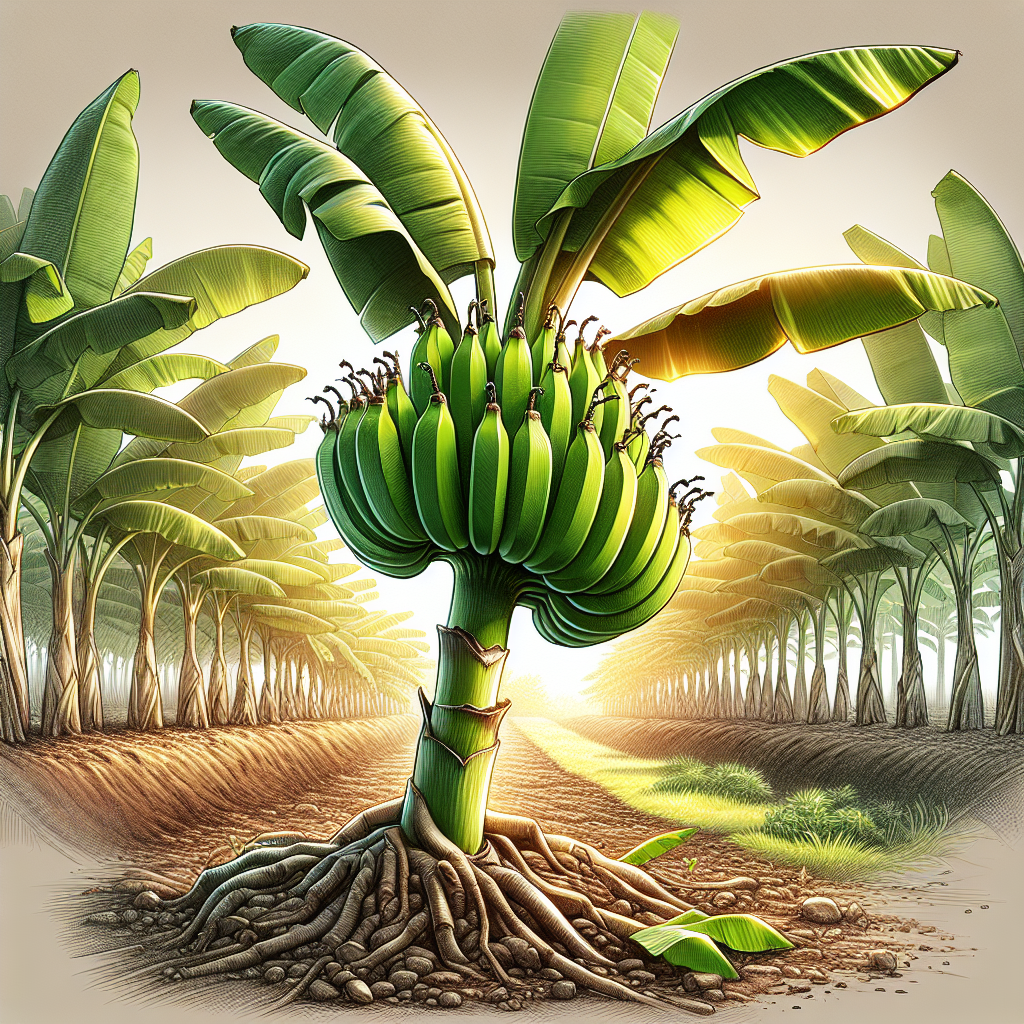
Introduction to Manzano Banana
Known in many regions as apple banana, this cultivar is valued less for supermarket uniformity and more for flavor complexity. The fruit is shorter and thicker than standard export bananas, with a creamy, aromatic pulp that develops notes reminiscent of apple and strawberry as it ripens. In Latin America, the Caribbean, and parts of tropical Asia, it has long been appreciated as a premium fresh-eating banana rather than a bulk shipping type.
For growers, this is not the fastest or easiest banana to push into production, but it is one of the most rewarding when managed well. Plants are generally more cold-sensitive than many newcomers expect, and they respond dramatically to soil fertility, irrigation consistency, and wind protection. If you already know the general growth cycle of banana, expect Manzano to behave as a somewhat slower, sturdier, flavor-first type that benefits from meticulous nutrition and patient harvest timing.
A mature planting creates a multigenerational mat made up of a fruiting pseudostem, follower suckers, and underground corm tissue. Good production depends on regulating that mat instead of letting it become overcrowded. In home orchards and small farms, Manzano often earns its space because consumers who taste it ripe usually recognize it immediately as different from common commercial bananas.
Botanical Profile of Manzano Banana
This cultivar belongs to the genus Musa, a giant perennial monocot rather than a true tree. The visible “trunk” is a pseudostem formed by tightly wrapped leaf sheaths. The true stem is an underground corm that produces roots and suckers. The inflorescence emerges from the center of the pseudostem once the plant has accumulated enough leaf area and carbohydrate reserves.
Manzano is commonly grouped among dessert bananas and is often associated with the Silk subgroup, though naming can vary by region and market. This matters because Silk-type bananas tend to have distinctive flavor and texture traits: relatively firm flesh, notable acidity when underripe, and excellent sweetness when fully colored. The fruit is usually shorter, plumper, and more angular when immature than Cavendish. As it ripens, the peel turns yellow and may develop black flecking or patches; this is often a sign of advanced ripeness rather than poor quality.
Plants are medium in height compared with very tall plantains or some cooking bananas, but local growing conditions strongly affect stature. In fertile tropical ground, pseudostems may reach roughly 3 to 4.5 meters. Leaves are broad, thin, and easily torn by wind, which is normal for bananas and not inherently a disease symptom. The root system is shallow and fibrous, with most active feeding roots concentrated in the top 30 to 60 cm of soil, which explains the plant's sensitivity to drought, compaction, and waterlogging.
Fruit hands are often smaller than industrial dessert bananas, but the eating quality is superior when harvested at proper maturity. Because the cultivar is not bred primarily for long-haul durability, it rewards local and direct-market growers who can pick near full maturity and allow fruit to finish ripening off the plant without cold injury.
Soil, pH, and Climate Requirements for Manzano Banana
Deep, friable, organic-matter-rich soil is the single biggest driver of success. Ideal soils are loams or sandy loams with high biological activity, excellent drainage, and the ability to hold steady moisture. Heavy clay can work only if aggressively improved with organic matter, broad planting mounds, and drainage channels. Standing water for even 48 to 72 hours can reduce root oxygen enough to stall growth, trigger yellowing, and invite corm and Root rots.
The preferred pH range is about 5.5 to 7.0, with an ideal target around 6.0 to 6.5. Below pH 5.2, nutrient imbalances become more likely, especially calcium, magnesium, and phosphorus availability issues, while manganese and aluminum toxicity may increase. Above pH 7.2, iron and zinc deficiencies can show up as interveinal chlorosis on younger leaves. If your soil is acidic, use finely ground agricultural lime or dolomitic lime based on test results. If alkaline, repeated additions of compost, mulches, elemental sulfur where appropriate, and acid-forming fertilizers can help gradually moderate the root-zone environment.
Manzano thrives in true tropical to warm subtropical climates. The best temperature range is roughly 26 to 32°C during active growth, with night temperatures above 18°C. Growth slows noticeably below 16°C, and prolonged exposure below 10 to 12°C can cause chilling injury, leaf bronzing, poor emergence of new leaves, distorted bunches, and delayed flowering. Frost can severely damage foliage and may kill young plants outright.
Rainfall or irrigation should supply the equivalent of 1,200 to 2,500 mm annually, but distribution matters more than total. The crop wants constant moisture, not alternating flood and drought. As a practical field guide, the top 20 to 30 cm of soil should stay evenly damp like a wrung-out sponge, never powder-dry and never sour-smelling or sticky for days. Drought stress first appears as slowed leaf unfurling, leaf edge scorch, narrow new leaves, and reduced bunch size. Overwatering shows as persistent yellow lower leaves, weak soft pseudostems, algae or moss on the soil surface, sour anaerobic odor, and plants that look wilted despite wet ground because damaged roots cannot absorb oxygen or water.
Wind protection is essential. Strong, repeated winds shred leaves, lowering photosynthetic capacity, and severe gusts can topple fruiting stems. Establish shelterbelts, use living windbreaks, or plant near protective structures without creating stagnant, disease-prone air pockets. Full sun is ideal for yield and sugar development, though intense reflected heat combined with low humidity can scorch young tissue.
For growers working on broader fertility and soil structure, the principles in soil health strategies are especially relevant to long-term banana productivity.
Step-by-Step Planting & Propagation
Start with disease-free sword suckers or clean tissue-cultured plants. Sword suckers are preferred over broad-leaf water suckers because they arise more vigorously from the corm and produce stronger future fruiting stems. A good sword sucker typically has a narrow juvenile leaf shape, a solid base, and visible connection to a healthy mother corm. Avoid planting material from mats with nematode damage, bacterial ooze, corm discoloration, or poor bunch history.
- Choose the site carefully. Select a frost-free area with at least 8 hours of direct sun, drainage after heavy rain, and wind protection.
- Test the soil. Confirm pH, organic matter, potassium, calcium, magnesium, and micronutrient status before planting.
- Prepare the ground deeply. Loosen soil at least 40 to 60 cm deep where possible. Incorporate well-finished compost, aged manure, and mineral amendments according to soil test. Do not use fresh manure in direct contact with roots.
- Form raised beds or mounds in heavy or flood-prone soils. Mounds 30 to 50 cm high materially reduce corm rot risk.
- Space appropriately. Home growers can use about 3 to 4 m between plants. Commercial density varies, but overcrowding reduces airflow, increases disease pressure, and shrinks bunch size.
- Trim and sanitize suckers before planting. Remove damaged roots and any rotted tissue. Some growers dip corms in hot water or approved biological treatments to suppress Nematodes and pathogens.
- Plant at the correct depth. Set the corm so the top sits just below or level with the surrounding soil after settling. Planting too deep can trap moisture around the growing point.
- Water in thoroughly. The first irrigation should eliminate air pockets but not leave a standing basin for days.
- Mulch immediately. Apply 8 to 15 cm of coarse organic mulch, keeping it a few centimeters away from direct contact with the pseudostem base.
- Label generations. In managed mats, identify the mother, one follower, and one peeper to simplify future pruning.
Tissue-cultured plants offer uniformity and cleaner starts, but they require hardening off. Acclimate them gradually to sun and wind for 1 to 3 weeks before field planting. Because bananas are heavy feeders from an early stage, do not let young plants sit in nutrient-poor media too long.
Care & Maintenance regimes for Manzano Banana
Fertilization should reflect the crop’s appetite for nitrogen early, then strong potassium demand as bunch formation approaches. A balanced approach is best: abundant compost for soil biology, moderate nitrogen to build canopy, and generous potassium for fruit fill, flavor, and stem strength. Split applications are superior to infrequent heavy doses. In practical terms, feed every 4 to 6 weeks during active growth with composted organic matter plus a potassium-rich amendment where needed. Excess nitrogen without enough potassium creates lush, weak growth that is more prone to lodging and soft fruit.
Leaf analysis is valuable in commercial settings. Where testing is unavailable, use plant signals. Pale overall foliage and slow leaf emergence suggest nitrogen shortage. Marginal yellowing or scorching on older leaves can indicate potassium deficiency. Interveinal chlorosis on younger leaves may point to iron or zinc problems, especially in alkaline soils.
Irrigation must be consistent from establishment through bunch filling. Young plants may need light, frequent irrigation until roots expand; mature plants often perform better with deeper watering that penetrates 30 to 45 cm, followed by slight drying of the surface, depending on soil type. In sandy soils, this may mean irrigation 2 to 4 times per week in dry weather. In loams, once or twice weekly may suffice. Drip or micro-sprinklers are ideal because they maintain root-zone moisture without excessive splash. The key target is steady moisture, not saturated soil.
Desuckering is central to yield management. Maintain one fruiting stem, one follower about half to two-thirds its size, and one young peeper for succession. Remove extra suckers by cutting them at ground level and destroying the growing point. If mats are left unmanaged, competition for water and potassium intensifies and bunches become smaller and later.
Pruning is mostly sanitary. Remove leaves that are fully dead, badly diseased, or interfering with bunch management, but avoid over-pruning green leaves because they feed fruit development. A healthy fruiting stem should retain as much functional leaf area as possible. Support heavy bunches with props or tied braces if wind or slope makes toppling likely.
Mulch should be renewed continuously. Bananas respond exceptionally well to thick organic mulch from chopped leaves, grass, shredded stems, or composted crop residues. Mulch buffers heat, suppresses weeds, conserves water, and slowly releases nutrients. Keep the collar area slightly open to reduce rot risk.
Flowering and bunch emergence can vary widely with temperature and fertility. Manzano often takes longer to come into bearing than faster dessert types. After bunch emergence, some growers remove the remaining male bud below the last hand once fruit set is complete, especially where insect pressure or disease accumulation around bracts is a concern. Bagging bunches with breathable protective sleeves can reduce sunburn, insect scarring, and bird damage.
Pests, Diseases & Organic Management
The most serious constraints are usually Nematodes, Banana weevil borers, Fungal leaf diseases, and root or Corm rots in poorly drained soils. Prevention is more effective than rescue.
Banana weevil borer larvae tunnel into corm and pseudostem tissue, weakening plants and reducing nutrient flow. Symptoms include poor vigor, easy toppling, reduced sucker quality, and internal tunnels visible when stems are cut. Organic management includes starting with clean planting material, removing old harvested pseudostems quickly, trapping adults with cut stem pieces, and maintaining field sanitation.
Plant-parasitic nematodes damage roots, leading to poor anchorage, low nutrient uptake, and toppling in wind. Aboveground symptoms resemble drought even when water is present. Use clean propagation stock, rotate where feasible before replanting, add organic matter to stimulate antagonistic soil life, and avoid moving infested soil between blocks.
Sigatoka-type leaf spot diseases reduce green leaf area and therefore sugar production. Early lesions appear as streaks or spots that expand and necrose. Good airflow, appropriate spacing, prompt removal of heavily infected dead leaves, and avoiding overhead irrigation late in the day all help. Nutritionally balanced plants tolerate pressure better than stressed ones.
Bacterial soft rots and Corm rots become likely in waterlogged, compacted, or wounded sites. Soft, foul-smelling tissue at the base is a danger signal. Improve drainage immediately, reduce irrigation, sanitize cutting tools, and destroy severely infected plants.
Banana aphids can vector viral diseases and often colonize the undersides of leaves or sheltered young tissue. Encourage beneficial insects, wash small infestations off with water, and use insecticidal soap or neem-based products where appropriate. Monitor carefully because virus management depends on quick removal of infected plants.
Birds, squirrels, and fruit bats may attack ripening bunches. Physical exclusion with bunch bags, netting, or harvest timing is more dependable than repellents.
Organic control works best as a system: clean stock, drainage, mulch, nutrition, airflow, mat regulation, sanitation, and monitoring. Companion species that attract beneficial insects, such as Nasturtium and Yarrow, can support a more balanced orchard ecology around the planting, though they should not be allowed to compete heavily at the banana root zone.
Harvesting, Curing & Optimal Storage
Harvest timing determines flavor more than most beginners realize. Manzano should be cut at full physiological maturity, not merely when fruit exists. Look for fingers that are well filled, with angles becoming less sharp and the peel color shifting from dark green to lighter green. The floral ends dry down, fruit diameter increases, and hands appear plump rather than narrow.
Because this cultivar develops its signature flavor late, immature harvest produces starchy, acidic fruit that never fully expresses its quality. Depending on climate, bunches may be ready roughly 3 to 5 months after flowering, sometimes longer under cool conditions. Fruit intended for local sale can be harvested later than fruit that must travel.
Use a two-person harvest method for safety. One person supports the bunch while the other cuts the pseudostem partially to lower it gradually, then severs the bunch stalk cleanly. Avoid dropping bunches; bruising triggers premature blackening and uneven ripening.
After harvest, keep bunches shaded and dry. Wash only if necessary, and if washing is done, use clean water and dry fruit before packing. Remove damaged fingers and latex residues carefully. Hang hands or bunch sections in a well-ventilated room at about 14 to 18°C if possible for even ripening. Do not refrigerate green bananas below about 13°C; chilling injury causes dull peel color, poor ripening, and off texture.
Ripe Manzano bananas commonly show peel spotting or black patches while the interior remains excellent. This is normal for advanced sweetness. For short-term storage, hold ripe fruit at cool room temperature and separate from ethylene-sensitive produce. To speed ripening, place fruit in a paper bag with a ripe apple or similar climacteric fruit. For market handling, harvest at the correct stage, avoid compression in crates, and sell before full peel collapse even if flavor is still improving.
Companion Planting for Manzano Banana
Companion planting around bananas should focus on soil protection, beneficial insect support, and shallow-rooted ground coverage rather than aggressive competition. Since banana feeder roots occupy the upper soil profile, companion plants should be placed mainly around the outer drip zone, not packed tightly at the pseudostem base.
Thai Basil works well near paths and margins because its aroma can help diversify insect signals in the planting while attracting pollinators and beneficial insects when allowed to flower. It stays relatively manageable and does not create the heavy shade or root competition that larger crops might.
Nasturtium is useful as a living mulch and beneficial insect plant. It can draw aphids away from more valuable crops in mixed plantings and helps cover exposed soil. In wetter climates, monitor it so it does not create excessive humidity directly against banana stools.
Yarrow is valued for attracting parasitic wasps, hoverflies, and other beneficials. It is especially useful on orchard edges, access lanes, or insectary strips beside the banana block rather than within the tight root zone itself.
Clover can function as a low-growing soil cover in drier lane areas, reducing erosion and contributing biologically active organic matter. In very humid or poorly drained sites, however, groundcovers must be managed carefully so they do not hold excessive moisture against mats or interfere with fertilizer placement.
The best layout is usually zoned: bananas as the dominant canopy, mulch ring around each stool, companion herbs and flowering insectaries beyond that ring, and access for desuckering, feeding, and harvest. Good companion design supports the crop, but it never replaces drainage, fertility, and sanitation as the real foundations of production.