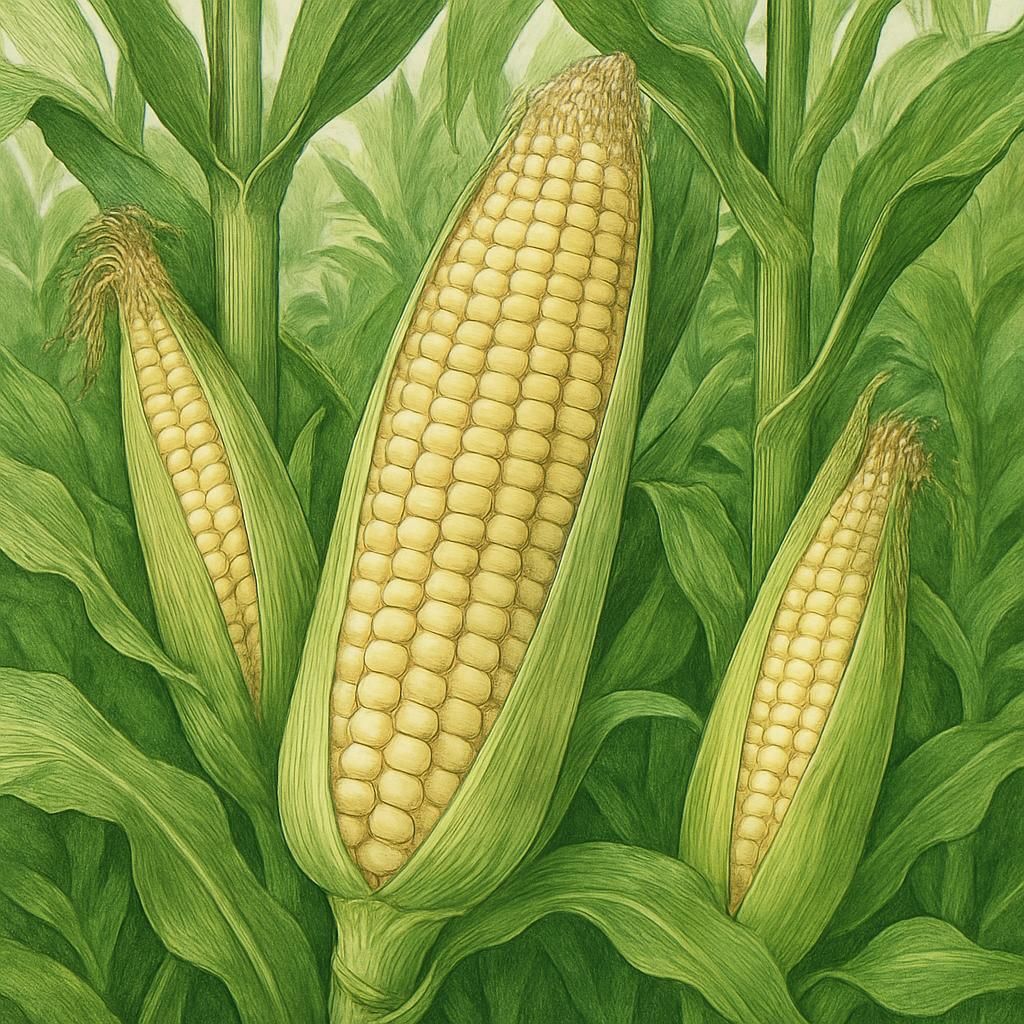
Introduction to Maize (Piamonte Corn)
Maize, commonly referred to as Piamonte Corn, is a distinguished variety within the broader corn family, valued for its robust growth and high-yield potential. Cultivated worldwide, it provides a crucial source of food, feed, and industrial raw material, making it a significant agricultural commodity.
Botanical Profile of Maize (Piamonte Corn)
The Piamonte Corn is a member of the Poaceae family, characterized by tall stalks that can reach up to 12 feet in height. It exhibits a unique genetic makeup that allows for wide adaptability and varied uses, from livestock feed to human consumption. The plant features wide leaves and produces ears filled with rows of kernels.
Soil, pH, and Climate Requirements for Maize (Piamonte Corn)
For optimal growth, Piamonte Corn requires well-drained, fertile soil. The following table summarizes the ideal conditions for cultivating this crop:
| Factor | Ideal Condition |
|---|---|
| Soil Type | Loamy to sandy loam |
| Soil pH | 5.8 to 7.0 |
| Temperature | 60°F to 95°F (15°C to 35°C) |
| Rainfall | 20 to 40 inches annually |
Step-by-Step Planting & Propagation
- Seed Selection: Choose high-quality Piamonte Corn seeds that are disease-resistant and suited to your climate.
- Soil Preparation: Till the soil to a depth of 6-8 inches, incorporating organic matter to enhance fertility.
- Planting: Sow seeds 1 to 2 inches deep, with a spacing of 10-12 inches apart in rows 30 inches apart.
- Thinning: Once seedlings are established, thin to maintain optimal spacing.
Care & Maintenance Regimes for Maize (Piamonte Corn)
Maize (Piamonte Corn) requires diligent care to ensure maximum yield. Here is a table summarizing its care schedule:
| Care Task | Frequency/Duration | Details |
|---|---|---|
| Watering | Weekly | 1-2 inches depending on rainfall |
| Fertilizing | Bi-weekly | N-P-K ratio of 10-20-10 |
| Pruning | As needed | Remove damaged or diseased stalks |
Pests, Diseases & Organic Management
Piamonte Corn is susceptible to several pests such as the Corn Earworm, and diseases like Common Rust. Here are some organic management strategies:
- Pests: Use Neem oil and biospesticides to manage Fall Armyworm and Corn Borers.
- Diseases: Implement crop rotation and use resistant varieties to minimize Northern Corn Leaf Blight.
Harvesting, Curing & Optimal Storage
- Harvesting: Maize is ready for harvest when the kernels are hard and the husks brown and dry.
- Curing: Allow corn to cure by leaving it in dry conditions for 7-10 days to reduce moisture content.
- Storage: Store in a cool, dry place at temperatures between 32°F to 40°F (0°C to 4°C).
Companion Planting for Maize (Piamonte Corn)
Maize benefits from companion plants such as Beans to fix nitrogen and Squash to suppress weeds. These companion plants not only improve soil health but also boost crop yield through improved pest management. Discover the synergistic effects of companion planting in our blog: Summer Companion Planting: 10 Organic Pairings to Boost Small Farm Resilience.
For more on cultivating corn, you may refer to the Corn wiki page, which provides additional resources and tips.