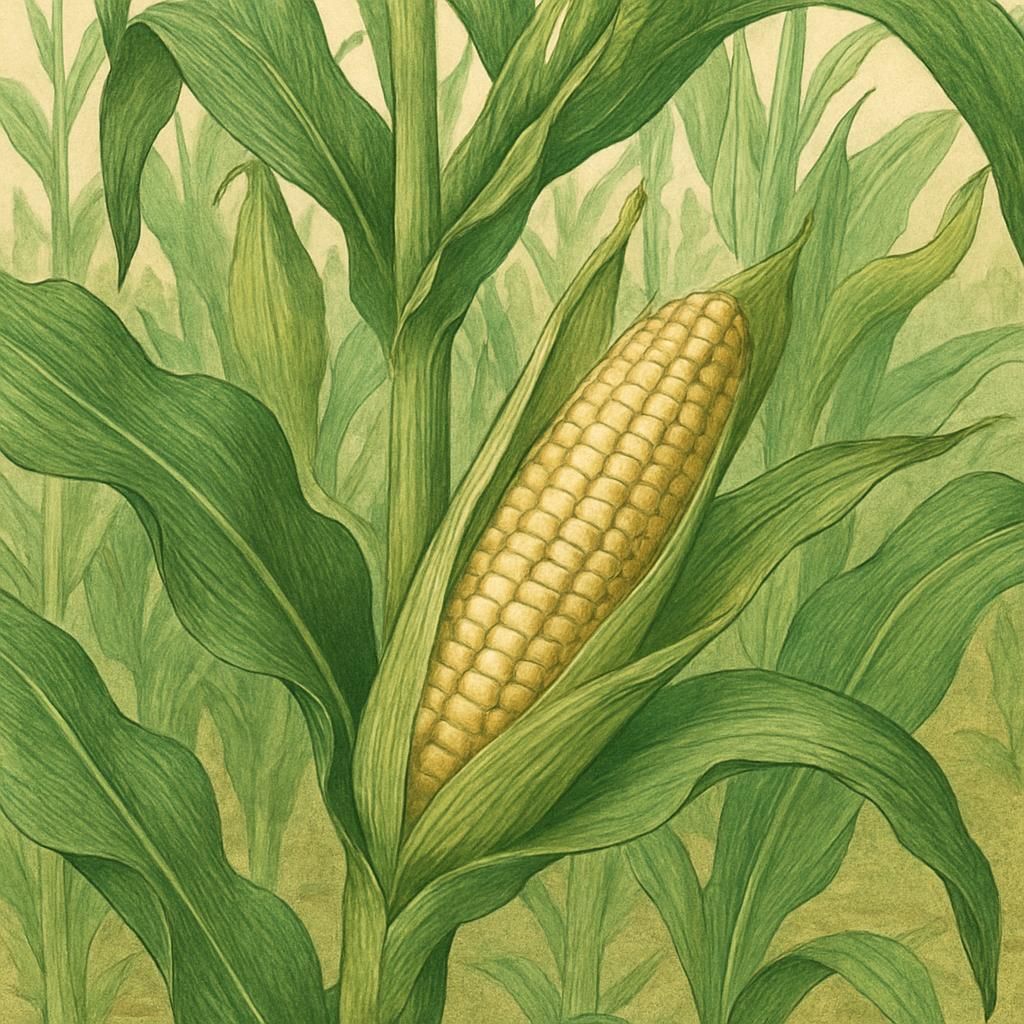
Introduction to Maize (Pennsylvania Dutch Butter)
Maize, commonly known as corn, is a staple crop with a rich history of cultivation in various forms. The Pennsylvania Dutch Butter variety is a flavorful heirloom type prized for its buttery texture and taste. This guide delves into the comprehensive process of growing this crop, ensuring you capitalize on its potential.
Botanical Profile of Maize (Pennsylvania Dutch Butter)
The Pennsylvania Dutch Butter maize is part of the Poaceae family, characterized by its tall stalks and large leaves. As a monocotyledon, its seedlings produce a single leaf upon germination. The plant's key feature is its ears, packed with rows of kernels.
Soil, pH, and Climate Requirements for Maize (Pennsylvania Dutch Butter)
Maize thrives in well-drained loamy soil with ample organic matter. It prefers a neutral to slightly acidic pH and requires full sun exposure.
| Condition | Ideal Range |
|---|---|
| Soil Type | Loamy, well-drained |
| pH Level | 6.0 - 6.8 |
| Temperature | 15-30°C (59-86°F) |
| Sunlight | Full Sun |
| Rainfall | 600-750 mm annually |
Step-by-Step Planting & Propagation
- Site Selection: Choose a site with full sun and good drainage. Amend soil with compost to improve fertility.
- Seed Preparation: Soak seeds overnight for better germination.
- Planting Time: Once the danger of frost has passed, plant seeds directly into the soil.
- Spacing: Rows should be 75 cm apart with plants 25 cm apart within rows.
- Depth: Sow seeds about 2.5-3.5 cm deep.
- Watering: Regular watering is crucial during growth, especially at tasseling and silking stages.
- Thinning: Once seedlings reach a suitable height, thin them to the recommended spacing to ensure healthy growth.
Care & Maintenance Regimes for Maize (Pennsylvania Dutch Butter)
Proper care is essential to maximize yield and quality for this corn variety.
| Activity | Frequency |
|---|---|
| Watering | 1-2 inches per week |
| Fertilization | Every 4-6 weeks (Use a balanced N-P-K fertilizer) |
| Pruning | Not necessary |
Pests, Diseases & Organic Management
Maize is susceptible to various pests and diseases, necessitating proactive management.
- Corn Earworm and European Corn Borer are common pests.
- Southern Rust and Gray Leaf Spot are notable fungal diseases.
- Employ crop rotation, and beneficial insects like ladybugs to naturally control pest populations.
Harvesting, Curing & Optimal Storage
- Harvest Time: Ears are ready to harvest when kernels feel plump upon feeling through the husk.
- Curing: Allow harvested ears to dry in a warm place to optimize flavor before storage.
- Storage: Corn can be stored in a cool, dry place on the cob or shelled in airtight containers.
Companion Planting for Maize (Pennsylvania Dutch Butter)
Interplanting with crops like Beans or Squash can prove beneficial.
- Beans provide nitrogen fixation that benefits maize.
- Squash acts as a living mulch, reducing weeds and conserving soil moisture.
For additional expert insights on companion planting, visit our related blog post: Summer Companion Planting: 10 Organic Pairings to Boost Small Farm Resilience.
For more general information about corn cultivation, visit Corn (crop).