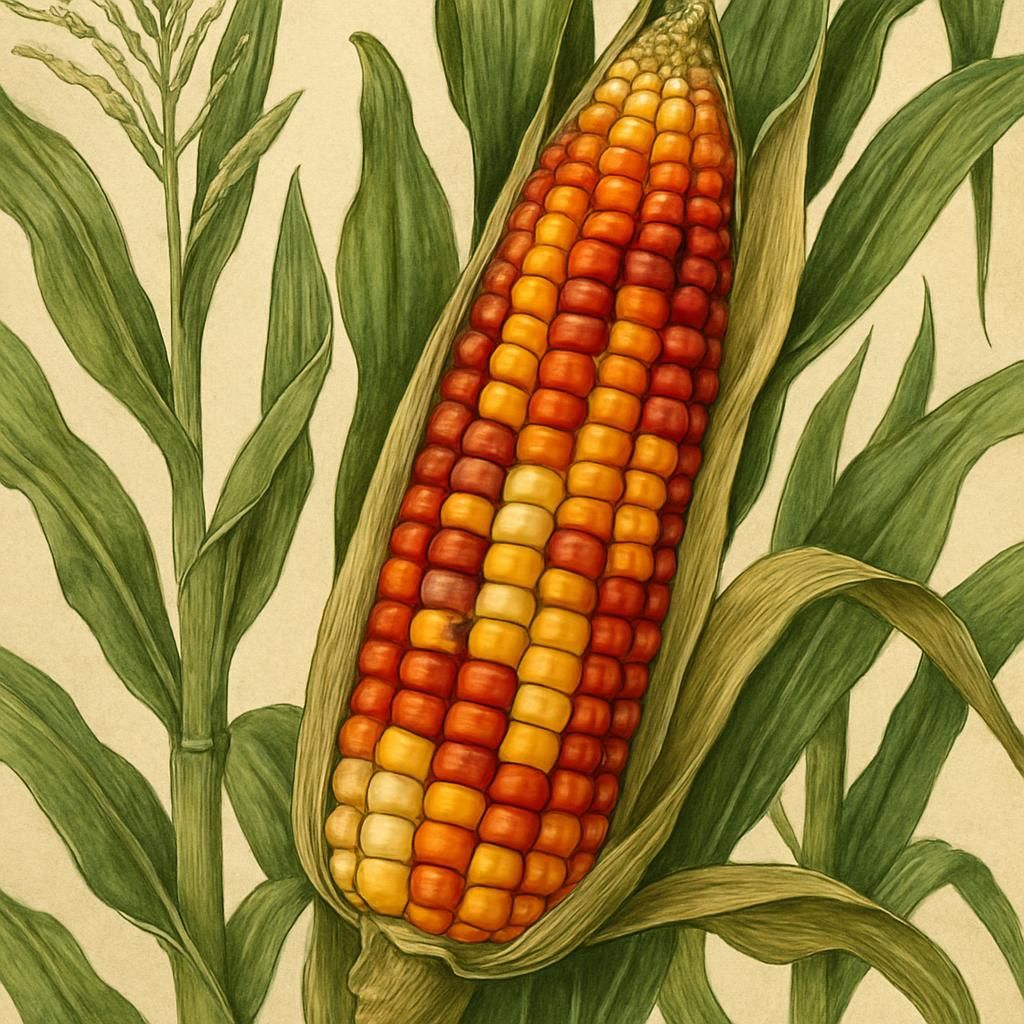
Introduction to Maize (Chapalote)
Chapalote maize, also known as a traditional landrace of corn, has been grown in the southwestern United States and northern Mexico for centuries. This ancient variety is valued not only for its culinary applications but also for its adaptability to different growing conditions. It features a unique color transition from yellow to deep red, making it a favorite among traditional maize varieties.
Botanical Profile of Maize (Chapalote)
Chapalote is a subspecies of Zea mays, falling into the flint corn category due to its hard exterior. Its botanical characteristics include:
- Plant Height: Typically grows between 1.5 to 2.5 meters.
- Kernel Colors: Range from yellow and orange to deep red and purple.
- Cobs: Generally measure around 6-10 inches in length.
- Growth Habit: Hardy and drought-tolerant.
Soil, pH, and Climate Requirements for Maize (Chapalote)
Maize (Chapalote) thrives in a variety of soil types but performs best in well-drained, fertile soils. Adequate sunlight is crucial for its development, and it requires moderate rainfall or irrigation.
| Factor | Ideal Condition |
|---|---|
| Soil Type | Loamy, well-drained |
| Soil pH | 5.5 - 7.0 |
| Temperature | 22°C - 32°C |
| Rainfall | 500 - 800 mm annually |
| Sunlight | Full sun, 6-8 hours per day |
Step-by-Step Planting & Propagation
- Site Selection: Choose a location with full sun exposure. Ensure soil is well-drained and either use raised beds or amend heavy clay soils.
- Soil Preparation: Till the soil and incorporate organic matter such as compost or aged manure.
- Sowing: Plant seeds 1-2 inches deep directly into the soil after the last frost date.
- Spacing: Space seedlings 10-12 inches apart with 30-36 inches between rows to allow for adequate air circulation.
- Thinning: Once seedlings reach 4 inches, thin to the strongest plants.
- Germination: Expect germination within 7-10 days.
Care & Maintenance Regimes for Maize (Chapalote)
Consistent care is essential for optimum yield, focusing on water management, pest control, and providing nutrients.
| Task | Frequency |
|---|---|
| Watering | 1 inch per week |
| Fertilizing | Every 4-6 weeks |
| Weeding | As needed |
| Pruning | Not necessary |
Fertilization should be performed with a balanced 10-10-10 NPK or a specific corn blend, emphasizing nitrogen during the vegetative stage.
Pests, Diseases & Organic Management
Chapalote maize can be affected by common corn pests such as Corn Earworm, European Corn Borer, and Fall Armyworm. To manage these pests, employ:
- Companion Planting: Integrate crops like beans and pumpkins to deter pests.
- Natural Predators: Encourage beneficial insects such as ladybugs and lacewings.
- Neem Oil: Use as an organic pesticide against infestations.
Diseases can include Common Rust and Northern Corn Leaf Blight. Employ crop rotation and remove debris to minimize disease spread.
Harvesting, Curing & Optimal Storage
- Harvesting: Harvest when cobs are fully mature, usually 100-120 days post-planting. Kernels should be hard and nearly impossible to dent.
- Curing: Dry cobs in a warm and well-ventilated area for 4-6 weeks to ensure moisture content is below 12%.
- Storage: Store dried kernels in airtight containers in a cool, dark place to prevent deterioration.
Companion Planting for Maize (Chapalote)
Chapalote maize benefits significantly from traditional "Three Sisters" planting with beans and squash as companions. Beans supplement nitrogen to the soil while squash covers the ground, reducing weeds, and maintaining soil moisture.
For further enrichment of your farming practice, consider exploring Crop Rotation Realities: 6 Organic Patterns That Deliver for Small Farms.